

The story
A promising undercover officer assigned to lure and arrest gay men, defies professional orders when he falls in love with a target.
Story from TheTVDB.
Where to Watch
Where-to-watch data by JustWatch · every service.
Cast

Tom Blyth
Lucas

Russell Tovey
Andrew

Amy Forsyth
Emily

Maria Dizzia
Marie

Christian Cooke
Ron

Gabe Fazio
Uncle Paul
John Bedford Lloyd
Lt. Sollars
Sam Asa Brownstein
Christian
Darius Fraser
Jeff
Alessandra Ford Balazs
Jessie
Joseph Emmi
Gus
Luke Burke
Ben
Marlene Mancini
Nonna
Henry Stockwell
Man in Bathroom #1
Ben Anderson
Man in Bathroom #2
Jason Ngo
Man in Bathroom #3
Charli Emmi
Oliver Fedrizzi
Emily Fedrizzi
Lucas's Cousin
Carmen Emmi III
Lucas's Cousin
Joseph Emmi Jr.
Toddler Lucas
Rachael Haegerty
Lucas's Cousin
Christine Albright
Aunt Trish
Lauren Stanton
Joanne
Videos

Official Trailer
Trailer
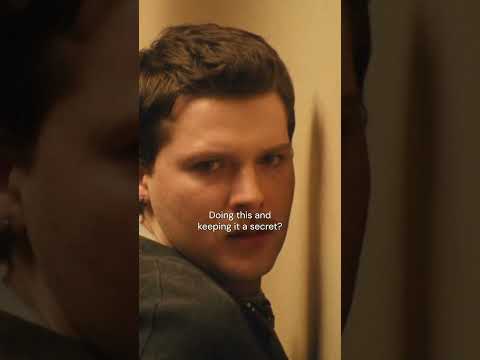
Is this hard for you?
Teaser

In Cinemas 10 October
Teaser

In Cinemas 10 October
Teaser

Life through his eyes.
Teaser

His lips are sealed.
Teaser

Official Teaser
Teaser

Adam Zmith on PLAINCLOTHES, the history of queer public life and the law in the UK
Featurette

Conversations @ Curzon | Russell Tovey on Plainclothes, the 1990s and the Power of Storytelling
Featurette

Clip
Clip

Meet the Artist 2025: Carmen Emmi on “Plainclothes”
Featurette
More Like This

A Thousand and One
2023 · ★ 6.6

My Policeman
2022 · ★ 7.5

The Burning Plain
2008 · ★ 6.6

Beach Rats
2017 · ★ 6.1

Cleveland Abduction
2015 · ★ 7.3

Unfaithful
2002 · ★ 6.7

The Clovehitch Killer
2018 · ★ 6.4

The Whisper Man
2026 · ★ 6.8

My Fault: London
2025 · ★ 7.4

Someone to Watch Over Me
1987 · ★ 5.9

The Disappearance of Alice Creed
2009 · ★ 6.5

In Too Deep
1999 · ★ 6.4

My Son, My Son, What Have Ye Done
2010 · ★ 6.1

Believe Me: The Abduction of Lisa McVey
2018 · ★ 8.0

Soldier's Girl
2003 · ★ 7.0

American Heart
1992 · ★ 6.4

American Gigolo
1980 · ★ 6.2

Sea of Love
1989 · ★ 6.6

In Cold Blood
1967 · ★ 7.5

Cape Fear
1991 · ★ 7.3
What People Are Saying
“Plainclothes” opens with a quiet, intimate gesture: two men touching each other, timidly, in the dim light of an old movie theater, and it becomes clear right away that all the tenderness of that moment is about to be swallowed by a world that has no idea what to do with men like them. In her first feature, Carmen Emmi builds this story with an uneasy visual energy, full of fragments, memories, and contradictory impulses, like the film’s own form is being eaten away by the protagonist’s anxiety. And it’s exactly this collision between possible tenderness and everyday terror that turns “Plainclothes” into a cruel identity drama, sometimes suffocating, always emotionally honest. The narrative structure embraces Lucas’s inner chaos (played by Tom Blyth) with frantic montages that jump between textures, from dirty VHS to clean digital, in a rhythm that feels like interrupted thoughts, traumatic memories, and fears that spill over without warning. At first, this style works like a sensory dive into the mind of a man constantly on the edge of collapse, but Emmi and editor Erik Vogt-Nilsen stretch this device so far that it starts to lose strength; the sheer amount of visual and musical noise can be more draining than immersive. Even so, the intention is crystal clear: Lucas lives in a permanent state of alert, and the film wants the viewer to feel every twitch of that paranoia. It’s a risky choice, but totally aligned with the emotional brutality Emmi is shaping. At the center of this spiral sits the story’s cruelest contradiction: Lucas works as an undercover cop arresting gay men who look for discreet encounters in public bathrooms. He seduces with a glance, lures them in, turns them over to his partner, and every arrest is like a tiny emotional execution. The film doesn’t treat this as metaphor; it treats it as real torment. Lucas recognizes in the men he destroys the same desire that consumes him, and this cycle of self-destruction is filmed with deliberate discomfort. When Andrew (Russell Tovey) enters the story (quiet, reserved, with the face of a 90s “family man”) the spark between them isn’t just sexual: it’s a glimpse of who Lucas could become if he had the courage to exist. Andrew is the mirror of a possible future, but also a reminder of everything that gets lost when you live a lie. The film grows strongest in the dynamic between these two men. Even though Emmi tackles social and family issues with force, it’s in the moments where Lucas and Andrew let themselves breathe (whether in the empty theater, the quiet greenhouse, or in those awkward touches) that “Plainclothes” finds its heart. Russell Tovey plays Andrew with compassion and a kind of contained sadness, a man already tired of surviving in the shadows; but it’s Tom Blyth who carries the film on his shoulders. His performance is devastating and physical: he makes you feel a body shrinking in on itself to fit inside an identity that was never his. His eyes always look like they’re asking for help, like he’s about to confess everything but knows he can’t open his mouth. It’s a relentless performance, driven by pain, anxiety, and a yearning for liberation that can’t exist without cost. When the fear of recognizing yourself takes over, it gives birth to an affection so powerful, and so unreachable, that it almost restores something inside you, and Blyth nails every nuance of that, from terror to ecstasy. The family setting reinforces the weight of expectations shaping Lucas. The loving presence of his late father only deepens his silence; his grandfather, the inspiration behind his career, represents the traditional masculinity he tries so hard to replicate; and the grotesque figure of Uncle Paul (Gabe Fazio) becomes the voice of the kind of hatred Lucas fears waking up if he ever reveals who he is. Fazio plays Paul with a disgusting, almost cartoonish aggression, but that just highlights the point: men like him aren’t exceptions, they’re part of the social fabric that traps Lucas in a maze with no exit. In contrast, Andrew becomes the one safe place Lucas manages to find in all that noise. Technically, “Plainclothes” is a film of extremes: sometimes suffocating and hysterical, sometimes intimate and filled with silence. This back-and-forth can be tiring, but it’s right in this excess that Emmi finds her voice. The film is imperfect, but intentionally imperfect, like a body trying to stay upright while something inside it collapses. Its fragmented aesthetic echoes a time when living openly meant risking not only affection, but your social survival too, and the film recreates that climate with real accuracy. Overall, “Plainclothes” is less a forbidden romance and more a warm (and painful) portrait of a man trying to exist in a world that forces him to choose between loving and surviving. When Lucas and Andrew find in each other the possibility of breathing for the first time, the film reaches its brightest point. And it’s exactly that contrast (between the violence of repression and the gentleness of desire) that turns Emmi’s film into a visceral study of identity, shame, and the courage needed to finally look in the mirror without looking away.
Read it on trakt.tvCame in after watching the movie, and damn the comment section is not giving. I’m missing tv time
Read it on trakt.tvPlainclothes me surpreendeu muito positivamente, porque eu esperava um filme genérico e recebi um drama com uma pitada de mistério e com um ritmo estranhamente divertido. A atuação do Tom Blyth conseguiu ser melhor do que a do Russell Tovey o que foi uma surpresa pra mim, minha única crítica talvez seja a decisão de ser filmado em 4:3 e terem lotado o filme de efeitos visuais na tela, que, se bem dosado teria sido divertido, mas que acabava apenas quebrando o bom ritmo do filme.
Read it on trakt.tvwhy gay movies are beautifully made? songs were nice! >So, when we are going to San Francisco? >Well, I'm already there. Aren't you? >Don't look at me like that. >-Like what? >Like we know everything about each other. >-Well, I don't know you. But I'd like to. >That's not how this works.
Read it on trakt.tv'Plainclothes' proved to be a rewarding, measured exploration of the complexities surrounding internalized dynamics. The slow pace might not be for everyone, but I thought it was super compelling, especially with the way they used time jumps and camera work to show Lucas's internal struggles and mental state. I found the final twenty minutes of the film to be a truly rewarding conclusion that struck all the right chords, complemented by excellent performances and wonderful chemistry among the entire cast.
Read it on trakt.tvContains spoilers — show it
The acting was amazing loved the ending tension it was done so well lighting really peak they had some great scenes tbh initially I thought Tom Blyth had his own heated rivalry then I realized it was heated trauma but it was still a captivating movie
The LGBTQ+ community has made remarkable strides in terms of acceptance over the past five decades, a far cry from the conditions that were in place years ago. However, despite this progress, community members from various personal backgrounds and those working in certain professions have struggled with their comfort levels when it comes to being open about themselves. They have been unable or unwilling to step forward to profess their true natures to a world that has steadily become more understanding (even if there’s still work to be done in this area, as has become painfully apparent of late). Such are the conditions faced by Lucas (Tom Blyth), an undercover cop assigned to arrest (some would say entrap) gay men who cruise public spaces (particularly restrooms) looking for sex partners, ultimately nailing them on counts of indecent exposure. There’s one problem with that, though: Lucas wrestles with his own attraction to men, a leaning that has made doing his job more personally challenging. He also struggles to cope with the pressures of remaining closeted in his less-than-accepting family, particularly his hypercritical, homophobic uncle (Gabe Fazio). The ante gets upped on all of this when, on the job, Lucas encounters a middle-aged man, Andrew (Russell Tovey), to whom he’s highly attracted. Andrew is something of a mystery man himself, giving off vague vibes about himself that keep Lucas at bay, despite the charged sexual energy between them, as well as the officer’s growing amorous feelings for the enigmatic stranger. The duo is ostensibly trapped at arm’s length in their own choices, but they must nevertheless contend with how to handle the undeniable attraction between them in the wake of personal and professional impediments that they’ve allowed to get in the way – and that, thanks to several ironic plot twists, end up complicating their respective lives even further. Despite the film’s seemingly plausible premise, however, the execution of this story leaves something to be desired, a problem attributable to a narrative and screenplay that could definitely use some work. For starters, the picture is set in the late 1990s, yet the paranoia level among the two leads comes across more like something out of the 1950s. Granted, circumstances in the LGBTQ+ community weren’t as conciliatory then as they are today, but, as a general rule, they weren’t as overwhelmingly confining as they’re depicted here. Then there are plot elements that simply don’t mesh as well as they might have. When the film’s big reveals surface, for instance, they’re often treated almost flippantly, as if they were being employed as insensitive comic relief instead of as dramatic turning points more in line with the overarching tone of the remainder of the story. And then there’s the release’s uneven pacing, marked by a dreadfully dull opening act that, thankfully, is somewhat made up for into the film’s admittedly better-handled second half. But, despite the steady improvement as the film progresses, there’s still plenty of material here that could stand some much-needed shoring up. As one of the year’s most anticipated LGBTQ+ releases, writer-director Carmen Emmi’s debut feature unfortunately comes across as a sizable disappointment, one that could have used a few more script revisions before being committed to film. When a director seeks to make a picture with a profound statement, it’s imperative that the material backs it up with a solid, factually grounded foundation befitting such an insightful observation and does so with eloquent, suitably fitting writing, both of which, sadly, come up lacking in this well-intentioned but ultimately flawed offering.
Read it on themoviedb.orgFollowing the murder of two young girls who refused to give their killer oral sex, the authorities decide that this is a reasonable excuse to clamp down on cottaging in the gents toilets of a mall. That’s where officer “Lucas” (Tom Blyth) is put to work. He’s the handsome lure to attract gentlemen into unzipping when they probably wished they hadn’t, before they are led away in handcuffs for prosecution. Then one shift, he encounters the slightly less obvious “Andrew” (Russell Tovey) who doesn’t fall for the trap, and who slightly enthrals the young man. Indeed as the story goes on we realise that “Lucas” has a secret of his own and that what he wants from “Andrew” might fly in the face of his professional obligations. Of course, in his way “Andrew” is no different from “Lucas”. A man living a life under wraps, with his own secrets to keep - so what chance anything might come of anything? I thought Blyth held this together well as he juggled his professional, family and “private” lives together, especially as the latter element sees him become ever so slightly obsessive. The denouement is messy, but it does tie the threads together after a fashion and along the way auteur Carmen Emmi shines a light on what would appear to be an entirely disproportionate use of almost gleefully applied police resources provided based on quite a ridiculous underlying premise. Tovey’s role is maybe a little undercooked and does come across as borderline cruel at times, but the sum of the parts is a well presented critique on near-contemporaneously set homophobia, fear and forbidden love - and it is well worth a watch.
Read it on themoviedb.org