

The story
On January 20, 1942, as Nazi Germany war effort sours due to the failure of Operation Barbarossa, the entrance of the United States into World War II and the death of Walther von Reichenau, a Wannsee Conference is held in order to determine the method by which the government is to implement Adolf Hitler's policy, that the German-occupied Europe should be Judenfrei, including those in the occupied territories of Occupation of Poland (1939–1945), Reichskommissariat Ostland Protectorate of Bohemia and Moravia and German military administration in occupied France during World War II. As the film opens, various officials from different German agencies arrive and mingle at a lakeside villa in the Berlin Boroughs and neighborhoods of Berlin of Wannsee. Among those present:
Story from TheTVDB.
Where to Watch
Where-to-watch data by JustWatch · every service.
Cast

Kenneth Branagh
Reinhard Heydrich

Stanley Tucci
Adolf Eichmann

Colin Firth
Dr. Wilhelm Stuckart

Jonathan Coy
Erich Neumann

Brendan Coyle
Heinrich Müller

Ben Daniels
Josef Bühler
Barnaby Kay
Rudolf Lange

Kevin McNally
Martin Luther

Ian McNeice
Gerhard Klopfer
Brian Pettifer
Alfred Meyer
Ewan Stewart
Georg Leibbrandt
Peter Sullivan
Karl Eberhard Schöngarth

Owen Teale
Roland Freisler

David Threlfall
Friedrich Wilhelm Kritzinger

Nicholas Woodeson
Otto Hofmann
Clare Bullus
Maid
Simon Markey
Stenographer
David Glover
Supervising Butler
David Willoughby
Orderly 1

Tom Hiddleston
Phone Operator
David Spinx
Cook
Dirk Martens
NCO

Andreas Guenther
NCO2
Florian Panzner
Luther's Driver
More Like This

The World Will Tremble
2025 · ★ 7.5

The Courageous Heart of Irena Sendler
2009 · ★ 7.4

Schindler's List
1993 · ★ 8.6

Nuremberg
2025 · ★ 7.6

The Grey Zone
2001 · ★ 6.6

Adam Resurrected
2008 · ★ 6.1

Escape from Sobibor
1987 · ★ 7.2

Operation Finale
2018 · ★ 6.7

Truth & Treason
2025 · ★ 8.1

Inglourious Basterds
2009 · ★ 8.2

Fatherland
1994 · ★ 6.3

The Zookeeper's Wife
2017 · ★ 7.3

Lee
2024 · ★ 6.9

Walking with the Enemy
2014 · ★ 6.3

Resistance
2020 · ★ 7.0

The Pianist
2002 · ★ 8.4

Triumph of the Spirit
1989 · ★ 6.5

A Midnight Clear
1992 · ★ 6.5

I Am Elizabeth Smart
2017 · ★ 6.8

Max
2002 · ★ 6.2
In the News
See All-
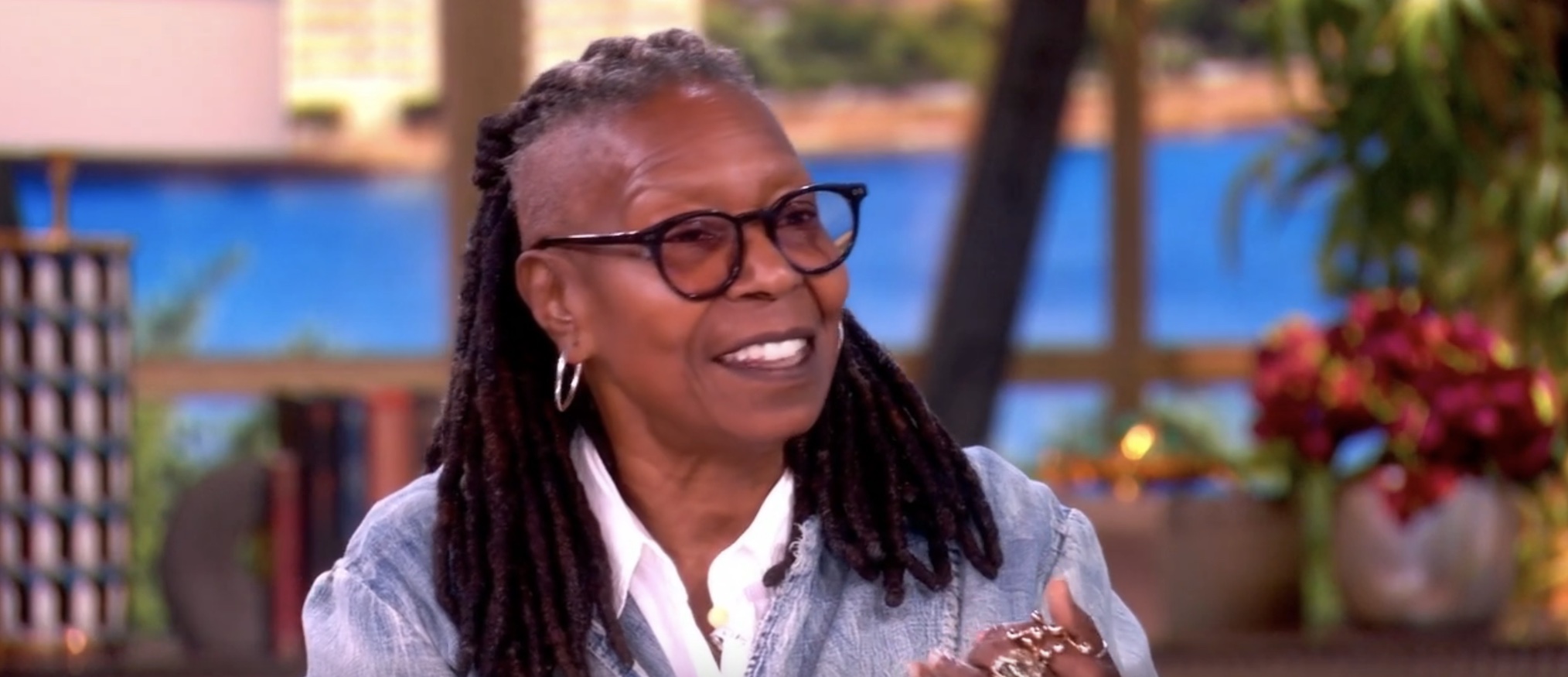 ‘The View’: Whoopi Goldberg Wonders If Widespread Outages Are Trump’s Post-Blue Wave ConspiracyTV Insider · 2d ago
-
'Sunrise On The Reaping' Review: The Hunger Games Prequel Is A Solid Conspiracy ThrillerInverse · 2d ago
-
Earl Thomas’ Wife Pleads Guilty to Conspiracy to Scam $2.7 Million From Ex-NFL StarTMZ · 6d ago
-
 Kevin Spacey’s Global Pandemic Conspiracy Movie Gets Release Date With a Bizarre TaglineComing Soon Net · 6d ago
-
 Conspiracy Thriller ‘The Awakening,’ Starring Kevin Spacey, Gets U.S. Release (EXCLUSIVE)Variety · 6d ago
-
L.A. Gang Interventionist Skipp Townsend Arrested In Alleged Murder ConspiracyTMZ · Nov 6
-
‘Wild Horse Nine’ Is Part Conspiracy Thriller, Part Buddy Comedy, All Malkovich FTWRolling Stone · Nov 6
-
 Tracker Season 4 Episode 6 Trailer Shows Colter’s Next Conspiracy Without RussellComing Soon Net · Nov 2
What People Are Saying
It's surprising the coolness that Nazi and SS treated the decision about the final solution. Very good movie, it happens entirely in a meeting room with great dialogs.
Read it on trakt.tvI found it a very good, dry, uncomfortable and necessary film. It does not need camps, gunfire or explicit images of extermination to be chilling. Its strength lies precisely in the opposite: a group of well-dressed men, sitting in a mansion, eating, smoking and calmly discussing how to organize the murder of millions of people. That is what impresses most. There are no monsters with monster faces. There are bureaucrats, soldiers, lawyers, officials and regime representatives discussing powers, figures, deadlines, methods and jurisdictions. The film understands very well that absolute evil can also speak in an administrative tone, with good manners and glasses of wine on the table. The idea of the banality of evil runs through everything. Nobody seems to be experiencing a historic moment of horror, but rather a work meeting. Some raise legal objections, others economic ones, others procedural ones, but almost nobody questions the essential matter from a place of humanity. Extermination appears not as an explosion of uncontrolled hatred, but as public policy turned into a file. That is why the euphemisms are so terrible. "Evacuation", "treatment", "solution", "relocation"... clean words to cover bodies, gas chambers, shootings and industrial death. The film is frightening because it shows how language can anesthetize conscience. If you change the words, it seems as if you change reality, even when what lies behind them is slaughter. Kenneth Branagh is magnificent as Heydrich. He plays him with a mixture of charm, coldness, threat and superiority that is deeply unsettling. He does not need to shout all the time. He controls the meeting like someone conducting a poisonous orchestra: he smiles, flatters, corrects, humiliates and makes clear that the decision has already been made even though everyone pretends to deliberate. Stanley Tucci also works very well as Eichmann, more contained and administrative, almost grey. Precisely that lack of grandeur makes him disturbing. He does not seem like a theatrical demon, but like a technician of death, someone who turns horror into logistics. And Colin Firth brings an interesting tension because his resistance does not necessarily come from compassion, but from law, form, order and jurisdiction. The film does have something of filmed theatre, of course. Almost everything happens in a room, with characters talking for an hour and a half. But that did not bother me. On the contrary: that concentration gives it strength. There is no visual escape, no distraction. We are locked in with them while horror becomes minutes, agenda and agreement. I also liked that it does not turn the meeting into a real democratic discussion. The appearance of debate is a lie. Heydrich has come to impose, not to listen. The others may qualify, protest a little or defend their own area of power, but the machinery is already moving. That feeling of administrative destiny is terrifying. The film seems especially valuable to me because it forces us to look at Nazism not only as ideological fanaticism, but as a system. For such barbarity to happen, a criminal leader is not enough; you need offices, trains, laws, stamps, lists, accountants, lawyers, policemen and people willing to obey or look the other way. That is its real blow. It may not be a film for everyone. Anyone expecting war action, conventional suspense or big twists may get bored. It is dense, verbal and very much a meeting-room film. But if you are interested in history, power, bureaucracy and the way a society can turn crime into procedure, it is gripping. What stayed with me most was that nauseating sense of normality. They eat, drink, joke, get irritated by minor details and listen to music while discussing millions of lives as if they were a transport or storage problem. That distance between the civilized atmosphere and what they are deciding is what makes the film so powerful. I do not think it is perfect as cinema, because its television and theatrical nature shows, and some supporting characters remain more functional than deep. But I also do not think it needed flourishes. In a story like this, a director too eager to show off would have got in the way. The sobriety helps make what matters be what is said and what those words hide. In the end, for me it remains an essential work about bureaucratic horror. It is not spectacular, but it is deeply unsettling. It shows that barbarism does not always arrive screaming; sometimes it enters with a folder, a uniform, a cigarette and good manners. And seen that way, it is more frightening than any scene of explicit violence.
Read it on trakt.tvIt’s not often that you watch a film that takes place primarily in one room and still find yourself fully sucked into what is happening in that room. Bravo to the screen writers who took this cold meeting about the logistics of mass murder and created a script that highlighted the absurdity of the mindset that precipitated its requirement. The cast was phenomenal and kept me engaged for the duration of the entire proceeding. These men delivered a cold and shocking discussion with the kind of dry, matter of fact delivery that is so horrifying considering the gravity of what they are proposing to do. It’s wild to think that a meeting like this actually took place where they so casually discussed the logistics of genocide. It’s a miracle that an actual record was left to be found.
Read it on trakt.tvQuite well done recreation of the historical meeting. Good script and good cast. Quite a decent movie.
Read it on themoviedb.orgA well done recreation with fabulous actors.
Read it on themoviedb.org