

The story
In 1951 Hollywood, Eddie Mannix is head of physical production at Capitol Pictures. His duties as the studio "Fixer (person)" find him corraling its scandalous stars, fending off twin gossip columnists Thora and Thessaly Thacker, and weighing an impressive job offer from the Lockheed Corporation. When unmarried synchronised swimming actress DeeAnna Moran becomes pregnant, Mannix arranges for her to place the baby in foster care then discreetly adopt it, preserving her image.
Story from TheTVDB.
Where to Watch
Where-to-watch data by JustWatch · every service.
Cast

Josh Brolin
Eddie Mannix

George Clooney
Baird Whitlock

Alden Ehrenreich
Hobie Doyle

Ralph Fiennes
Laurence Laurentz

Scarlett Johansson
DeeAnna Moran

Tilda Swinton
Thora Thacker / Thessaly Thacker

Channing Tatum
Burt Gurney

Frances McDormand
C. C. Calhoun

Jonah Hill
Joe Silverman
Veronica Osorio
Carlotta Valdez
Heather Goldenhersh
Natalie (Secretary)

Alison Pill
Mrs. Mannix
Max Baker
Head Communist Writer

Fisher Stevens
Communist Writer

Patrick Fischler
Communist Writer
Tom Musgrave
Communist Writer

David Krumholtz
Communist Writer
Greg Baldwin
Communist Writer
Patrick Carroll
Communist Writer
Fred Melamed
Communist Writer

John Bluthal
Prof. Marcuse
Alex Karpovsky
Mr. Smitrovich
Armazd Stepanian
Eastern Orthodox Clergyman
Allan Havey
Protestant Clergyman
Videos
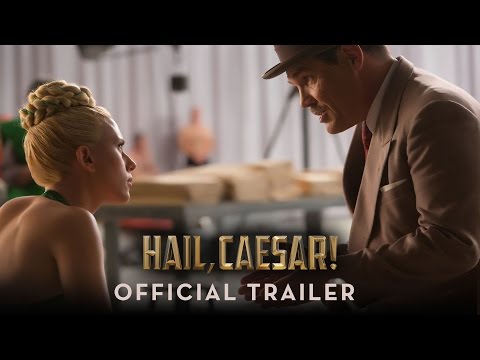
Official Trailer
Trailer

TV Spot 23
Teaser

TV Spot 3
Teaser

TV Spot 8
Teaser

Channing Tatum's Performance Of A Lifetime - Extended Preview
Clip

"I Was Kidnapped" - Extended Preview
Clip

Unmasking The Communist Conspiracy
Clip

Scarlett Johansson Mermaid Ballet
Clip

"The Director"
Featurette

"Eddie Mannix Slaps Baird Whitlock"
Clip

"The Starlet"
Featurette

"The Gossip Columnists"
Featurette
More Like This

Cecil B. Demented
2000 · ★ 6.4

Who's Harry Crumb?
1989 · ★ 5.9

Nancy Drew
2007 · ★ 6.1

That Darn Cat!
1965 · ★ 6.6

Dead Men Don't Wear Plaid
1982 · ★ 6.6

Who Framed Roger Rabbit
1988 · ★ 7.5

The Freshman
1990 · ★ 6.3

Dog Gone
2008 · ★ 6.5

See How They Run
2022 · ★ 6.3

After the Fox
1966 · ★ 6.1

Scooby-Doo
2002 · ★ 6.1

Foul Play
1978 · ★ 6.3

Problem Child
1990 · ★ 6.2

The Cheap Detective
1978 · ★ 6.4

The Great Mouse Detective
1986 · ★ 7.0

The Adventure of Sherlock Holmes' Smarter Brother
1975 · ★ 6.0

Wrong
2012 · ★ 6.2

The Late Show
1977 · ★ 6.3

The Great Muppet Caper
1981 · ★ 6.9

The Mirror Crack'd
1980 · ★ 6.1
What People Are Saying
Big named cast, but just didn't deliver. Kinda boring actually.
Read it on trakt.tvI was really impressed by the cast, but in the end was really disappointed. I didn't fully understand the point of the story, so I was confused half of the time. I was really bored throughout the movie – waiting for it to get more interesting…
Read it on trakt.tvUnderrated and an excellent Coen Brothers film..
Read it on trakt.tvContains spoilers — show it
[7.4/10] It would be too much to call *Hail, Caesar!* a deconstruction of Old Hollywood glamour. It would also be too much to call it a tribute to that 1950s studio sparkle either. Instead, it’s a love letter written with a poison pen -- a movie about movies that both admires and recoils from the mercenary work necessary to make these dream factories run, while remaining amusingly ambivalent about the ribbons of reveries they create. It is also a Coen Bros. movie, so grand plots and convoluted ploys nearly reach their ridiculous fruition, only to fall apart at the last minute. Scads of self-possessed personalities veer between the absurd, the self-important, and the unvarnished sweet. And in uproarious stretches that provoke guffaws and slower situational silliness that wins wry smiles, it is damn funny. The film tells the story of a star who’s kidnapped by Communists, a simple but earnest hayseed tapped to portray an effete sophisticate, a foul-tempered starlet whose pregnancy threatens to puncture her shining public image, and any number of other fires that the studio’s fixer must put out to keep the trains running on time. That fixer, Eddie Mannix, is the spine of the film, smoothly trudging his way from one crisis to the next, avoiding derailments with his pocket watch, gumption, and effortless understanding of whom to lean on, whom to sweet talk, and whom to slap around to keep it all moving. But he has a chance to step off the track. Mannix carries an offer from Lockheed Martin in his back pocket, one that would give him more regular hours, an in at a more professional sort of business, and a much easier life than the 27-hours-straight he has to put in to hack it as head of physical production for a Hollywood film studio. *Hail, Caesar!* is neither quixotic nor cynical about what entails. It makes no bones about the absurd strictures and control that studios exert over the lives of their employees. Mannix and his confederates cook up phony adoptions, cover indiscretions with political pressure, treat their dunderheaded or demanding stars more like ornery pets than people. It touches on pay for writers, laws evaded as though they’re barely there in the first place, and a workaday mundaneness that belies all the supposed magic. And yet, the movie also pays homage to the styles and output of that age of the cinema. From a Gene Kelly-esque sailor-filled dance number, to a series of Cowboy songs and stunts, the movie lovingly recreates the tints and tropes of the old days. Monologue-laden historical epics sit next to comedies of manners. Starlets emerge from beneath artificial waves in the same fashion as Russian subs. Hitchcockian pursuits and suspenseful car rides give ways to Capra-esque crane shots and that California glow. For however much the Coen Bros. seem poised to poke fun at, or at least acknowledge, the grim realities of celluloid shimmer, they’re just as apt to deploy it to their own, tribuative ends. Meanwhile, they mine the insanity of this all for all the comic gold they can find. (Hello, Mr. Pocket!) A group of religious figures debate the depiction of God in the studio’s latest movie, and cosmology in general, in a scene that just drips with the Coens’ dry sense of humor. Ralph Fiennes and Alden Ehrenreich nearly blow the roof off the place in a scene where the former’s cultured director tries to coach the latter’s dopey cowboy to deliver his line with a layer of performance beyond “aw, shucks.” Empty-headed actors compare the dialectics of socialism and direct action to having to shave Danny Kaye’s back. There’s a constant strain of sly absurdity, the loonies who populate this lot and this town, that the writer/directors channel throughout for both their quiet chuckles and big laughs. The catch is that, given the expansive cast of characters and deliberately overstuffed set of stories and conflicts and conspiracies for a harried (but never ruffled) Mannix to have to resolve, the movie feels a little too loose and aimless at times. *Hail, Caesar!*, contrary to the flicks it both spoofs and valorizes, doesn’t have much momentum from scene to scene. Instead, the Coens and their team are content to jump around from character to character, crisis to crisis, and conversation to conversation like a buzzed clapper boy stumbling home. Each (or at least most) of the pieces they put together are fun to watch or interesting to mull, but they rarely amount to more than the sum of their admittedly well-constructed parts. Still, in its best moments and sequences, the film’s charms and the talents of its creatives are hard to deny. The film low-key satirizes a familiar moment in so many films about making one type of art or another. After Mannix has whacked some sense into his big star, the leading man heads to the set and delivers one of those grand oratories that defined so many of that era’s iconic films. Playing a Roman soldier whose heart is moved, he gazes upon Christ crucified (skeptically noted as a principal, rather than an extra by a P.A.), and delivers his lines with conviction and passion (not ardor). The crew looks on in admiration; the music swells, and in the climax of the speech the orator...forgets his lines. The director yells cut. The lead grouses about how close he was. His co-star gripes about their uncomfortable Roman costumes. And the train keeps rolling. This isn’t magic or alchemy. It’s a bunch of idiots and working stiffs hacking out pleasantries in celluloid for a paycheck or at the behest of even more mercenary forces beyond their control. But *Hail, Caesar!* contrasts that faux, unavailing scene of the good soldier seeking his direction before a man of god with a real one. When Mannix asks his Priest for forgiveness in the confessional, he implicitly asks him whether to take the Lockheed job, with all its ease and destruction, or to stay at this tougher racket and keep corralling these nudniks by only slightly less morally-questionable means. He walks out of that confessional reassured, ready to keep helping make those features a hard-won reality, by any means at his disposal. That’s the optimistic cynicism of *Hail, Caesar!*. The movie, and by extension the Coens, don’t seem to harbor any illusions about the pure artistry of the cinematic output. The message of the film is not that all of this tricks and juggling and extra-legal measures are not somehow worth it for the beauty committed to film. But the work itself, the labor it takes, to just be a part of that machine, is its own kind of beautiful. Movie-making, especially in the studio days, could be a slog and a grind and even a grift, in a way that belied the glitz and glamour that Tinseltown projected to the world. The Coens make no bones about that, but with decades in the business, and their tough-running fixer, they clearly still think that work is worth more than even the biggest frame could hold.
Kind of just a boring story. Coen Brothers do a good job creating interesting characters which kept me mildly engaged and the movie looks great but the story lacks plot and we do not get to spend enough time with nearly enough of the characters. Overall not a super interesting movie.
Read it on trakt.tvThis has the typical Coen brothers quirkiness but doesn't live up to their other movies. There are some great scenes but most of it is kinda dull. I did pick up more on a rewatch but this is near the bottom of the Coen's filmography for me.
Read it on trakt.tvThere’s a scene halfway through the film when Hobie Doyle (Alden Ehrenreich), a Western B-movie star, is cast in a fancy melodrama helmed by Laurence Laurentz (Ralph Fiennes). Doyle is hopelessly out of his element, hobbling about in his new suit–the switch was the studio’s idea in an effort to broaden Doyle’s appeal, much to Laurentz’s dismay. It’s not long before the two engage in a back-and-forth, Laurentz trying to get Doyle to pronounce “Would that it ‘twere so simple”, and Doyle trying desperately to appease Laurentz. After a lengthy exchange, both are left exacerbated. Much later in the film, we catch a glimpse of the final version, where Doyle and Laurentz compromise with a much simpler: “It’s…complicated.” Complicated is exactly what’s at the heart of this situation. Laurentz’s increasing frustration with this obvious miscast and Doyle’s confusion may serve to fuel the slapstick comedy on exhibit, yet this scene alludes to so much more. It’s the inner mechanics of Hollywood, where directors are mere technicians and actors are props, all to be assigned and managed. It’s the clashing of proud classical Hollywood traditions of entertainment and escapism with the dreaded rise of message films and sophisticated art. It’s the contradictory nature of unfettered creativity with capitalism and consumerism, where compromise–and perhaps communism–seems to be the only way out. This is just one slice of the screwball nature that is the Coen Brothers’ latest comedy, Hail, Caesar! There’s also a kidnapped Roman soldier, Baird Whitlock (George Clooney at his dimmest and greatest), a handsome sailor (Channing Tatum) and a beautiful mermaid (Scarlett Johansson). All opportunities–that the Coens gladly take–to simultaneously demonstrate the power and influence of cinema, while mocking its sense of self-importance. Each scene is allowed to play out, Channing Tatum and his homoerotic musical number or Scarlett Johansson’s hypnotizing aquatic acrobatics. It’s not only an homage films of the Golden Era, but a demonstration of the mechanics that make film such an appealing medium. The Coen Brothers have a firm grasp on the allure behind each piece, using the acting, staging and costumes to propel Hail, Caesar! forward. It’s a simple concept–use filmmaking techniques to advance a theme and narrative, but by prioritizing these lengthy sequences over traditional narrative pacing or dialogue, the Coen Brothers give room for these fundamental concepts to breathe and thrive. It’s all threaded together through Josh Brolin’s character, Eddie Mannix, studio fixer. And there’s a lot that needs fixing: a pregnant star, a discontent director, communism, threat from the future–the usual. It’s a packed schedule, and the film follows suit with a similarly hectic pacing. An array of symbols, innuendos and subversions are thrown at the viewer: Capital Studios butting with Das Kapital, Mannix being offered a role at Lockheed where they tout a more stable industry– weapon-making, or Whitlock staring at the audience as he addresses God. It borders on bombastic, but there’s just too much wit, and heart, here to discredit any of the ideas presented–fleshed out or not. Hail, Caesar! doesn’t break new ground in the increasingly crowded sub-genre of Hollywood-on-Hollywood, but it hits a Goldilocks concoction between inside baseball cynicism and endearing love letter. Though all these antics, the Coen Brothers argue, quite convincingly, that everything in film matters, while also making a case for the futility and hollowness of anything produced on the grounds of Hollywood. So is this a nihilistic shrug at our attempt at defining and contextualizing or a fierce exhibition of the inherent power of Hollywood where life imitates art? Well, as Doyle would try to tell you, “Would that it ‘twere so simple.”
Read it on themoviedb.orgI am a fan of the Cohen Brothers, but I will not lay laurels at the feet of a movie simply because it bears their name. _Hail, Caesar!_ is not one of their better efforts. Unrelated: I also wonder why they felt it necessary to hide the fact that they were making a faith-based film in the trailers. _Final rating:★★½ - Had a lot that appealed to me, didn’t quite work as a whole._
Read it on themoviedb.org