

The story
In 1941, a German U-boat embarks on a dangerous mission from La Rochelle to Spain and back. The Captain, a sensitive man hardened by years of tough responsibility, must inspire his crew to carry out nearly impossible orders when things start turning tragic.
Story from TheTVDB.
Where to Watch
Where-to-watch data by JustWatch · every service.
Cast

Jürgen Prochnow
Lieutenant 'Der Alte'

Herbert Grönemeyer
Lieutenant Werner

Klaus Wennemann
Chief Engineer
Hubertus Bengsch
First Watch Officer

Martin Semmelrogge
Second Watch Officer

Bernd Tauber
Kriechbaum

Erwin Leder
Johann 'Das Gespenst'

Martin May
Ullmann

Heinz Hoenig
Hinrich

Uwe Ochsenknecht
Chief Bosun

Claude-Oliver Rudolph
Ario

Jan Fedder
Pilgrim

Rita Cadillac
Monique

Ralf Richter
Frenssen
Joachim Bernhard
Preacher

Oliver Stritzel
Schwalle
Konrad Becker
Bockstiegel
Lutz Schnell
Dufte
Martin Hemme
Brückenwilli

Otto Sander
Phillip Thomsen

Günter Lamprecht
Weser Captain
Thomas Boxhammer
Roger Barth
Günther Franke
Weser First Officer
Videos
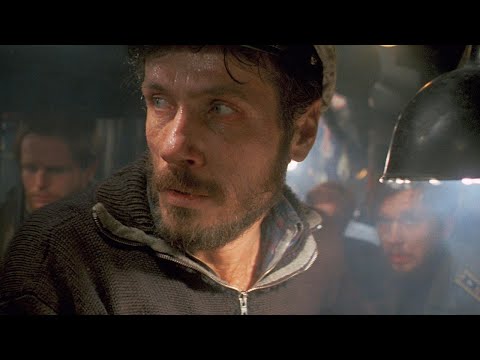
Das Boot (1981) REMASTERED TRAILER [HD]
Trailer
More Like This

Kursk
2018 · ★ 6.6

The Thin Red Line
1998 · ★ 7.4

Walking with the Enemy
2014 · ★ 6.3

Nuremberg
2025 · ★ 7.6

Schindler's List
1993 · ★ 8.6

Lone Survivor
2013 · ★ 7.4

The Caine Mutiny Court-Martial
2023 · ★ 6.7

Outlaws - For Greater Glory
2012 · ★ 7.0
Stalingrad
1993 · ★ 7.3

Twelve O'Clock High
1949 · ★ 7.2

Unbroken
2014 · ★ 7.4

Saving Private Ryan
1998 · ★ 8.2

The Great Raid
2005 · ★ 6.6

Force 10 from Navarone
1978 · ★ 6.3

Beneath Hill 60
2010 · ★ 6.8

Fury
2014 · ★ 7.5

All Quiet on the Western Front
2022 · ★ 7.7

Shout at the Devil
1976 · ★ 6.1

When Trumpets Fade
1998 · ★ 6.6

The Tank
2025 · ★ 7.1
In the News
See All

What People Are Saying
At 210 minutes in length, this Director's Cut of the film is Petersen's best film one of the best war films ever made. The film may run the gamut of submarine thriller conventions that you would expect to see, but Petersen takes a more interesting approach in handling them. The film spends a lot of time showing life aboard the submarine, constantly emphasising the limited set with characters climbing over and around each other and their supplies, allowing the audience to feel the claustrophobia that this environment would have. The film never breaks from the point of view of the sailors aboard the submarine and is focused solely on their characters as they go about their routines, giving the audience time to get to know them and highlighting their nervous anticipation initially and thereafter, the boredom, tension and repetitiveness of their work as they dive and surface, waiting for battle. When the battles do occur, Petersen is keen to emphasis the reality of these moments for the sailors aboard the submarine, focusing on their reactions to the constant bombardment and drawing out these sequences to build tension, but also to demonstrate the relentlessness of the attacks against the submarines. It's a great approach that really makes you feel for these characters and offers a reminder that the horrors of war are visited on both sides. The final act doesn't wholly satisfy emotionally in that it feels a little tacked on, but it does fit with the themes of the film.
Read it on trakt.tvMonths before Pearl Harbor made World War II a true global conflict, we join the crew of a cramped German U-boat, patrolling the murky green waters of the English Channel in search of British blockade-runners. Although the war is still relatively young, the ship’s captain sees his country’s missteps, notes the Brits’ gathering strength and reads the writing on the wall. He still fights valiantly for the motherland, an impressively capable commander with an intimate understanding of his vessel, but he scoffs at the notion of Hitler as a strategic genius and bristles at the official missives that send him on fool’s errands. Under his watch is a small, determined band of some fifty soldiers. A mix of energetic young men, loyal officers, dedicated engineers and one late addition: a state propagandist, sent to snap photos and write stories, who’s ostracized for his cushy status amidst the sweat and squalor of a submarine’s guts. Watching this from a western perspective is interesting, as we certainly don’t want to see the Nazis succeed, but we’ve also stared death in the eye alongside them and sympathized with their quandary on a basic human level. Further lessons in the status of extended warfare as a mutual catastrophe, then, and this time moviegoers are not the only pupils. Case in point: after finishing off a smoldering cargo ship that they believed evacuated, the sub’s crew is appalled when survivors leap from the fiery wreck, screaming for help as their flesh boils. Observing from the deck, the grizzled captain adds one further item to his list of private complaints, then orders the pilot to move them away. No space, nor food, for enemies in this claustrophobic steel coffin. Their burials must occur at sea. There’s little romance to the life of a U-boat operator. We learn this, repeatedly, over the course of _Das Boot_. Much of their patrol is set against the backdrop of an open sea, a dutiful team of spotters tasked with squinting over the horizon in all manner of chop and nasty weather. Bored to tears, the crew yearns for combat, cheers the rare occasions it’s promised, then wring their collective hands as well-armed escorts repeatedly batter the hull with depth charges. They’d have been lost without the resolve of their captain, lost half a dozen times over, but such brushes with death will exact a toll. Still, they remain devoted to the job, even as the sporadic bursts of dread and long stretches of unbroken emptiness leave them stiff and altered. The film conveys this change, and its reasons, with empathy and skill. I felt like I’d gone through hell right alongside these men, learnt the ins and outs of the ship, seen the rigid demands of a daily routine in such a confined space and held my breath at the threat of instant, random, implosive doom. _Das Boot_ is extremely well done, but also a steep order. At 208 minutes, the Director’s Cut lasts almost exactly an hour longer than the original theatrical version and seems about an hour too long. From what I’ve gathered, though, that initial release was almost entirely action-focused and sacrifices many crucial moments of character development, so it’s not exactly right either. I should also mention that lingering, pervasive exhaustion is major part of the film’s narrative, and a long running time certainly reinforces that theme. If you can set aside the better part of a work shift to take it all in, submarine movies really don’t get much better than this. You may not enjoy the experience, but you’ll certainly feel and remember it.
Read it on trakt.tvIf you don't die from a bullet, shellshock will kill you.
Read it on trakt.tvGreat WWII movie that really captures what it would have been like inside a German u-boat.
Read it on trakt.tvContains spoilers — show it
incredible war series, during my watch i constantly thought how hellish it would be in the shoes of one of the soldiers on board of the submarine. very intriguing scenes. [spoiler] i cried during the last few minutes of the series and was genuienly shocked how they chose to handle the ending. everything happened so quickly i couldnt contain my emotions at all. just absolute madness and shocking how fast it was all over. [/spoiler]
I’ve said it before and I’ll say it again: I hate the German language with a passion. That has nothing to do with this movie, though. Das Boot is fine, but too long and slow for my taste. I think I shouldn't have watched the 3+ hours version, that could've been better for me... Still, I got claustrophobia watching this movie, which is the point, so I’ll give it some credits for that.
Read it on trakt.tv_**Life on a German U-boat**_ During WW2, the German submarine U-96 (with Jürgen Prochnow as the captain) leaves the French harbor of La Rochelle for war adventures & misfortunes in the North Atlantic when they’re eventually commissioned to go through the Strait of Gibraltar. The men experience the challenging claustrophobic life of serving on a U-boat with its highs and lows. Who will make it back alive? “Das Boot” (1981) is a well done accounting of what it was like to live on a U-boat in WW2 – the claustrophobic living conditions, boredom, filth, sheer terror and… no women. One great scene is when the submarine surfaces after torpedoing a couple ships in a British convoy; it’s like hell came to Earth. The flick focuses on the Germans in the restricted spaces of the U-boat and it’s amazing that a compelling film can be made from that limited dramatic angle. While this is a war picture, it doesn’t glorify war. It’s “anti-war” simply by showing the way it was for sub-mariners. The film runs 2 hours, 29 minutes, and was shot in North Sea near Heligoland; the Atlantic Ocean; La Rochelle, France; and Bavaria, Germany. GRADE: B
Read it on themoviedb.org"Das Boot" stands out as a masterful epic of war cinema, not just for its thrilling combat sequences but for its in-depth look at the human element of warfare. Wolfgang Petersen's direction brings to life the claustrophobic world of a German U-boat, filled with men who are far more than the enemy caricatures often depicted in war films. Jurgen Prochnow's performance as the Captain is especially noteworthy, bringing a palpable sense of leadership, humanity, and burden. The film's slow pacing allows for an immersive experience, making viewers feel a part of the crew's long, tense moments of silence followed by the chaos of battle. The technical details and the psychological depth explored in the characters break down the traditional barriers of war movies, showing the crew as skilled, complex individuals rather than one-dimensional soldiers. "Das Boot" is a powerful, nuanced, and visually arresting film that captures the futility, dread, and sometimes the mundanity of war. It's a unique perspective that offers a gripping narrative and an emotionally resonant experience, making it a classic in both war and world cinema."
Read it on themoviedb.org