

2010
In the very near future, a small group of Americans and Russians set out on the greatest adventure of them all...to see if there is life beyond the stars.
1984PG1h 56m★ 6.7
The story
A joint USA-Soviet expedition is sent to Jupiter to learn exactly what happened to the "Discovery" and its H.A.L. 9000 computer.
Story from TheTVDB.
Where to Watch
Where-to-watch data by JustWatch · every service.
Cast

Roy Scheider
Dr. Heywood Floyd

John Lithgow
Dr. Walter Curnow

Helen Mirren
Tanya Kirbuk

Bob Balaban
Dr. R. Chandra
Keir Dullea
Dr. David Bowman

Douglas Rain
HAL 9000 (voice)
Madolyn Smith Osborne
Caroline Floyd

Savely Kramarov
Dr. Vladimir Rudenko

Taliesin Jaffe
Christopher Floyd
James McEachin
Victor Milson
Mary Jo Deschanel
Betty Fernandez

Elya Baskin
Maxim Brailovsky

Dana Elcar
Dimitri Moisevitch
Oleg Rudnik
Dr. Vasili Orlov
Natasha Shneider
Irina Yakunina
Vladimir Skomarovsky
Yuri Svetlanov
Victor Steinbach
Nikolaj Ternovsky

Candice Bergen
SAL 9000 (voice)
Gene McGarr
Commercial Announcer
Herta Ware
Jessie Bowman
Jan Tříska
Alexander Kovalev
Larry Carroll
Anchorman on TV
Cheryl Carter
Nurse
Ron Recasner
Hospital Neurosurgeon
Videos

2010: The Year We Make Contact Trailer (Redone in 1080p)
Trailer
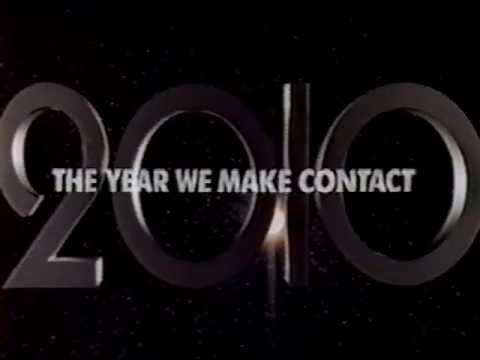
2010: The Year We Make Contact 1984 TV spot #2
Trailer

2010: The Year We Make Contact 1984 TV trailer
Trailer

Truly Stunning Io Images and Groundbreaking Jupiter Science from NASA's Juno Probe | Year 8 Update
Featurette

2010 : The Year We Make Contact
Clip

Max is killed by the monolith - 2010 (1984)
Clip

Somethings Going To Happen
Clip
More Like This

2001: A Space Odyssey
1968 · ★ 8.0

Star Trek Beyond
2016 · ★ 6.8

Star Trek Into Darkness
2013 · ★ 7.3

Star Trek
2009 · ★ 7.4

Star Trek: Insurrection
1998 · ★ 6.5

Star Trek: The Motion Picture
1979 · ★ 6.5

Space/Time
2025 · ★ 5.8

Star Wars: The Rise of Skywalker
2019 · ★ 6.2

Star Trek II: The Wrath of Khan
1982 · ★ 7.5
Stargate SG-1: Children of the Gods
2009 · ★ 7.2

Solo: A Star Wars Story
2018 · ★ 6.6

Dark Star
1974 · ★ 6.0

The Black Hole
1979 · ★ 5.8

Stargate: The Ark of Truth
2008 · ★ 7.0

Star Wars: The Force Awakens
2015 · ★ 7.2

Babylon 5: The Gathering
1993 · ★ 6.5

Valerian and the City of a Thousand Planets
2017 · ★ 6.7

Stargate: Continuum
2008 · ★ 7.1

Zenon: Girl of the 21st Century
1999 · ★ 6.1

Stowaway
2021 · ★ 6.0
What People Are Saying
**2001: A Space Odyssey** is my favorite film of all time. It stands as a testament to finest of film making, with groundbreaking set designs and costumes. And 1968 practical effects still look competent, even by today's CGI standards. Its minimalist approach in story telling is certainly polarizing, but I find **Stanley Kubrick**'s audacity astounding. **2001** is the benchmark of _pure science fiction_ film. **2010: The Year We Made Contact** is not a _pure sci-fi_. It looks and feels like **Ridley Scott**'s **Alien** (minus horror elements). It's more of a _sci-fi thriller_. The look and feel of the movie, not to mention sound, take a radical departure from hyper realistic **2001**. Computers in **2010** haven't evolved at all from 1980s Apple IIe and Commodore 64. There's sound in space. Newton's laws of motion are rarely observed. Heck, even "Also sprach Zarathustra" fanfare is poorly timed and the performance lacks the grandeur. No doubt about it. **2010** looks very dated. This is an 80s movie but the film embraces it by wearing that badge proudly. The only exception is the depiction of outer space. Using newer telemetry images from NASA and other space missions, Jupiter and its moons look spectacular, especially in comparison to **2001** made more than 16 years earlier. So a terrible sequel, right? If you watch **2010** soon after **2001** as I originally did, yes, **2010** may be terrible. But watching it with an open mind, you might find yourself enjoying it a lot more than many **2001** fans give credits for. For one thing, **2010** dismisses all the pretense of its prequel. It aims for three goals: (1) explain the mysteries of its prequel, (2) entertain, and most of all, (3) make a strong case for science and humanity rising above politics. To me, the film succeeds in achieving all 3 goals. One of the most remarkable things about the film is the cast. The film features who's-who of Hollywood. **Roy Scheider** may be a poor doppelgänger of **William Sylvester**. Yet it works. He is the prototypical stand-in for conflicted and righteous everyday man. He is just so personable and easy to sympathize. And we have **John Lithgow**, a master of expression, amazing **Helen Mirren**, who just fills the role perfectly even though it's essentially a bit part, and **Bob Balaban**, always lovable (even though he is playing a part that should've been played by Indian/Pakistan). The only misfire is **Dana Elcar**, whom I personally respect a great deal, but his terrible Russian accent is just too distracting. And there are a couple of standout cameos later in the film. Most sci-fi films with transcendental climax often demand repeated viewings, as to shed its initial shock so that viewers can digest its intents more rationally. **2001** and **Contact** are prime examples and **2010** falls into this category as well. (**Close Encounters of the Third Kind** is perhaps one of few that immediately captivates and succeeds.) My initial impression of its climax was highly negative. But over time, its simplicity and earnestness won me over and **2010** became a worthy companion to understanding and appreciating **2001**.
Read it on trakt.tvNot the masterpiece of 2001, but still one hell of a great story. I wish they would have made the two remaining books into movies.
Read it on trakt.tvOpposed to 2001: A Space Odyssey, this movie does have a compelling story, no endlessly dragged out scenes (more importantly no minute long black screens) and last but not least a cast which actually can act (my god, the dialogues in 2001 are just awful).
Read it on trakt.tvPretty good, but nowhere near the masterpiece of the first one, [spoiler] and it just kind of left you hanging.[/spoiler]
Read it on trakt.tv2001 is an overblown, avant-garde art project. Credit where it's due, it absolutely was groundbreaking in many aspects in its time, and thus it remains a pioneer. But it's hard to argue that not all of those aspects have stood the test of time, indeed it's rather likely to test the modern viewer's patience, if anything. 2010 sheds all that chaff though, and instead offers a genuine movie experience, on that merit alone it can already be considered better when viewed through a modern lens. That doesn't mean it's cut to absolute pieces either, as it still boasts an almost two-hour long runtime, so there's plenty to see and get lost in. There's time to build a solid foundation to start with, something beyond jumping off the "we're going back to discover what happened" block: we start off from Earth, and that connection remains throughout the movie, with links and flashbacks and events back home very much having an effect on the crew out there. On one hand, I think this constant background oppression, without much direct presence, greatly contributes to the atmosphere of the movie, especially with the inclusion of actual Russian chatter. The viewer gets a rather persistent sense of being stifled, being suffocated, as if there's not enough air to breathe... which is very apt, literally and figuratively. Amidst all this, we do get answers: the crew does manage to return, they do figure out what happened (which in itself is also a rather realistic situation, all things considered)... but at the same time they also fall down the proverbial rabbit hole, and soon enough we find ourselves facing the mystery yet again. And it's this inscrutability of it all, on the other hand, that we still don't really learn what's going on or why, who's doing it or how, the fact that scientists themselves are left scratching their heads as they're forced to observe and feel - this is the other thing that makes the movie work very well. The answers we get only lead to yet more questions, but we barely even have time to ask those, only to ponder them afterwards, off-screen as it were, just like those details influencing the fate of the crew happen on Earth. Everything works together incredibly well to create - not necessarily a sense of immediate threat, not necessarily a sense of direct urgency... but definitely a sense of under-the-surface unrest, tension even, something that never really lets the viewer relax. And that's certainly a strong concentrate of the cold war era. Having said all this, 2010 isn't without faults. It really is an 80s movie, which can be highly subjective hit-or-miss. Some things do look dated, perhaps even illogical. The mirroring of real-life events, of real-life relationships, the obvious political messaging - these aren't necessarily the ingredients of science fiction as such, so that's just one more reason not to like any of it. Both the visual and abstract elements are realistic enough to potentially make some viewers uncomfortable, for one reason or another. Especially when watching it after 2001, there's enough of a disconnect to question whether this is a sequel at all: whereas 2001 aimed and being grandiose and meticulous, 2010 wears its "product of its time" badge with honour, like the thick layer of dust on Discovery. Fwiw, it's certainly quite an experience to dive into that particular world, that particular atmosphere, without the usual clichés of bullets flying all around, or spies and their impossible gadgets.
Read it on trakt.tvA much more standard affair compared to its predecessor. Given that's the case, I honestly enjoyed this more than '2001: A Space Odyssey' - if only because it's more closer to what I'd personally want from a film than what that 1968 flick offers, which is moreso an attempted art piece. Of course, the original does things visibly and audibly far, far greater than this 1984 release - just plot-wise, this is better in my opinion. That's not to say that '2010' is something I'd consider great, because I wouldn't. It is, though, solid sci-fi fare, one I had a decent time watching. I'm not a fan of recasts, but Roy Scheider does a good job in place of William Sylvester as Heywood Floyd. Bob Balaban does well, while it's neat to see John Lithgow and Helen Mirren involved. I'm somewhat surprised (but agreeable) that this has, seemingly, been fairly well received. I was expecting it to be poorly thought of by the majority, as is usually the case for sequels of iconic movies that aren't cut from the same cloth; different director etc.
Read it on trakt.tv_**Another trip to Jupiter to find answers**_ After the mysterious failure of the Discovery One mission to Jupiter in 2001, Dr. Heywood Floyd (Roy Scheider) resigned his position as head of the National Council for Astronautics. Several years later, the Soviets send the spacecraft Leonov & crew to Jupiter along with three Americans, including Floyd, to help investigate Discovery and the malfunction of the vessel's sentient computer, HAL 9000. Keir Dullea returns as the missing astronaut David Bowman while Helen Mirren plays the captain of the Leonov. Bob Balaban and John Lithgow also appear as the other two American astronauts. "2010: The Year We Make Contact" (1984) is realistic science-fiction that’s less artsy and more dramatically compelling compared to its predecessor, “2001: A Space Odyssey” (1968). That doesn’t make it better, of course, just different. “2001” raised questions while this one provides answers, which some people inevitably won’t like. The questions include: Why did HAL malfunction? What was the real reason for Discovery's original mission, unknown to Floyd? What happened to Bowman? What is the purpose of the colossal monolith orbiting Jupiter? Both films compliment and counterbalance each other. This one’s more of a straightforward space adventure in the near future. Unlike Star Wars, which is space fantasy, “2010” is space-oriented adult science-fiction. Star Trek is too, but “2010” is far more realistic, which I appreciate. In other words, don’t expect any Klingons or spacecraft dogfights. This is more along the lines of “Mission to Mars” (2000) and “The Martian” (2015). The film runs 1 hours, 56 minutes. GRADE: B
Read it on themoviedb.orgA much more standard affair compared to its predecessor. Given that's the case, I honestly enjoyed this more than <em>'2001: A Space Odyssey'</em> - if only because it's more closer to what I'd personally want from a film than what that 1968 flick offers, which is moreso an attempted art piece. Of course, the original does things visibly and audibly far, far greater than this 1984 release - just plot-wise, this is better in my opinion. That's not to say that <em>'2010'</em> is something I'd consider great, because I wouldn't. It is, though, solid sci-fi fare, one I had a decent time watching. I'm not a fan of recasts, but Roy Scheider does a good job in place of William Sylvester as Heywood Floyd. Bob Balaban does well, while it's neat to see John Lithgow and Helen Mirren involved. I'm somewhat surprised (but agreeable) that this has, seemingly, been fairly well received. I was expecting it to be poorly thought of by the majority, as is usually the case for sequels of iconic movies that aren't cut from the same cloth; different director etc.
Read it on themoviedb.org