

The story
Eight London couples try to deal with their relationships in different ways. Their tryst with love makes them discover how complicated relationships can be.
Story from TheTVDB.
Where to Watch
Where-to-watch data by JustWatch · every service.
Cast

Hugh Grant
The Prime Minister

Alan Rickman
Harry

Emma Thompson
Karen

Liam Neeson
Daniel

Martine McCutcheon
Natalie

Colin Firth
Jamie Bennett

Bill Nighy
Billy Mack

Laura Linney
Sarah

Lúcia Moniz
Aurelia

Andrew Lincoln
Mark

Keira Knightley
Juliet

Chiwetel Ejiofor
Peter

Gregor Fisher
Joe

Martin Freeman
John

Joanna Page
Just Judy

Heike Makatsch
Mia

Thomas Brodie-Sangster
Sam

Kris Marshall
Colin Frissell

Rodrigo Santoro
Karl

Abdul Salis
Tony

Rowan Atkinson
Rufus, Jewellery Salesman
Rory MacGregor
Engineer

Sienna Guillory
Jamie's Girlfriend

Billy Bob Thornton
The US President
Videos

10th Anniversary Trailer
Trailer

Trailer
Trailer

Jamie's Romantic Proposal in Broken Portuguese
Clip

Hugh Grant's Iconic Dance Scene - Extended Preview
Clip

Love Actually is Good, Actually | BFI video essay
Featurette

Untold Love Stories - Deleted Scenes
Featurette

Love Actually Scene with Directors Commentary
Featurette

"All I Want for Christmas is You"
Clip

A Party at No. 10 Downing Street Extended Preview
Clip

Cards on the Doorstep
Clip

No one does excruciating quite like Mr. Bean | 🎬 Love Actually (2003)
Universal Pictures

Chiewetel Ejiofor re-evaluates LOVE, ACTUALLY
Josh Horowitz

Emma Thompson & Rowan Atkinson were in 'Love Actually' together 🎄
The Graham Norton Show

Emma Thompson & Rowan Atkinson Were In 'Love Actually' Together | The Graham Norton Show
The Graham Norton Show

Love Actually Is... On Our Red Couch | All-Time Classics | The Graham Norton Show
The Graham Norton Show

Keira Knightley Makes SURPRISING ‘Love Actually’ Confession
Entertainment Tonight
More Like This

The Holiday
2006 · ★ 7.1

A Christmas Wish
2019 · ★ 6.5

This Time Next Year
2024 · ★ 6.1

12 Dates of Christmas
2011 · ★ 6.1

Your Christmas or Mine?
2022 · ★ 6.4

Which Brings Me to You
2023 · ★ 6.3

A California Christmas: City Lights
2021 · ★ 6.6

Sidewalks of New York
2001 · ★ 6.1

Love in Taipei
2023 · ★ 6.8

The Wrong Paris
2025 · ★ 6.7

Notting Hill
1999 · ★ 7.3

Your Christmas or Mine 2
2023 · ★ 6.3

Love at First Sight
2023 · ★ 7.2

Hello, Goodbye, and Everything in Between
2022 · ★ 6.1

Christmas Around the Corner
2018 · ★ 6.4

The Lords of Flatbush
1974 · ★ 5.8

Chéri
2009 · ★ 6.1

The Prince and the Showgirl
1957 · ★ 6.4

Easy Virtue
2008 · ★ 6.5

A Place in the Sun
1951 · ★ 7.3
In the News
See All-
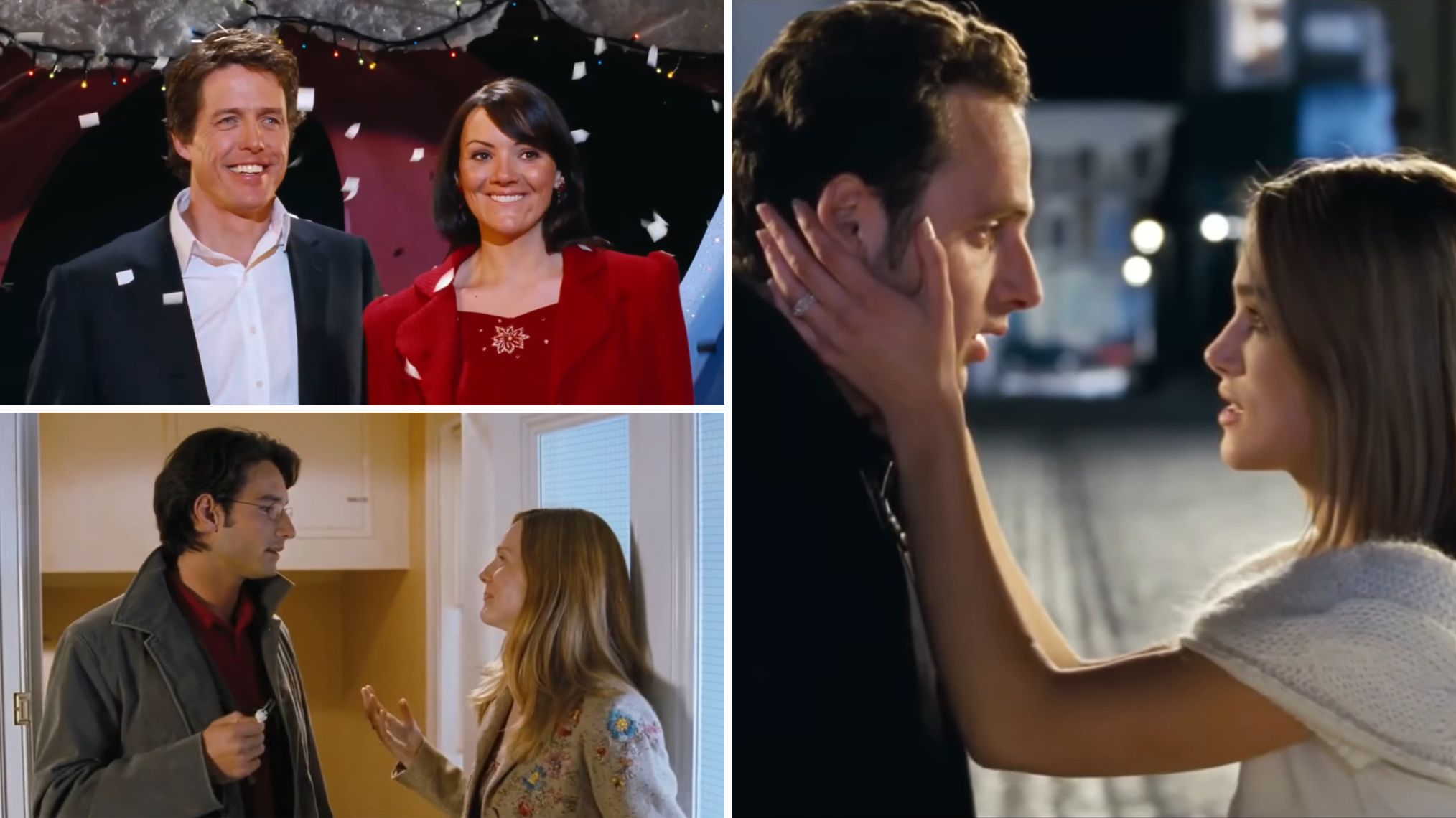 ‘Love Actually’ Romances: Ranking 8 Pairings From Worst to BestTV Insider · 5d ago
-
 23 Years Later, Love Actually's Most Romantic Line Is Still The Greatest Christmas Quote EverSlash Film · 5d ago
-
 Keira Knightley Says ‘It Means Nothing’ When Fans Quote ‘Love Actually’ to Her Because She Hasn’t Watched It Since the Premiere: ‘I Don’t Remember It’Variety · Nov 10
-
 Keira Knightley On Fans Quoting ‘Love Actually’ To Her: “It Means Nothing To Me”Deadline · Nov 10
-
 Keira Knightley Makes Surprising ‘Love Actually’ Comments, 23 Years After Its ReleaseJust Jared · Nov 9
-
 3 Best Movies on Netflix This Week (Nov 9-13)Collider · Nov 9
-
 Bill Nighy, Hayley Atwell and Maisie Williams Lead Voice Cast of Animated Feature ‘The Last Dino’ (EXCLUSIVE)Variety · Nov 4
What People Are Saying
It's cheesy, it's stupidly cliché, but I can't help but enjoy it whenever I see it
Read it on trakt.tvPerhaps the ultimate Christmas film and the pinnacle of British humour.
Read it on trakt.tvContains spoilers — show it
[4.8/10] What if you managed to wrangle a host of England’s finest actors, and threw them into a movie devoted almost entirely to the meaning of Christmastime and love, with a horrible, arguably repugnant understanding of both? As *Love Actually* itself predicts through the story of its aging rocker cashing in on a turgid cash-in X-mas album, that turd would become a venerable number one hit. *Love Actually* is an embarrassment, a bit of holiday hokum suitable only to lull you to sleep after large doses of eggnog and honey ham. That is, perhaps, a little too harsh a pronouncement. When the film tries to be something other than adult romance -- whether it’s parental encouragement, sibling comfort, or simply friendship -- it is cute at worst and heartwarming at best. But when it tries to spin tales of actual romantic love between grown-ups, it lays the film’s horrid ethics, thin romcom tropes, and sexist leanings bare. So let’s alternate between the two and attempt to uncover the best and worst of this misguided but seemingly unkillable film in the process. The most prominent offender is the Hugh Grant plot. (Fair warning, I’m going to refer to these vignettes by performer rather than by character name, since that’s about as much thought as the film put into the characters.) The story, which stars Grant as England’s Prime Minister and Martine McCutchen as the assistant he falls in love with, can basically be summed up as “What if we did the Monica Lewinsky scandal, except played it as romantic?” and is pretty much that wrong-headed throughout. The film at least commendably tries to distance itself from that sort of thing, making Hugh Grant single and caking the whole thing in meetcute energy. But it’s emblematic of all the things that make this movie’s romantic leanings so repugnant. For one thing, it’s focused on a power imbalance between the romantic leads, that is only obviated when the Prime Minister fires (or “redistributes”) the girl he’s crushing on after he’s caught her making out with the American president, in a bit so ridiculous and contrived, all the film can do with it is make it the motivation for Hugh Grant to find his backbone as a leader, as dumb a dramatization of implicit sexual harassment as you’re likely to find. But it’s fine, you see, because Hugh Grant loves his assistant despite the fact that she isn’t rail thin, and we’re supposed to admire him for this “I love my curvy wife” affection. It’s part and parcel with the raft of idiotic fat-shaming in the movie, from the multiple unnecessary comments about McCutchen’s size, to the Portuguese father in Colin Firth’s story bitching about his overweight daughter, to Bill Nighy’s continued references to his “fat manager.” At least Bill Nighy’s behavior as washed up rockstar Billy Mack is framed as bad behavior, and maybe that’s why Nighy’s plot goes down smoother than some others. There’s a teenage boy perspective to this whole movie, and that finds more purchase under the mantle of an aging rockstar than it does to any sort of romantic feelings between adults. Watching Nighy misbehave in the guise of promoting his new turd of a Christmas cash-in to hit #1 on the charts is one of the more entertaining threads throughout the film. And Bill realizing that his best friend, and the person he loves most in the world, is the manager he’s been jostling with in the lead-up to the holidays, manages to wring the slightest modicum of heart out of the plot, even if, like most other bits in the film, the ending manages to squeeze in treating women like disposable objects. Speaking of which, the absolute dumbest bit in the film is Colin, the libidinous pick-up artist who’s convinced that American girls would fall all over him, and travels to Wisconsin over the holidays to prove himself right. The whole story has the maturity and romantic POV of an *American Pie* movie, and the contrived, cartoonish way that women in the USA stumble over themselves to bring him into a foursome and are ready to jump into bed with anything speaking the Queen’s English is foolish at best and gross at worst. And yet somehow, the most wholesome storyline in the episode is the one where the soon-to-be couple spends most of the film naked. The story of Martin Freeman and Joanna Page, who play sex scene stand-ins with no qualms about chatting in the buff on screen but feel shy and retreating in normal situations, manages to take a ribald premise and actually make it cute. It’s telling that the most normal-seeming, even-keel romance *Love Actually* can muster is built on the fact that two people who have every opportunity to be attracted to one another on a physical level instead connect on a personal level. That’s a mirror image of Colin Firth’s storyline, where after finding his wife cheating on him with his brother, his character (a writer) retreats to a french vacation house to recover. There, he meets a hired housekeeper named played by Lúcia Moniz, who only speaks portuguese and whom he’s generally indifferent to. Then, all of a sudden, he sees her strip down to her underwear (with the film careful to pan across her body in slow motion) and magically he is in love. The film tries to paper over this, conveying that there’s a nigh-spiritual connection between them as they express the same feelings even though they can’t understand one another. And there’s an O. Henry-esque finish with the duo each learning the other’s language in order for a spur-of-the-moment proposal to work. But in the end, it’s another power imbalance with Firth deciding that his housekeeper, who doesn't speak his language, is hot, and the film shifting into rapidly implausible romcom mode to try to not only justify it, but make it sweet, to few returns. The best the film can manage, and really what it coasts on the whole way through, is due to the talent of actors like Firth, who make these absurd and frankly repugnant situations have the faintest patina of humanity to them. That’s the saving grace of the story where Alan Rickman and Emma Thompson play a married couple, where Thompson discovers Rickman’s wandering eye. It’s one of the more down-to-earth, non-saccharine stories in the film, which bolsters it, and Thompson in particular wrings the comedy, pathos, and relief her character experience at various point. But even here, the plot is bogged down by the third member of the love triangle being another power-imbalance secretary whose only purpose or character in the film is to be Rickman’s seductress, replete with even more gratuitous lack of clothing. There’s an extended, not especially funny interlude from Rowan Atkinson that feels dissonant, and the climax of the plot, what should be its high point of a confrontation, bottoms out with an overblown, overly dramatic exchange between Rickman and Thompson rather than something that feels more grounded and real. That’s something only managed by Laura Linney, whose character in enamored with a handsome co-worker, but whose romantic life is all but scuttled by her mentally ill brother, whose unfortunately-timed phone calls require her to pause her life to look after him. It’s another story here that succeeds by not being focused on romance, and instead on a filial love, that’s bolstered by the twinge of tragedy and realness to it that isn’t realized nearly as well in Thompson/Rickman infidelity plot. The film still goes big at times with the timing of the brother’s phone calls or his behavior in the hospital, but it’s founded on the hardship for Linney of sacrificing her love life for the good of a sick family member, but also the corresponding joy and warmth she’s able to wring from looking after someone she cares about. That’s the opposite tone the film strikes when trying to depict impossible love in the Keira Knightley/Andrew Lincoln story, which is arguably the most iconic in the film. Enough has been written about this storyline already, but suffice it to say, nothing speaks to this film’s befuddling values more than the fact that it wants the audience to find nothing sweeter than a guy creeping on his best friend’s girlfriend/fiancee/wife from afar, and then confessing his feelings after they’re married and she’s found his secret tape of her. If you want to understand this movie’s confused view of love, you could watch this segment alone and comprehend, if not necessarily understand, how backwards *Love Actually* is when it comes to its titular subject matter. And as a bonus for fans of *The Walking Dead* (another work with some quality performances but not always admirable values and oft-atrocious writing), we discover that it’s not Andrew Lincoln’s cheek-chewing Georgia accent that’s holding him back, but rather his inability to seem like a real human being, whether he’s playing a trauma-swallowing southern sheriff or a creeptastic English romcom lead. But again, *Love Actually* finds its footing when it instead focuses on the puppy love of middle schoolers, the sort of romance that is chaste and rudimentary enough to dovetail with the film’s naive-at-best view of human interactions. The notion of Liam Neeson’s character, newly widowed, connecting with his stepson by coaching him through a crush is one of the few genuinely sweet and heartwarming bits that the movie offers. It’s buoyed by the fact that the storyline centers more around Neeson’s growing relationship with his stepson, and leaves the tween romance material for school pageant pop songs and silly airport chases. Nothing in this plot is mindblowing, but there’s a bit of knowing fun and true feeling in it that’s all but missing from the rest of the movie. Despite all its faults, *Love Actually* remains eminently watchable, which perhaps, more than its series of saccharine scenes, explains its longevity. Whether you want to attribute that to the killer cast director Richard Curtis assembled, or the light tone the film maintains, or the fact that jumping between plots keep the movie light on its feet, it’s an easy film to leave on, whether you’re genuinely touched by its stories or more apt to make fun of them. The linkages between plots are occasionally contrived, but generally clever, and even at its most eye-roll-inducing, the film is too insubstantial to really hate. But the more you think about *Love Actually*, the clearer it becomes how ill-conceived the whole enterprise is. Between the cavalcade of men in positions of power lusting after their underlings, the body-shaming-in-the-guise-of-affirming and male gaze-y camera work, and the fundamental misunderstanding of what motivates genuine caring, affection, and yes, love are, it soon becomes apparent that this film is a pile of rusty nails covered by a thick layer of frosting and doused in ipecac. It seems sweet enough at first, but it’s more baffling and painful the deeper you go, and god help you if you start regurgitating it.
"Love Actually" is probably the best example for wearing nostalgia goggles when it comes to enjoying a piece of media if there ever was one. You know, I enjoy movies and TV Shows that can be deemed a "product of its time" to a certain degree. Like, take "Friends" for an example. There’s so much humor in the show and so many views we, as a society and individual people, have grown out of and it certainly displays some forms of humor that shouldn’t have been accepted even in the 90s, but we learn and grow and change (some of us do). I can still enjoy it and love it for what it is, because it brings me back to simpler times and gives me a specific peace of mind I‘m often lacking these days. And that’s what nostalgia does. It brings us back to places, mostly to give comfort. "Love Actually" is a film I‘ve been watching around Christmas probably since it first came out and I still do it every year. It was a tradition first, now it feel like more of an obligation. While "Friends" has aspects that haven’t aged well, "Love Actually" as a whole is just the opposite of fine wine and one of the few examples where the nostalgia goggles wear off with each passing year. I don’t hate it or anything, I still remember why I initially loved it, and I still enjoy certain aspects, but overall it just is one big red flag of everything that should not be considered romantic. The movie is an extravaganza of body shaming, sexism, cheating, homophobia and many more aspects that just make me say "yikes.“ Just to cover a few examples: - Nathalie is not only body-shamed for no fucking reason, but also sexually assaulted and punished for it. - Mark is a stalker - Everything about the Colin Frissell storyline and the portrayal of women - Whatever the fuck is going on between Billy Mack and his manager - Sarah never getting a resolve for always putting her brother first and staying miserable - The whole cheating storyline and how it’s handled There’s just so much. And the question is... why? None of this is actually romantic. A lot of these characters are quite miserable if we think about it. And even the storylines I personally think are less in the issue zone are not free of it. I always enjoyed Jamie and Aurelia, but even here we have the body shaming of the sister, the questionable aspect of British superiority complex to her Portuguese heritage and the issue that Jamie falls for his housekeeper without knowing her and "saving" her from her poor life. Sam‘s puppy love is also quite adorable and at least it’s kids falling in love so the fucking airport chase is at least not as bad. (Though I also don’t get how grief is addressed in this storyline). That leaves substitute porn actors John and Judy, who are ironically probably the least offensive storyline of the whole movie. Like I said, I know why I initially enjoyed this film. I understand why people still do. I get why it’s considered a Christmas classic. It’s just, my nostalgia goggles are highly dysfunctional when it comes to his movie.
Read it on trakt.tvMy all-time favorite Christmas movie! I love it so much!
Read it on trakt.tvThis is the worst movie I have ever seen.
Read it on trakt.tvGod only knows what I'd be without you. London, England, and it's the run up to Christmas, and we are in the company of a number of couples dealing with the joys and problems that love can bring. We open with a narration from Hugh Grant who tells us that when he is troubled by the hate in the world, he thinks of the arrivals area of Heathrow airport. A place where loved ones greet returning loved ones, a place that indeed showcases a strand of love in its joyous form. He further ventures that when the aeroplanes hit the twin towers on 9/11, as far as he knows, all those phone calls from those sadly involved were messages of love, not hate. Pertinent musings that although somewhat sombre for an opening, sets it up nicely for what Richard Curtis (writer and director) wants to say. A roll call of fine British and Irish actors, and American Laura Linney, lend their considerable talents to Curtis' ensemble piece. The structure is surprisingly simple considering the number of stories being woven together, the result being that there is sure to be a story in there to either love, or, yes, even hate. Is it sentimental? Of course. Is it as stuffed as a turkey on Xmas day? Naturally. Does it stretch credibility in some strands? For sure. But only the coldest of hearts could truly decry that Love Actually is all around. Very often it's funny too. Curtis, following on from writing credits such as Four Weddings And A Funeral, continues to show himself to be a very fine writer of comedy. None more so than with Bill Nighy's past his sell by date pop star, Billy Mack. There's something for everyone in here, indeed there's likely to be something that many can associate with. It's a lovely affecting film that should hopefully perk up those that get blue around the holiday season. With perceptive writing, some excellent acting (Nighy, Emma Thomson, Colin Firth et al) and a soundtrack of some worth, Love Actually is a winner. 8/10
Read it on themoviedb.orgLove Actually coulda been somebody; it coulda been a contender. There were scenes and characters I loved, but the movie was all but ruined by the irritatingly bad bits. They could have dropped two entire subplots and raised the quality considerably: I am thinking pf the needlessly crass over the hill singer with the Christmas song competition, and the male fantasy thread about the idiot going to Wisconsin and encountering three shapely nymphomaniacs. The time saved cutting those scenes could have been allocated to Laura Linney’s special needs brother and her infatuation, a plot that just petered out near the end, and to the Emma Thompson character’s marriage, which showed promise but similarly fizzled out with a half-hearted scene at the end. Or they could have given more screen time to Natalie, the prime minister’s love interest, who stole a few scenes and deserved many more. So it was fun in places and touching at other times, and I can just about see myself watching this star-studded near-miss again, as long as I can keep a finger on the fast forward button.
Read it on themoviedb.org