


The story
In 1929, two African-American women, each of whom is able to “pass” as white, make different decisions on how they choose to live their lives in Harlem.
Story from TheTVDB.
Where to Watch
Where-to-watch data by JustWatch · every service.
Cast

Tessa Thompson
Irene Redfield

Ruth Negga
Clare Kendry

André Holland
Brian Redfield

Alexander Skarsgård
John Bellew

Bill Camp
Hugh Wentworth

Gbenga Akinnagbe
Dave
Antoinette Crowe-Legacy
Felise
Justus Davis Graham
Ted
Ethan Barrett
Junior
Ashley Ware Jenkins
Zulena
Amos J. Machanic
Ralph Hazelton
Stu S. Becker
Cabbie
Tom White
Attendant
Margaret Daly
Woman #1

Kerry Flanagan
Woman #2

Buzz Roddy
Officer

Derek Roberts
Guest
Amber Barbee Pickens
Dancer
Samuel Coleman
Dancer
Tatiana Marie Barber
Dancer
Carmen Carriker
Dancer
Leroy Church
Dancer
Brian Davis
Dancer
Zuri Foreman
Dancer
Videos
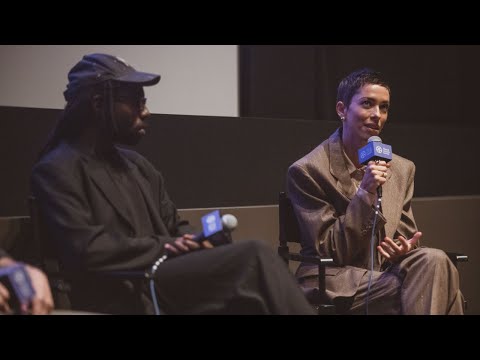
Passing Q&A with Rebecca Hall, Devonté Hynes, and Jacob Ribicoff
Featurette

Rebecca Hall on Passing | FLC Luminaries
Featurette
More Like This

Wonderstruck
2017 · ★ 6.1

Ragtime
1981 · ★ 7.0

Killer's Kiss
1955 · ★ 6.3

The Namesake
2007 · ★ 6.8

Julia
1977 · ★ 6.5

Gigi & Nate
2022 · ★ 7.6

Cabrini
2024 · ★ 7.7

Priscilla
2023 · ★ 6.7

The Best of Enemies
2019 · ★ 7.4

The Wrong Man
1956 · ★ 7.1

Hammett
1982 · ★ 6.2

Blue Jasmine
2013 · ★ 7.0

Eleanor the Great
2025 · ★ 6.8

Skin
2009 · ★ 6.4

The Help
2011 · ★ 8.2

Origin
2023 · ★ 6.2

Fast Girls
2012 · ★ 6.0

A Complete Unknown
2024 · ★ 7.1

21
2008 · ★ 6.7

The Giver
2014 · ★ 6.6
In the News
See All-
How Parvati Shallow Is Passing the Torch to the Next Generation of Proud Female VillainsTheWrap · 20h ago
-
Ebenezer Was Johnny Depp’s Big Screen ‘Test’ (And Studios Barely Gave Him A Passing Grade)Yahoo · 1d ago
-
 ‘Grey’s Anatomy’ Actor Isaiah Washington Reveals New Girlfriend After Announcing Wife’s PassingJust Jared · 1d ago
-
 Sports Announcer Dan Hicks’ Cause of Death Released After His Sudden Passing at 64Just Jared · 2d ago
-
 New Details Emerge About Ray Tintori’s Passing, Boyfriend of ‘SNL’ Alum Heidi GardnerJust Jared · 2d ago
-
 John Travolta Reveals If He’s Open to Dating Again 6 Years After Wife Kelly Preston’s PassingJust Jared · 3d ago
-
 ‘Special Forces’ Winner Collin Gosselin Reveals How He Almost Blew His Cover in InterrogationTV Insider · 6d ago
-
 ‘Special Forces’ Winner Alexia Umansky Reveals Why Passing Was ‘Bittersweet’ at FirstTV Insider · Nov 13
What People Are Saying
It's rare seeing an arthouse Netflix original. This is a beautiful film and yes, the ending will be divisive. I still don't know how to feel about it.
Read it on trakt.tv"We're, all of us, passing for one thing or other." - Irene I felt so conflicted about this film that it took some time to even be able to write a review. The film is good, simultaneously intriguing and frustrating. It is subtle and hopeful, and harsh and crushing in necessary places. As a queer, black person, I felt the weight of racial tension whilst watching, as well as the pressure to "pass" for something western society has deemed acceptable. It's a reminder to some of us that we have to maintain decorum, remain vigilant and make sure there are no cracks... nor that the fragile pot we hold dear doesn't get too close to edge and break the status quo... even if we lie to others (and ourselves) that we didn't actually want the pot anyway... but... rambling... right, yes... the movie is worth the watch. Bittersweet... but worth the watch. Survival of the fittest or something...
Read it on trakt.tvfor being a directorial debut (on the part of an incredibly talented woman to be fair) this was really solid. i think a lot of people might be unhappy with the unanswered aspects of it, or the lack of clarity or even the decision to film it in black and white and its aspect ratio. however, all of these work together to emphasize the nebulous gray area that being white-passing puts you in. it makes sense given hall's own experiences with racial identity. (if you're like me and didn't know much about her beyond being a great but very british actor: her mother is originally from michigan and her grandfather was a man of color passing as white during his own time, presumed to be african-american and of native american descent.) i think this was written well, directed well, and acted well. the source material is also worth a read. however, i'm white-passing myself (south asian, not bipoc) and i do think that my own experiences are part of why i found the lack of clarity and how much of this movie is open to interpretation to be part of what worked for it.
Read it on trakt.tvTessa Thompson and Ruth Negga shine in a film that masterfully illustrates the allure, the burden, and the damage to all of passing. Passing is in the end in the eye of the beholder, what the white eye needs to tell itself to soothe its feelings or desires, and yet we still tear ourselves and each other apart trying to achieve or be in proximity to it.
Read it on trakt.tvA great film, but that ending made me feel like the writer didn’t really know how to end the story.
Read it on trakt.tvto the Academy: Where’s Ruth Negga’s Oscars?
Read it on trakt.tvIf you enjoy reading my Spoiler-Free reviews, please follow my blog @ https://www.msbreviews.com Black-and-white films are something I'll always cherish, but when these two colors become part of the narrative itself, then I can only expect a great movie. Passing approaches the fear of being colored due to obvious reasons of the film's period, and it does so in a necessarily disturbing, emotionally investing manner. Tessa Thompson (Irene) plays in the colored side while Ruth Negga (Clare) enjoys the privileges of passing as white. A captivating story unravels with Irene and Clare feeling envious of each other. If the former desires the latter's (external) happiness, Clare feels terrible for not possessing the same principles and morals as Irene. While I feel much more empathy for Irene's pride in being colored, I also don't blame Clare for getting a better life without all the discrimination. Both have their own personal problems, but as their friendship grows larger and more significant, these issues also expand and become seriously hurtful, especially to Tessa's character. The narrative loses a bit of steam when it starts focusing on romantic jealously instead of the interracial matter. The passage of time occasionally feels too abrupt and slightly confusing. Finally, the ending doesn't do justice to the movie's central theme and title, almost completely forgetting what it was supposed to communicate to the audience. Nevertheless, it's still a marvelous film with a meaningful storytelling purpose. As expected, Tessa and Ruth deliver brilliant performances, boasting a charming, dynamic, even passionate chemistry, but André Holland, Alexander Skarsgård, and the always remarkable Bill Camp also prove their worth. The B&W transmits a beautiful message concerning the lack of importance of someone's color (in B&W, everyone looks the same), and the significant value of morals and principles that truly define a person. As her feature directorial debut, Rebecca Hall undoubtedly shows talent, but she'll need to learn that "less is more". Gorgeous, elegant cinematography from Edu Grau. Passing is a solid feature directorial debut for Rebecca Hall, but she must learn to focus on just one central theme. Otherwise, such a beautifully shot movie boasting outstanding performances will lose its precious message in the middle of so many irrelevant, superficial romantic endeavors. Tessa Thompson and Ruth Negga carry the plot forward with charm and elegance, as does everyone else in the cast, but these two share such remarkable chemistry that I feel that the slow pacing was actually quite adequate. While the main plot revolves around the "passing as white" debate, I couldn't feel more engaged by the narrative and its opposite-sided main characters. However, this fascinating matter gradually loses energy, ultimately fading completely to an underwhelming jealously story between women, culminating in a climax that feels slightly out-of-place and exaggerated. Still, it's more entertaining than I anticipated it to be, and it still leaves the viewers with a very interesting "what if it was me" scenario to think about.
Read it on themoviedb.org“Passing,” based on the 1929 novel by Nella Larsen, is and elegant and sophisticated film. It’s drop-dead gorgeous to look at, and the lead performances from Tessa Thompson and Ruth Negga are absolutely fabulous. Rebecca Hall‘s restrained direction adds to the beauty of the film, as does Eduard Grau‘s handsome black and white cinematography. There’s so much about this project to praise, but you may hear some refer to the movie as “nuanced” — which is nothing more than a polite way to say “boring.” Refined, upper-class black woman Irene (Thompson) enters a fancy tearoom in a swanky New York City hotel. Across the table, she spots a blonde woman (Negga) staring her down. It turns out the two knew each other when they were younger, but fate has brought them together. Both women are black but light skinned, and Clare has used her complexion to her advantage by passing as white. They each struggle to find a place they belong in a society that’s not too kind to those who are of a different color. It’s a story that’s filled with complex ideas, but the end result is mostly a snore. There isn’t much story to speak of, and the timely issues of gender, identity, and class, and the weighty topic of race as performance art, are squandered in a bland wrapper. The film is quite tame with its social commentary, which is so disappointing because this is the perfect vehicle in which to really make a bold statement. Hall’s direction is nicely done, and she draws excellent performances from Negga and Thompson. But this movie is stretched to two hours when the sparse story could have been told in half that time. There are multiple scenes of deep gazes and lengthy pauses that slow down the movie, including what feels like a nearly three minute scene where someone is removing her coat. I had high hopes for “Passing,” but I feel like this book-to-screen adaptation was a wasted opportunity to deliver a more important, profound message.
Read it on themoviedb.org