


The story
A wheelchair-bound photographer spies on his neighbors from his apartment window and becomes convinced one of them has committed murder.
Story from TheTVDB.
Where to Watch
Where-to-watch data by JustWatch · every service.
Cast

James Stewart
L.B. Jefferies

Grace Kelly
Lisa Fremont

Wendell Corey
Thomas Doyle

Thelma Ritter
Stella

Raymond Burr
Lars Thorwald

Judith Evelyn
Miss Lonelyhearts

Ross Bagdasarian
Songwriter
Georgine Darcy
Miss Torso

Sara Berner
Woman on Fire Escape

Frank Cady
Man on Fire Escape
Jesslyn Fax
Miss Hearing Aid
Rand Harper
Newlywed

Irene Winston
Emma Thorwald
Havis Davenport
Newlywed
Jerry Antes
Dancer with Miss Torso (uncredited)
Benny Bartlett
Man with Miss Torso (uncredited)
Sue Casey
Sunbather (uncredited)
Iphigenie Castiglioni
Woman with Bird (uncredited)
James Cornell
(uncredited)
Don Dunning
Detective (uncredited)
Marla English
Girl at Songwriter's Party (uncredited)

Bess Flowers
Songwriter's Party Guest with Poodle (uncredited)

Art Gilmore
Radio Announcer (voice) (uncredited)
Fred Graham
Detective (uncredited)
Videos
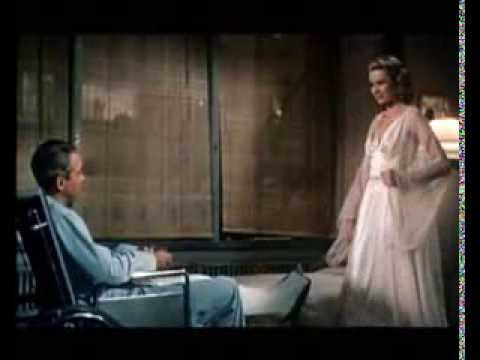
Rear Window Original Theatrical Trailer
Trailer

Rear Window - Trailer
Trailer

Fathom's Big Screen Classics: 70th Anniversary Spot
Teaser

TCM Presents Spot
Teaser

The Unsettling Scream in the Night
Clip

James Stewart Takes A Peek | 'Rear Window' (1954) | Hitchcock Presents
Clip

Lisa Sneaks Into the Apartment
Clip

The Opening Scene - 'Rear Window' | Hitchcock Presents
Clip

Jeff Gets A Closer Look - 'Rear Window' | Hitchcock Presents
Clip

The Difference Between You And Me - 'Rear Window' | Hitchcock Presents
Clip

Detective Doyle Finds Zero Leads - "Rear Window" | Hitchcock Presents
Clip

A Block Full Of Lonely Hearts - "Rear Window" | Hitchcock Presents
Clip
More Like This

Intrusion
2021 · ★ 5.9

Aurora Teagarden Mysteries: A Very Foul Play
2019 · ★ 7.5

Witness for the Prosecution
1957 · ★ 8.2

Ten Little Indians
1965 · ★ 6.3

Out of Time
2003 · ★ 6.4

The Bedroom Window
1987 · ★ 6.3

Conspiracy Theory
1997 · ★ 6.6

Killer's Kiss
1955 · ★ 6.3

The Caveman's Valentine
2001 · ★ 5.9

The Gift
2015 · ★ 6.7

The Stranger
2022 · ★ 6.2

Shadow of a Doubt
1943 · ★ 7.5

Footsteps in the Fog
1955 · ★ 7.0

Insomnia
2002 · ★ 7.0

Agatha and the Truth of Murder
2018 · ★ 6.4

A Double Life
1947 · ★ 6.4

Under Suspicion
2000 · ★ 6.1

The Conversation
1974 · ★ 7.5

Garage Sale Mystery: A Case Of Murder
2017 · ★ 7.1

Premonition
2007 · ★ 6.3
In the News
See All
What People Are Saying
Hitchcock at his best. Great concept and execution, sadly they don't make movies like this anymore.
Read it on trakt.tvthe most shocking thing in this movie is that Jimmy Stewart is so ambivalent about marrying Grace Kelly.
Read it on trakt.tvContains spoilers — show it
3 Thoughts After Watching ‘Rear Window’: 1. If _The ‘Burbs_ and _Melrose Place_ had a baby. 2. I was surprised by the lack of a Hitchcockian twist. 3. All in all, it was an enjoyable film. It was interesting to see all the various characters in their own little worlds. The beginning was fairly dialogue-heavy, and I found the end to be somewhat anticlimactic, but Jimmy and Grace were fantastic.
Hitchcock binds James Stewart to a wheelchair, deposits him at the picture window of a big city apartment and lets an idle imagination find its own drama. In this case, it's a murder most foul behind the drawn curtains of a neighboring unit. Costar Grace Kelly is refined and magnetic as the fashion conscious would-be fiancée; a model of smooth-talking elegance who, after initial doubts, is soon drawn into the intrigue of what's actually happened in that dark room across the way. After an argumentative start, Stewart and Kelly quickly settle in as a close-knit pair of obsessed observers, stoking each other's suspicions and inducing a steady shared vigil. The issue of their troubled romance is problematic, introduced in the first act and never truly resolved, but that doesn't bother me. I much prefer them as whispering cohorts with a gossipy secret, and the film already has more than enough subplots going on. It's a steaming pressure cooker of a suspense story, one which encourages viewers to second-guess their impressions and then punishes them for doing so. Like a large-scale stage production, the entire tale is told against a single backdrop: an unusually busy, uninhibited residential block. Sir Alfred's aptitude for frugal filmmaking is on full display here, utilizing every inch of screen to fill blanks and enrich the environment. It hustles, it bustles, it stirs in the morning and settles down after dark. We get to know each resident, to learn their habits and patterns, just like Stewart does from his lonely perch. Perhaps a little slow and meandering to start, once the pieces come together and our well-meaning voyeurs take matters into their own hands, it accelerates like a spooked getaway driver.
Read it on trakt.tvContains spoilers — show it
[9.0/10] I often think about the transportive quality of cinema. With a trick of color and light, it can take you to the shores of distant lands or push you through dreams and nightmares. There’s a breadth to the form, a way in which it makes the immense accessible, in a way that's practically unrivaled. The greatest achievement of *Rear Window* is how Alfred Hitchock and company buck against that idea, and instead present us with an entire bustling world, captured within the confines of one self-contained little Greenwich Village tenement building. The movie almost feels like a dare. Could you produce a compelling murder mystery where all the action is afar and your main characters barely leave a single room? It would be daunting. And yet, somehow, Hitchcock and company not only craft a thrilling potboiler within those limitations, but make it feel that much more tense given the distance, and that much more vivid a story for being built as a cinematic ship in a bottle. Part of that comes from the vividness of the character. Jimmy Stewart’s hobbled photographer is, frankly, more of a prick than you typically see from an actor whose legacy is defined by his ability to embody the wholesome everyman. You immediately get the restlessness, the prickliness, the sense of someone used to going where the action is, forced to subsist in his simple apartment for eight weeks, and it bringing out the worst in him. Thankfully, he has a tremendous collection of foils. Thelma Ritter nearly steals the show as Jeffries’ nurse, Stella. In a film where Jeffries’ sad sack routine vacillates between sympathetic pathos and self-entitled pity parties, Stella talks back to him as both the voice of reason and the chiding nudge he needs. Grace Kelly likewise holds the frame as Lisa, who’s both a caring partner to Jeffries and a defiant, self-possessed counterpart to his perspective on life and, well, her. Equal parts radiant in cinematic splendor (and legendary costumer Edith Head’s designs) and subtly steely in her disposition and responses to Jeffires, Kelly is an essential part of the film’s milieu. Each of them has shading, little quirks and suggestions of their life beyond this room, and bursts with personality in the film’s back-and-forth. Wendell Corey isn’t quite as electric as Jeffries’ old war buddy turned NYPD detective, Doyle. But even there, the droll witticisms between them buoy the movie. Even if you didn’t give a damn about the murder mystery, the repartee amongst the characters in the film is worth the price of admission on its own, and helps add a sense of authenticity to a movie that walks the line between the natural and the fantastical. In the same way, even if you weren’t bothered by whether the man who lives across the way from Jeffries murdered his wife, you might want to stick around simply for the marvelous little ecosystem Hitchock and the production team conjure up at 125 West 9th street. One of the best elements of the picture is the sense that Jeffries’ is not the only story taking place here. There are scores of little narratives -- a lonely woman looking for companionship, a young artist struggling to create, a pair of newlyweds settling into their new lives -- that we only get glimpses of. That too adds to the realism of the piece. Many Hitchcock films have a sense of being fit-for-purpose. That's a good thing. He and his collaborators build worlds that feel real but exist solely for the story at hand, with almost every noteworthy element feeding back into the establishing the tone or the context or the narrative momentum needed. But in *Rear Window*, there is an abiding sense of how little pieces of other stories, other lives, other trials no less significant or meaningful, bleed through in ways we only witness at the margins. That is a feature, not a bug, and it adds to the film’s themes. So does the remarkable sense of place that Hitchcock and cinematographer Robert Burks create. The courtyard of the tenement building is an isolated but bustling place. Everyone is separated into their own little corners, but their worlds intersect. Burks and his team put together some brilliant long takes that drift across the window frames, capturing miniature vignettes, before retreating back into Jeffries’ apartment. Editor George Tomasini has the discipline to use a number of longer takes, letting the action unfold organically and breaking down the artifice of the form. The result is a small but bustling ecosystem that comes through as almost effortlessly authentic. The choices draw the connections, big and small, between the people going about their lives through those frames. The ambient noise from children playing in the street, or diegetic music, add to the tone and tension of the picture. Some interactions are timed a little too perfectly, but even that sense of this tiny community as an unwitting ballet, each dancer performing their steps, albeit occasionally bumping into one another, adds to the vividness of this world. And it makes the perfect canvas for L.B. Jeffries to project his restlessness and imagination onto. One of the great tricks of the script, penned by John Michael Hayes, is that evokes an intriguing ambiguity about what exactly Jeffries, and the audience, has witnessed. There is certainly something fishy about Jeffries’ neighbor, Lars Thorwald, leaving with a large case multiple times in the twilight hours after recurring arguments with his wife. Snippets of phone calls, precious jewelry in odd places, the simple expressions of the man, all prompt the enterprising voyeur to raise an eyebrow and wonder if something horrible has happened. But as Doyle points out, there’s reasonable explanations for all of this, and little in the way of hard evidence of anything nefarious. Hitchcock and company make it deliciously murky whether something awful is afoot or if this is all a grand misunderstanding. Psychologically, a photographer used to sniffing out the story, who’s been cooped up for weeks, could be forgiven for inventing one out of bare inputs when he’s starved for the real thing. And the audience, primed to anticipate the macabre in an Alfred Hitchcock movie, could be forgiven (or tricked!) for expecting the same. That is the other grand bit of masterfulness in the framing of the story -- it deftly situates the audiences right next to L.B. Jeffires, practically and emotionally. Part of the movie’s genius is the way it capitalizes on Jeffries’ helplessness. Temporarily Immobilized from an injury on the job, there is a sense of frustration in Jeffires, how he’s reliant on others to follow-up on his suspicions, to gather clues, to justify his suspicions. And at the same time, it adds to the tension when he bears witness to crimes or threats or impending violence, and is unable to do much of anything but watch. We, the audience, are in the same position. Any film fan who’s watched a horror movie and thought to themselves “No! Get out of the house!” when things get hairy can understand the terror of seeing some impending horror through the screen. And it’s easy to empathize with Jeffries, watching a person or a character you care about, in grave danger, with no option but to sit there and hope it all works out. For once, Hitchcock drags an audience surrogate to the other side of the silver screen and makes them the center of his picture. As always in the director’s films, the use of light and shadow only adds to the subtle and not so subtle menace. Jeffries’ inevitable struggle with Thorwald shouldn't be much. A local salesman and an injured chump shouldn't be much of a fight. And yet, the dark room, lit only by the ambient light from outside; the way the shadows frame the quiet fury in Thorwald’s eyes, a dizzying flashes from Jeffries’ photographic defense mechanism, all turn this small scale skirmish into a life-and-death struggle, as befits the magnifying aims of the film. Of course, in the end, the day is saved, the bad guy is defeated, and all it costs Jeffires is another date with a broken leg -- two this time. There is an irony to Jeffires' discovery that he can find danger and excitement right here, and it causes the wanderlust-riddled man to stay in one place for a while longer. And there’s a subtle but potent counterpoint to that idea as well, in Lisa’s arc over the course of the film. Jeffires is ready to end their relationship over the idea that Lisa couldn't hang in his world, that her well-heeled Upper West Side perfection is a poor match for his rough-and-tumble adventurism. And yet, she becomes his partner in the investigation, showing a guile, a bravery, and fortitude that his imagination was too feeble to suspect. Their domestic relationship is one of the most fascinating elements of the a film with a lot going on, and the fact that rather than bending to Jeffires’ (frankly rude) presuppositions, Lisa proves her mettle and then some, feels remarkable for a film from 1954. And yet, in a way, it’s unsurprising because, despite being decades old, *Rear Window* feels strikingly modern. Despite some stylization in the crackling dialogue, there’s a real naturalism to the film. The way the events play out from simple glances across the courtyard give it an almost cinema verite feel in places. Even the way the dialogue is allowed to breathe, simply spilling out between the characters over long conversations, confer a certain observational quality. But *Rear Window* is also a movie that is profoundly modern in its anxieties. In the subtext of the film is fear that we are becoming more isolated from one another, that people are lonely and facing unseen struggles, in a way that represents a breakdown of the community. Stella waxes on about couples’ inability to let connection between people bridge the divide over intellectual contemplation and bare practicality. Jeffires talks about the tools of modernity, taking away the old rhythms of life. He doesn’t know the name of the people whose lives he turns into a spectator sport; he just watches their mutual isolated trials and travails. It’s the moments when those invisible barriers are broken -- when someone might be gazing at *him*, when Thorwald makes eye contact with the camera -- that are the most frightening. When a poor couple’s dog turns up dead in front of their stoop, the wife rebukes every neighbor within earshot. She declares that if they were real neighbors, if they were connected to one another, this never would have happened. It tracks with a modern sense of mistrust and alienation, that we get small visions of one another’s lives, but that we’ve become increasingly separated into our own little boxes, in a way that leads to sad speculation and disillusionment. Not for nothing, there’s a certain resonance between the motifs of *Rear Window* in 1954, and the rise of television in the 1950s. More and more, L.B. Jeffires is consuming the world through little windows, witnessing these events, but at more and more of a remove from them, with a distance both literal and emotional. Hitchock and company seem, at best, ambivalent at that prospect. At a time when more and more of our world is consumed through our endless carousel of screens, that idea is, if anything, more potent now than it was all those years ago. By bringing the viewer into the movie, Hitchcock seems to be flipping the usual arrangement on its head, challenging us for just sitting there, and simply reflecting our messy world back at us rather than taking us into one of his elegant cinematic music boxes. That is the trick, and why *Rear Window* remains one of the most fascinating movies in Hitchcock’s filmography. The final message of the film seems to be that there are certainly grand, dizzying worlds that can be witnessed through that little screen -- Hitchcock himself has conjured more than a few -- but that there’s worlds no less rich, no less frightening, no less wonderful, waiting right next door.
A classic for a reason, Rear Window is nothing short of extraordinary. It's a slow burning anticipation thriller that feels anything but slow. Dynamic performances by both James Stewart and Grace Kelly bring light to the human condition in a way that is both inward and outward. The external threat perceived outside Jefferies' (Stewart) rear window is paralleled almost unknowingly by the internal conflict between him and Fremont (Kelly). That, paired with a diverse and meaningful cast — some of which never even speak a word — makes for quite a wonderful viewing experience that nigh everyone can truly enjoy.
Read it on trakt.tvL.B. Jeffries (Jimmy Stewart), an adventurous photographer, is temporarily immobilized by a serious leg injury. Bored, and living in a time where TV and internet were not available as distractions, he watches the courtyard out his real window and speculates about the lives of the neighbors that he sees. In particular, he wonders whether his neighbor Thorvald (Raymond Burr, who actually looks older than his later character Perry Mason) may have killed his wife. Hitchcock examines the situation from numerous points of view. At one extreme, Jeff could be considered a brilliant detective who sleuths out a case based purely on close observation. At the other end, he could be considered a voyeur and a paranoid whose suspicions could damage other people. These interpretations are voiced by his acquaintances, including his nurse (Thelma Ritter) and his fiance (Grace Kelly, the future Princess Grace of Monaco). In the end physical evidence is found that settles the Thorvald case but leaves Jeff's motivation still in question. Hitchcock takes advantage of the situation to introduce numerous subplots -- but they're MINIMALIST subplots, where the audience only sees what Jeff sees from his window. (Mild spoilers follow) Newlyweds quarrel, a depressed woman considers suicide but is rescued by a neighbor; a sexy girl ("Miss Torso") turns out to be not a party girl but devoted to an absent boyfriend. An entertaining thing about this movie is that we have numerous actors -- Stewart, Kelly, and Burr -- who are to become more famous for later movies and incidents.
Read it on themoviedb.orgIt Had To Be Murder. L.B. Jefferies is a wheelchair bound photographer who by way of relieving his boredom, starts observing the lives of all his neighbours from his apartment window. As he gets deeper into the lives of all around him, he becomes convinced that one of hem has committed the act of murder, thus putting himself and those close to him in mortal danger. Much like most of Alfred Hitchcock's other lauded pictures, Rear Window has been dissected, examined, appraised and written about by far more versed people than myself, a mere film fanatic. So how do I even start to write a review of a film that I view as one of Hitchcock's best? Well maybe I should just write what I like about it without delving into psycho babble and a deconstruction of the human psyche and all its little offshoots! So I will!. Rear Window is adapted by Alfred Hitchcock and his writer John Michael Hayes, from the Cornell Woolrich story called It Had To Be Murder/Murder From A Fixed Viewpoint. The film of course forces us the viewers to become voyeurs, watching a newly hooked voyeur go about his business. Quite a neat trick from Hitchcock, and one can reasonably assume that the maestro director was chuckling with glee within his genius girth. Working from the confines of a single set, Hitchcock has molded a suspenseful, intriguing, cheeky and sexy picture, with a top line cast giving the smart screenplay the performances it deserved. What is often forgot by those more concerned with the psychological aspects of Rear Window is the blatant irony of L.B. Jefferies situation, his obsession with the neighbours is not confined to a probable case of murder, his interest first and foremost is with the love lives of those he observes, thus forcing (excusing) him to acknowledge the love from the woman who so wants to be in his life! It's also important to note the merits of each character of the piece, those that visit Jefferies and the conversations that take place, even the suspected murderer has a bemused interest pouring from his very frame. Rarely has a film been produced that has every single character having a critical element to the story. Then there is the ending where Hitchcock and his team weave all strands together to leave us wryly smiling away whilst simultaneously feeling that we have been had by the big director, and be under no illusions here, we have been at the mercy of a genius and party to a film of unquestionable quality. 10/10
Read it on themoviedb.org