

Sunset Boulevard
A Hollywood Story: Sensational...Daring...Unforgettable...Sunset Blvd
1950NR1h 50m★ 8.3
The story
A screenwriter develops a dangerous relationship with a faded film star determined to make a triumphant return.
Story from TheTVDB.
Where to Watch
Where-to-watch data by JustWatch · every service.
Cast

William Holden
Joe Gillis
Gloria Swanson
Norma Desmond

Erich von Stroheim
Max von Mayerling

Nancy Olson
Betty Schaefer

Fred Clark
Sheldrake
Lloyd Gough
Morino
Jack Webb
Artie Green
Franklyn Farnum
Undertaker

Larry J. Blake
Finance Man #1
Charles Dayton
Finance Man #2
Cecil B. DeMille
Cecil B. DeMille
Hedda Hopper
Hedda Hopper
H.B. Warner
H.B. Warner

Buster Keaton
Buster Keaton
Ray Evans
Ray Evans
Anna Q. Nilsson
Anna Q. Nilsson
Jay Livingston
Jay Livingston
Fred Aldrich
Cop Dragging Body from Pool (uncredited)

Joel Allen
Prop Man #2 (uncredited)
Gertrude Astor
Courtier (uncredited)
Anne Bauchens
Editor (uncredited)
Edward Biby
Restaurant Patron (uncredited)
Danny Borzage
Accordionist (uncredited)
Ken Christy
Homicide Captain (uncredited)
Videos

Trailer
Trailer

75th Anniversary Spot
Teaser

Cliff “Method Man” Smith Discusses SUNSET BOULEVARD and Classic Film | TCMFF 2025
Featurette

Billy Wilder on making SUNSET BLVD
Featurette

"I Am Big, It's the Pictures That Got Small" Clip
Clip

“Mr. DeMille, I m Ready for My Close Up” Official Film Clip
Clip

Norma Desmond At Paramount Clip
Clip

Writer Robert Towne on Billy Wilder's SUNSET BLVD.
Featurette
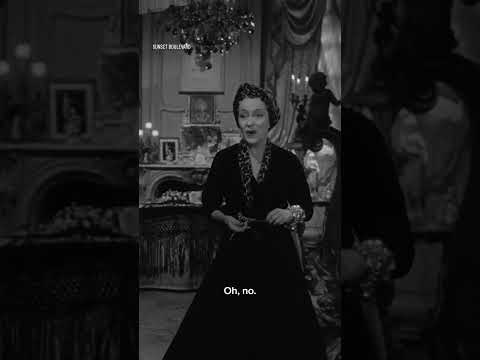
Sunset Boulevard, 1950 🖤
Paramount Pictures

Parasite vs. Sunset Boulevard — The Disillusionment Arc
Lessons from the Screenplay
More Like This

Mank
2020 · ★ 6.7

Priscilla
2023 · ★ 6.7

Man of a Thousand Faces
1957 · ★ 6.8

Trumbo
2015 · ★ 7.2

Two Weeks in Another Town
1962 · ★ 6.0

Opening Night
1977 · ★ 7.6

Hitchcock
2012 · ★ 6.6

A Double Life
1947 · ★ 6.4

Synecdoche, New York
2008 · ★ 7.5

Killer's Kiss
1955 · ★ 6.3

The Lost Weekend
1945 · ★ 7.6

Fat City
1972 · ★ 7.1

Wonderstruck
2017 · ★ 6.1

The Sense of an Ending
2017 · ★ 6.3

Foxes
1980 · ★ 5.9

The Cat's Meow
2002 · ★ 5.8

Fathers and Daughters
2015 · ★ 7.2

The Secret Life of Bees
2008 · ★ 7.5

Black Widow
1954 · ★ 6.4

Fedora
1978 · ★ 6.7
What People Are Saying
Contains spoilers — show it
A struggling writer (William Holden) on the run from creditors turns into the driveway of faded silent movie star Norma Desmond (Gloria Swanson). She hires him to live with her and write her next screenplay but her disconnect with reality quickly becomes apparent. The popularity of silent films is often forgotten with time, but it’s key to remember that at the turn of the 20th century the stars of cinema were the most famous people walking the earth. They accrued power & wealth to an extent that is unmatched today in the entertainment business, despite the celebrity-focused culture we live in. It’s equally important then to think of the impact audio had on the industry. We may see it as something that changed the medium but it was more than that; it split the art form cleanly in two. It’s like comparing a book to a painting - they both might involve forms on a page, but otherwise they are worlds apart. The result of course was a subset of society that remained richer than almost anyone else yet in the public eye had fallen completely off the face of the earth. The extremes of fame and obscurity provide fascinating material for Wilder to dig into, and make a commentary about the industry that remains relevant to this day. Gloria Swanson’s story in real life matches that of her character. She was a huge silent film star, whose career almost ended with the advent of dialogue. It is not easy to say how much her situation influenced her performance, but there’s no doubt that in Sunset Boulevard she creates one of the most memorable characters ever put to film. Wilder constantly cuts to shots of the door handles in her house - all missing on advice from her doctor to ease her psychological woes. This makes the house a slightly surreal place to be - it’s grand and it’s lavish but it’s just a little off. Swanson manages to mirror this in Norma Desmond. She still has her charm and beauty but she yearns to be young and relevant to the point of madness. She’s a force to be reckoned with in this film, but she also gives off a subtle understanding of the reality of her situation. It’s an extra dimension to the character that makes her more interesting, and ultimately more harrowing because she appears to have made a concious decision to choose this lifestyle. Holden fades a little but serves as a shoe-in the door for the audience. It can’t be easy to come up against someone like Swanson, who is clearly the centre of attention. He does succeed in making a good down-on-his-luck noir character and gives us a well grounded point of view. One other stand-out performance is Erich von Stroheim who plays Max, Norma’s ageing butler. He’s stern, mysterious and fiercely defensive of the film star. There’s an odd relationship at play there and sure enough as the film goes on we find out that he was an old director on a few of her films. Not only that, but he was her first husband, and has been writing fake fan mail for her to read every day. Again this is an auto-biographical character - von Stroheim was once a great director in the days of silent cinema. The house serves almost as a character in itself. Holden’s character likens it to Mrs. Haversham, grand, old, classy, but stuck in the past and in need of care. Wilder cleverly points to this in subtle ways. We see damp in the background, cracked walls, torn curtains; anything that is not in use looks worn out. It’s yet another reflection of Norma Desmond’s state of mind. Sunset Boulevard is a masterpiece of satire with an unforgettable central performance, held together by a director absolutely at the top of his game. http://benoliver999.com/film/2015/07/31/sunsetboulevard/
Contains spoilers — show it
[7.5/10] The grand irony of *Sunset Boulevard* is that the driving emotional force within the film is faded star Norma Desmond’s inability to accept that her days of silver screen stardom are over, and yet, ultimately, this is *her* movie. She is the most captivating part of the real life film, the most complex character, and the one who holds the spotlight despite our nominal protagonist. In a story about a person who’s pathologically unable to let go, she’s the part of the movie worth holding onto. Much of that is because *Sunset Boulevard* is more interesting in conception than execution. There is meat to the narrative here: of tragically faded glory, of emotional manipulation, of what hanging around this two-bit town is worth. But much of the presentation is, true to the in-story critiques of studio scripts, melodramatic and overblown. Despite the larger-than-life confines, this is a very human story, delivered without much humanity. The biggest exception to that is Gloria Swanson as Norma Desmond. She is, ostensibly, the film’s villain, and she does plenty of villainous things. She overrides the will of floundering writer Joe Gillis, uses her money to make him her pet, and then emotionally blackmails him with threats of self-harm when the lucre loses its luster. And yet, it’s hard to see her as, at worst, an eminently sympathetic monster. There is hubris when she stands in front of the projector or puts on her little house shows, but also something profoundly pitiable in someone who can't accept where they really stand. How can your heart not ache when she sits in the studio and is in the spotlight for one more moment, flocked by admirers, when we know that it’s not meant to last, and she thinks it’s a new beginning? How can you not feel something when what breaks her from her post-murderous stupor is a delusion that the cameras meant to document her downfall are, instead, there to capture her “return”? Cecile B. DeMille himself makes the point -- that for however easy it may be to look down your nose at Norma, her delusions of grandeur, and her outright mania -- that Hollywood itself chews up and spits out young women like her. It is telling that the most decent person in the picture treats her with the utmost care and kindness, a recognition that even if she’s a villain now, it took years of being victimized by an indifferent meatgrinder of an industry to make her that way. That's the other, not so subtle theme of *Sunset Boulevard* -- that Hollywood is full of vultures and devotees of “What have you done for me lately” who are as much mercenaries as they are dream-weavers. The people themselves get used or left behind, whether you're a star who couldn't keep up with the times, a screenwriter who could no longer hack it, or a studio reader with starry-eyed dreams of leaving your mark. The problem is, it’s hard to care too much about anyone else being ground up in that machinery besides Norma, especially Gillis, our erstwhile protagonist. Gillis is the negative image of Norma. Theoretically, he should be sympathetic. He is a down-on-his-luck creative who’s doing his best to scrape by. He’s penned into a role as a pet husband he doesn’t want because he needs the money and then can't bear to be responsible for a sick woman’s demise. He is, in the film’s visual grammar, a prisoner in an opulent but decaying cage. That should put us on his side. But Gillis is also, well, kind of a dick. To some degree, I think the film knows it and wants to lean into that complexity. Still, at the end of the day, I think director and co-writer Billy Wilder wants us to root for him, to feel for him just as much, and it’s a much tougher proposition. Gillis is some combination of snarky and cold in his disposition. He lies regularly and gets huffy at the people who won’t (or can't) save his bacon. He flirts with his good friend’s fiancee and nearly steals her away. And as much as he’s being forced into a particular mold by Norma (and arguably Max), he’s out to take advantage of her. The film tries to have its cake and eat it too, depicting him as begging off more lavish gifts and returning when she’s made a suicide attempt. But he always seems a little craven, a little sneering, when it comes to Norma, which makes it hard to be on his side or want to see him succeed. When he tells her the truth, it comes off as cruelty rather than tough love, and that's in keeping with an unsympathetic character who’s seemingly meant to be our perspective character. Some of that is simply the performances. I know styles have changed, and I can intellectually accept that. But in the moment, it means that William Holden’s exaggerated performance style, or the manicured banter that's supposed to pass as chemistry between him and Nancy Olson, or the labored monologues from just about everyone leave me unable to emotionally invest in most of the characters and their relationships. Throw in an overbearing score full of cheesy stings anytime something notable happens, and you have a presentation style that comes off too caricatured and performative for the modern viewer (or at least this modern viewer). The exception is Swanson’s turn as Norma. In truth, she gesticulates and exults, and goes for the cheap seats as much as anyone in the picture. The difference is that, as the silent film star whose revulsion to technicolor and the talkies comes from a sense of “I can say anything I want with my eyes” her sense of theatricality fits the character in a way it doesn’t anyone else in the film. And then there’s little moments, after her suicide attempt or her visit to the studio, where the real wounded soul, not just The Actress™️, seems to peek through. Swanson plays unhinged in a gripping and memorable way, especially when she directs her energies directly toward the camera. But aside from Erich von Stroheim as Max (who wrings menace and meaning from an interesting if occasionally silly role), she’s the only performer in the film who’s able to counter her maximalism approach with moments of underplaying that make Norma feel like a more complete and real person. Aside from Norma, the film’s best feature is its cinematography. Wilder and cinematographer John F. Seitz find beaucoup eye-catching shots within the decrepit mansion that is the film’s main setting. Choices like putting Max’s hands on the organ in the foreground while Gillis enters in the background, or shooting Gillis shooing Betty away and retreats behind iron bars while Norma lurks above, convey the sense of him stuck in this trap laid by two crafty if damaged people. The visions of projected light in particular are a recurring visual motif, representing the stardom that Norma so desperately wants to reclaim, while also providing striking imagery in a black and white film. The triptych of her standing dramatically in the projected light of her home theater, basking in the glow of the studio spotlight in her visit to Paramount, and finally posing for the news cameras sent to spell her doom in her final performance, tell the whole movie in miniature, and are the showpiece of one of its best qualities. Unfortunately, they have to counterbalance the dialogue and the story. Wilder and his co-writers struggle to come up with human-sounding dialogue, which works when you're writing for a melodramatic grand dame, but flounders when you have to put in the mouth of anyone else. Part of why all the other characters suffer is that their patter isn’t nearly as clever or poignant as the film seems to think it is. And Gillis’ writerly voiceovers occasionally offer a nice bit of poetic description, but largely just exist to write the movie’s themes or emotions on the screen instead of letting the audience catch on naturally. Then there’s unnecessary, soapy twists, like the fact that Max turns out to be Norma’s first husband, or Betty being ready to leave her fiancee for wet rag Gillis when it’s narratively convenient. So often, *Sunset Boulevard* tries to do too much, when just a little bit less would be so much more impactful. Despite it all, there is something humbling about watching a film made three-quarters of a century ago about being unable to let go of the warm, gauzy hues of an idealized past. There is something venerable and heartbreaking of a story of the entertainment industry chewing through a spate of young hopefuls until their desperate, deluded, or ready to escape. And there is something profoundly human about someone poisoned by their glory days, pathologically unable to break free of them, until it fells her and the people who dare to confront her with that fact rather than placate her. So much of that rests on Norma’s satin-swept shoulders. Her faded triumphs and naive dreams bring the film’s themes to life. Her emotional highs and lows as phony bits of hope and crestfallen realities crash upon her move the film and the audience. In a movie about how a onetime starlet’s triumphs are supposedly behind her, to where only a murder can get her back in the spotlight, it is, poetically, Gloria Swanson and Norma Desmond who ultimately steal the show.
Gloria Swanson is a treat to watch in Sunset Blvd. In any other film she would have come off as overly dramatic, but as a washed-up silent era diva she is absolutely perfect with all of the accompanying hand-wringing, dramatic head angles, and intense eye glares. It's old school acting, where theatre was more of an influence than realism. William Holden's Joe is a typical macho hero of the Golden age: sounding grumpy and slightly shouty, but simultaneously emotionally blank. He typically calls his much younger love interest "kid", grabs her by the shoulders and smashes his mouth into hers as his interpretation of a passionate scene. I sort of dislike him. He takes advantage of Norma's wealth, but then acts like it's a burden, age shaming her to no tomorrow. At the same time, the movie is a wonderful satire of the realities of Hollywood. How sad that a woman past her early thirties is considered a has-been with no prospects? While not as bad nowadays, the practice seems to persist, with most movie moms with teen children being played by 30-year-olds. The structure is also neat, being told from the point of view of a murdered man. In the end, this film has an unmistakable tinge of gothic fiction - a tale of a haunted house, where the haunting is the apparition of regret, old glamour gone shabby, and madness. The monologue and snappy lines also put it squarely into a film noir territory - the quality kind, not overdone to death. Billie Wilder was a visionary filmmaker.
Read it on trakt.tvThey say Hollywood loves movies about Hollywood, but when the movie's are this good, can you blame them? Compelling story, interesting character dynamics, iconic dialogue, and fantastic performances make this one easy to recommend. Now, with respect to performances, I will say that Gloria Swanson's portrayal of Norma Desmond was a bit hard for me to swallow. I'm sure it was all intentional, playing into her character's backstory, but it still felt a bit too theatrical/melodramatic for my tastes. With that said, it didn't detract much and there are plenty of her moments that still landed brilliantly. The highlight of the film for me was Norma's return to the Paramount lot and her visit to the stage where DeMille is shooting. The writing here is jealousy inspiring, with Norma's delusions of grandeur being superficially validated while DeMille recognizes a tragedy in the making and does his best to gracefully handle it. Beyond Norma, the other performances felt surprisingly natural for this era. The exchanges between Joe and Betty in particular were great, feeling like they'd easily hold up to the tastes of modern audiences.
Read it on trakt.tvThis movie holds up a mirror in front of the Hollywood movie business from different perspectives. It shows how cruel it is to former stars, especially women, but also towards writers or newcomers who want to succeed in the business. It also shows how a former star does not want to admit that she cannot get back to her former glory. One line that sums up this tragedy is: “There is nothing tragic about being 50. Unless you try to be 25.”. An excellent movie that still works for today’s show business and even for many situations in everyday life. A masterpiece made 75 years ago and that warns that if you try and don't succeed, you must find the right moment to move on in order not to stay entangled in a situation that you cannot get out of as a winner.
Read it on trakt.tv"Sunset Boulevard" has a special place in my heart as one of the first classics that interested me in cinema. It still works great after 70 years as it's a simple, straightforward, but focused film that manages to deal with timeless themes with sarcasm and intelligence without having no arthouse pretentiousness or making no life-changing statements. Video quality aside, there is nothing I would change about it. The characters are iconic thanks to the fact that they are played by actors that actually experienced the dawn of the silent era and the struggles to survive in the ever-changing Hollywood industry. Forgotten silent era diva Norma Desmond is played by Gloria Swanson, who was herself a faded star who lost her job due to the advent of sound films. Her butler and former director Max is played by Erich von Stroheim, who happens to have directed some of Gloria Swanson's classics (one of them gets even projected in Norma's living room). Director Cecil DeMille plays himself, and other silent era actors and old Hollywood personalities like Buster Keaton also have cameos. I also loved how, in the end, none of the characters is really positive. Norma and Max are self-delusional and unable to accept that the world around them has changed, they would do anything to prevent their dream from falling apart. Joe and Betty represent the "young" Hollywood, but they are blinded by their ambition and egoism to the point they both chose to embark on a clandestine affair, even though they owe everything to their partners. First-person narration by the already dead protagonist Joe Gillis makes the film even more fascinating. Gillis is a talentless but arrogant screenwriter who succumbed to Hollywood's trap of fame, and it feels almost ironic that "Sunset Boulevard" could have been the first successful screenplay in his career. The dialogues tend to be over the top at times, but they perfectly suit Norma's character and lifestyle. Gillis' cynical tone in the narration, combined with the awareness of his tragic fate, also manages to make us understand that we are not dealing with the usual melodramatic sentimentality of Hollywood.
Read it on trakt.tvA classic for the must to be seen list. Gloria Swanson is magnificent.
Read it on themoviedb.org**One of the great films of Hollywood's golden age.** This movie is really special. Not only does it show us a lot about the world of Hollywood during its golden age, but it also reveals a lot about the actors' egos, vanities and their titanic struggles to preserve their careers and stay in the limelight. Brilliantly directed by Billy Wilder, it is considered by many to be one of the great movie classics, combining entertainment, artistic value and cultural relevance. In 1951, it won three Oscars (Best Screenplay, Best Art Direction in a Black and White Film, Best Comic Film Soundtrack) and could perfectly have won one more, for Best Actress. But awards like these are never completely fair, especially in years so fertile for good films. Starting with the iconic scene of the dead man in the pool, the film intrigues us, and curiosity grips us, as the film shows how it all happened, introducing us to an average screenwriter who struggles to write a successful script that can leverage his career. He owes money, is in serious trouble and takes advantage of the opportunity to earn some easy money at the expense of a retired silent film actress, who decides to hire him to revise and type a script, written by herself and designed to mark her return. The script is mediocre, and he knows that the film will never happen, but he is coerced into silence, becoming the privileged eyewitness of the former star's gradual loss of lucidity. Of course, things get complicated as he loses his individual freedom and becomes more dependent on the whims and desires of his mistress. Despite the fiction, the film is based a lot on several loose true facts: one of them, the most obvious, is the fall of several actors in the course of the transition from silent to talking films. There were great actors who looked magnificent on screen and had great physical and facial expression, but who didn't survive this transition due to things as prosaic as a poor English fluency or a strange accent. Others, however, simply did not know how to understand and adapt to the novelty. The collapse of their careers and personal lives led to alcoholism, drugs, mental disorders. The film is able to condense almost all of this into a single character: Norma Desmond, the epitome of the fallen star. The cast has several well-known names, three of which – William Holden, Erich Von Stroheim and, obviously, Gloria Swanson – offer us the interpretation of their lives and their work of greater value and recognition. Of course, we cannot ignore that Swanson was a great star of silent cinema and that she shone in films like “Trespasser” or “Indiscreet”, and that Holden would continue to be a highly sought actor after this, having won his Oscar for Best Actor in a film that starred two years later. But there is no doubt that this film immortalized the three of them. Technically, the film is impeccable, and the merit lies a lot in the brilliance of the dialogues, in the excellence of the conception and development of the characters, in the extraordinary way in which Wilder managed to get the best out of Swanson and lead the actress to a magnificent performance, which has so much to brilliant and difficult as well as provocative (especially from the point of view of many Hollywood shooting stars, who saw themselves in character and felt offended by it). With an excellent pace, the film does not waste time or let the atmosphere of tension and drama fall into a standstill. The mansion, owned by the Getty family, acquires character by itself as it becomes the most obvious symbol of the disturbed personality and only of its resident. The black and white cinematography is magnificent, and accentuates, in its details and shooting angles, the dramatic feel of the film. The soundtrack isn't memorable, but it's effective and functional.
Read it on themoviedb.org