

The story
A man wanders through a heavy rainstorm finding his way into a restaurant. The restaurant's employees try to determine if he needs help. Despite his manic mode of speech being difficult to understand, Sylvia learns that his name is David Helfgott and that he is staying at a local hotel. She returns him to the hotel, and despite his attempts to engage her with his musical knowledge and ownership of various musical scores, she leaves.
Story from TheTVDB.
Where to Watch
Where-to-watch data by JustWatch · every service.
Cast

Geoffrey Rush
David Helfgott - Adult

Noah Taylor
David Helfgott - Adolescent

Armin Mueller-Stahl
Peter

Lynn Redgrave
Gillian
Googie Withers
Katharine Susannah Prichard
Sonia Todd
Sylvia

Nicholas Bell
Ben Rosen

John Gielgud
Cecil Parkes
Justin Braine
Tony
Chris Haywood
Sam
Alex Rafalowicz
David Helfgott - Child
Gordon Poole
Eisteddfod Presenter
Danielle Cox
Suzie - Child
Rebecca Gooden
Margaret
Marta Kaczmarek
Rachel
John Cousins
Jim Minogue
Paul Linkson
State Champion Announcer
Randall Berger
Isaac Stern
Ian Welbourne
Boy Next Door
Kelly Bottrill
Louise - Baby
Beverley Vaughan
Rabbi
Phyllis Burford
Synagogue Secretary
Daphne Grey
Society Hostess
Edwin Hodgeman
Soviet Society Secretary
Videos

Trailer
Trailer

David Helfgott performs at the Oscar®
Featurette
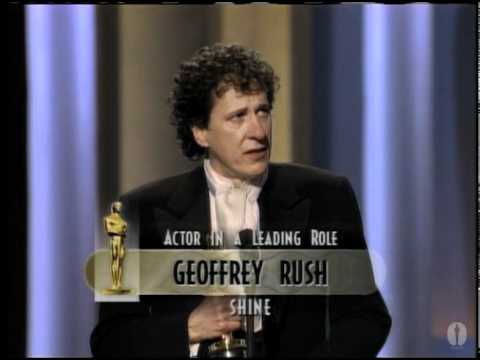
Geoffrey Rush winning Best Actor
Featurette
More Like This

TÁR
2022 · ★ 7.1

What's Love Got to Do with It
1993 · ★ 7.1

I Never Sang for My Father
1970 · ★ 6.7

The Piano Lesson
2024 · ★ 5.8

People Like Us
2012 · ★ 6.8

Pay It Forward
2000 · ★ 7.4

What Maisie Knew
2013 · ★ 7.1

Tyson's Run
2022 · ★ 7.7

Doubt
2008 · ★ 7.2

Dead Poets Society
1989 · ★ 8.3

Miss Fisher and the Crypt of Tears
2020 · ★ 6.1

Maria
2024 · ★ 6.5

Tigertail
2020 · ★ 6.7

A Map of the World
1999 · ★ 6.0

Mr. Holland's Opus
1995 · ★ 7.0

The Hurricane
1999 · ★ 7.4

Boyhood
2014 · ★ 7.5

Dad
1989 · ★ 6.4

Out of My Mind
2024 · ★ 7.6

Resurrecting the Champ
2007 · ★ 6.3
From Wikipedia
Shine is a 1996 Australian biographical psychological drama film directed by Scott Hicks from a screenplay by Jan Sardi, based on the life of David Helfgott, a pianist who suffered a mental breakdown and spent years in institutions. The film stars Geoffrey Rush and Noah Taylor as the adult and adolescent Helfgott, respectively, while Armin Mueller-Stahl, Lynn Redgrave, and John Gielgud appear in supporting roles. Shine had its world premiere at the Sundance Film Festival on January 21, 1996, followed by a theatrical release in Australia on August 15. At the 69th Academy Awards, the film was nominated for seven awards including Best Picture, with Rush winning Best Actor.
From Wikipedia’s article “Shine (film)”, under CC BY-SA 4.0.
What People Are Saying
An excellent Biopic about the real-life story of David Helfgott who become literally mad over trying to perfect his piano playing. The movie takes the viewer into the mental world of a genius and lets you suffer with him.
Read it on trakt.tv**Perhaps one of the most striking films in the work of Geoffrey Rush, and one of the toughest and most sincere portrayals of brilliance that cinema has seen to date.** Even though I'm a pretty serious music lover, and I've always loved classical music, I didn't know David Helfgott until I saw this film. The musical universe is full of prodigies who reveal talent since childhood. Mozart is perhaps the most famous example of this. However, it is one of those subjects that I feel we tend to overestimate, because you can also find prodigious children in other areas of knowledge, including the Human Sciences. It is, however, curious that we have so few examples of musical geniuses with solid and successful careers. Most pianists and musical performers, no matter how talented they are, depend more on their self-discipline and intensive training than on their basic talent. Helfgott, according to this film, had a difficult childhood, at the hands of an overbearing father, who basically pushed him towards a music career, realizing his talent. The problem is that the situation demanded a lot from the young genius, causing him to develop schizophrenia and several other mental problems. With serious speech problems (he stutters and talks compulsively), he is also incapable of maintaining a conventional relationship with the people around him. Of course, in the long run, we'll see how he gets around the difficulties and achieves consecration. Helfgott is played by several actors, but it is Geoffrey Rush who shines in the role. The actor was able, in this film, to cross the doors of international cinema thanks to one of the most complete and immersive portrayals of genius in cinema. Appearing on stage when the film is already halfway through, he dominates the entire work, imposing himself, demanding our attention, deserving applause. Even if the film no longer had any reason to merit – it does! – seeing the performance of this British actor would always be more than enough reason to justify a trip to the cinema. However, he is not alone: the film also gives us an excellent interpretation of Armin Mueller-Stahl in the role of the father, demanding and domineering. Noah Taylor, who gives life to the character of Helfgott in his youth, also leaves us with a job well done and of value. The script and direction also deserve a note of praise. Scott Hicks, who performs both tasks, has managed to create a film that is deeply dramatic, intense, capable of moving and making us think, without making the mistake of making it overly melodramatic or presenting things that are too dark and pessimistic. The film is deeply emotional, it even has several intense, almost painful scenes, but it is never a heavy film. In addition, the film makes a very clever use of cinematography and the soundtrack to lighten or thicken the entire environment in which the action takes place. In addition to the pieces by Rachmaninoff – a piano genius, but who finds equivalents in composers such as Chopin, Scriabin or Liszt, author of the naive but terribly demanding “La Campanella”, for me the most difficult solo piano – the film has a vast repertoire of classical pieces skillfully inserted into the soundtrack. It's worth seeing how they are used in the film.
Read it on themoviedb.org