

The story
In Paris, "The Little Tramp" falls in love with a blind flower girl, but she mistakenly believes that he is a millionaire.
Story from TheTVDB.
Where to Watch
Where-to-watch data by JustWatch · every service.
Cast

Charlie Chaplin
A Tramp

Virginia Cherrill
A Blind Girl
Florence Lee
Her Grandmother

Harry Myers
An Eccentric Millionaire
Al Ernest Garcia
His Butler
Hank Mann
A Prizefighter
Albert Austin
Street Sweeper / Burglar (uncredited)
Eddie Baker
Boxing Fight Referee (uncredited)
Henry Bergman
Mayor / Blind Girl's Downstairs Neighbor (uncredited)
Buster Brodie
Bald Party Guest (uncredited)
Jeanne Carpenter
Diner in Restaurant (uncredited)
Tom Dempsey
Boxer (uncredited)
James Donnelly
Street Sweepers' Foreman (uncredited)
Ray Erlenborn
Newsboy (uncredited)
Robert Graves
Police Officer (uncredited)
Charles Hammond
Street Passerby (uncredited)
Joseph Herrick
Boxing Match Spectator (uncredited)
Austen Jewell
Newsboy (uncredited)
Willie Keeler
Boxer (uncredited)
Robert Parrish
Newsboy (uncredited)
John Rand
Tramp Who Dives for Cigar (uncredited)
W.C. Robinson
Man Who Throws Away Cigar (uncredited)
Cy Slocum
Boxing Match Spectator (uncredited)
Tony Stabenau
Victorious Boxer - Later Knocked Out (uncredited)
Videos

Amy Madigan on CITY LIGHTS
Featurette
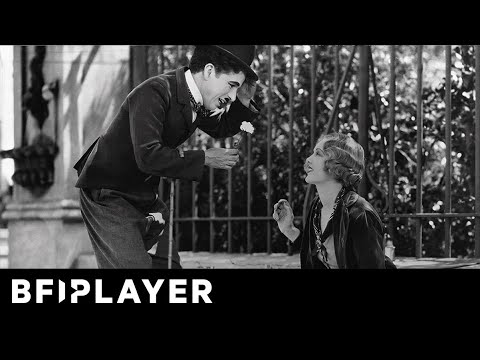
Mark Kermode reviews City Lights (1931) | BFI Player
Featurette

Buck Henry on CITY LIGHTS
Featurette
City Lights - Movie Review
Chris Stuckmann
More Like This

At First Sight
1999 · ★ 6.0

Me Before You
2016 · ★ 7.9

Modern Times
1936 · ★ 8.3

Sometimes I Think About Dying
2024 · ★ 6.8

Twelfth Night
1996 · ★ 7.0

Autumn in New York
2000 · ★ 6.1

Other People's Money
1991 · ★ 6.1

Magnificent Obsession
1954 · ★ 6.8

Return to Me
2000 · ★ 6.7

Great Expectations
1998 · ★ 6.6

Tulips in Spring
2016 · ★ 5.8

The Other Sister
1999 · ★ 6.4

The Baltimorons
2025 · ★ 6.3

Father of the Bride
2022 · ★ 6.3

Iris
2001 · ★ 6.4

50 First Dates
2004 · ★ 6.9

Love in Taipei
2023 · ★ 6.8

What's Love Got to Do with It?
2023 · ★ 6.1

Danny Deckchair
2003 · ★ 6.1

I Met a Girl
2020 · ★ 6.4
From Wikipedia
City Lights is a 1931 American synchronized sound romantic comedy-drama film written, produced, directed by, and starring Charlie Chaplin. While the film has no audible dialog, it was released with a synchronized musical score with sound effects. The story follows the misadventures of Chaplin's Tramp as he falls in love with a blind woman (Virginia Cherrill) and develops a turbulent friendship with an alcoholic millionaire (Harry Myers). Although talking pictures (or films with recorded dialogue) were on the rise when Chaplin started developing the script in 1928, he decided to continue working without dialogue only incorporating sound with the use of a synchronized musical score with sound effects. Filming started on December 27, 1928 and ended in September 1930. City Lights marked the first time Chaplin composed the film score to one of his productions and it was written in six weeks with Arthur Johnston. The main theme, used as a leitmotif for the blind flower girl, is the song "La Violetera" ("Who'll Buy my Violets") from Spanish composer José Padilla. Chaplin lost a lawsuit to Padilla for not crediting him. City Lights was immediately successful upon release on March 7, 1931, with positive reviews and worldwide rentals of more than $4 million. Today, many critics consider it not only the highest accomplishment of Chaplin's career, but one of the greatest films of all time. Chaplin biographer Jeffrey Vance believes "City Lights is not only Charles Chaplin's masterpiece; it is an act of defiance" as it premiered four years into the era of sound films which began with the premiere of The Jazz Singer (1927). In 1949, the critic James Agee called the film's final scene "the greatest single piece of acting ever committed to celluloid". In 1991, the Library of Congress selected City Lights for preservation in the United States National Film Registry as being "culturally, historically, or aesthetically significant". In 2007, the American Film Institute ranked it 11th on its list of the best American films ever made. As a published work from 1931, City Lights will enter the American public domain on January 1, 2027.
From Wikipedia’s article “City Lights”, under CC BY-SA 4.0.
What People Are Saying
That's brilliant!!!! It's a must watch movie don't miss it! Sadness and joy in the same movie
Read it on trakt.tvCity Lights is still for me among one of Charlie Chaplin’s greatest work he has ever made. While I don’t think it’s the funniest he has ever made, it’s definitely pretty heartwarming similar to the Kid movie he made. Plenty of gags as you expect of Chaplin to give you a laugh and especially the whole boxing ring fight. The ending is wonderful and it’s one of the best endings I’ve seen from Chaplin, and held the film in high regards like with Modern Times as Chaplin begins to transition to the sound period.
Read it on trakt.tvAn incredibly timeless goofy ahh movie filled with heart and soul (finally watched a Chaplin movie at 22)
Read it on trakt.tvThe Year I Watch some of my Friends Favorite Movies #4 - City Lights (1931) This is a masterclass in storytelling and the art of the set up and payoff of gags and the moving a story along. And to buck the trend of talkies and choose to do a silent film with sound effects and music… kinda like the movie that bridges the two eras. Charlie Chaplin is great in this and Virginia Cherrill is wonderful as the blind girl… his love interest. This movie will put a smile on your face.
Read it on trakt.tvChaplin like we love him. An all-time classic
Read it on trakt.tvHe's again the hobo. Every time I watch a Chaplin movie I realize that this isn't my cup of tea. I don't think it's funny or a histrionic masterclass. I fail to understand why people obviously thought that it was funny when the movie premiered. It's just silly. I mean there's perhaps historic relevance here but I can't really appreciate this fact since I don't know how other movies from that era compared. That said, there's bits and pieces I like: The historic city, the Rolls-Royce, the contemporary entertainment clothes and interior design. The fight night is entertaining. I like the (tragic?) ending. I always liked that Chaplin's tramp showed poor people and their desolation in midst a rich upper class (who isn't always happy either). The entire romance isn't bad either. Well, it's not particularly romantic but the mere fact that she's blind and poor makes his feelings for her special.
Read it on trakt.tvVirginia Cherrill charmingly plays a young, blind, flower seller whom the tramp (Charlie Chaplin) falls for, hook line and sinker. Later that night, he is crossing a bridge when he encounters a suicidal, dipso, millionaire (Harry Myers) whom he convinces to hang about for a while longer, and who by way of appreciation invites him to a party at his mansion, then to a series of evening entertainments. Thing is, when he wakes up with the mother of all hangovers next morning, though, he has never a clue who the tramp is and so gets his butler to send him packing. Meantime, still determined to help his new love, our kindly vagrant reads in a newspaper that there might be might be a cure for her blindness - but it will be expensive. His boozy buddy offers him $1,000 to help but when, as usual in the morning, he sobers up and denies all knowledge of the "gift". The police are called and things now take a series of unhappy turns that force the tramp to think of other ways of raising the cash. This challenge is especially spurned on when he discovers that she has left her usual selling spot and is now quite poorly and being taken care of by her grandmother (Florence Lee) - and they are facing eviction. It's probably his attempts at boxing that provide for most of the entertainment here, but there are plenty of other humorous exploits - especially between him and Myers and the scenes with Cherrill are touching and joyous, too. Chaplin keeps the pace moving along well with plenty of variety in a film that's a gem to watch.
Read it on themoviedb.org