

The story
Hirayama is content with his life as a toilet cleaner in Tokyo. Outside of his structured routine, he cherishes music on cassette tapes, books, and taking photos of trees. Through unexpected encounters, he reflects on finding beauty in the world.
Story from TheTVDB.
Where to Watch
Where-to-watch data by JustWatch · every service.
Cast

Koji Yakusho
Hirayama

Tokio Emoto
Takashi

Arisa Nakano
Niko

Aoi Yamada
Aya

Yumi Aso
Keiko

Sayuri Ishikawa
Mama

Tomokazu Miura
Tomoyama

Min Tanaka
Homeless
Miyako Tanaka
Old Lady with Brush

Ron Mizuma
Businessman
Soraji Shibuya
Kid
Aoi Iwasaki
Kid
Kisuke Shimazaki
Lost Boy
Yuriko Kawasaki
Mother
Aki Kobayashi
Baby
Bunmei Harada
Priest
Reina
Tourist
Shunsuke Miura
Bath House Owner
Gan Furukawa
Old Man
Atsushi Fukazawa
Kat-Chan

Taijirō Tamura
Regular

Masahiro Komoto
Bar Owner
Makiko Okamoto
Old Woman
Daigo Matsui
Vinyl Store Staff
Videos

Official US Trailer [Subtitled]
Trailer

Trailer [Subtitled]
Trailer

Official Clip - Next Time Is Next Time. Now Is Now. [Subtitled]
Clip

Interview with Wim Wenders
Featurette
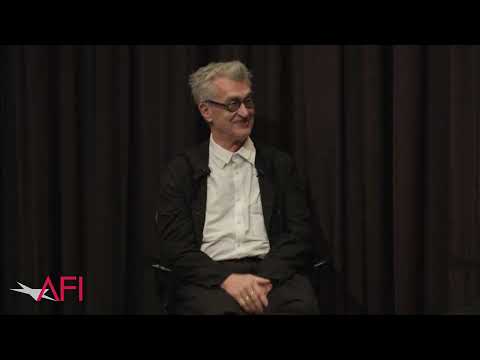
PERFECT DAYS Writer/Director/Producer Wim Wenders in Conversation
Featurette

Wim Wenders on How "Ozu's Spirit Looms Large" Over PERFECT DAYS
Featurette

Official Clip
Clip

Koji Yakusho and Takuma Takasaki on Perfect Days at NYFF61
Featurette
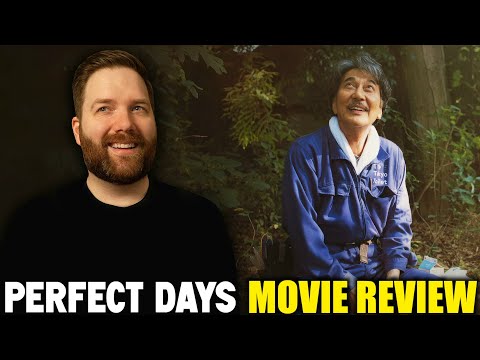
Perfect Days - Movie Review
Chris Stuckmann
PERFECT DAYS - Official Trailer
NEON
More Like This

Only Yesterday
1991 · ★ 7.4

Café Lumière
2004 · ★ 6.9

Every Day a Good Day
2018 · ★ 7.2

Child of Kamiari Month
2021 · ★ 6.5

Little Forest: Winter/Spring
2015 · ★ 7.9

Little Forest: Summer/Autumn
2014 · ★ 7.8

Ikiru
1952 · ★ 8.3

After the Storm
2016 · ★ 7.2
Okko's Inn
2018 · ★ 7.2

When Marnie Was There
2014 · ★ 7.9

Maborosi
1995 · ★ 7.5

Whisper of the Heart
1995 · ★ 7.9

The Colors Within
2024 · ★ 6.9

Sweet Bean
2015 · ★ 7.5

Night on the Galactic Railroad
1985 · ★ 7.1

Departures
2008 · ★ 7.9

Our Little Sister
2015 · ★ 7.6

Nothing Personal
2009 · ★ 6.5

Tokyo Story
1953 · ★ 8.1

The Sea of Trees
2016 · ★ 6.2
In the News
See All
What People Are Saying
Komorebi: The sun's rays filtering through the leaves, creating a pattern that is never repeated twice and therefore exists only in that moment. Like even the simple and uneventful days of our lives. Each day can never be lived the same twice so it is special and perfect because it only exists once. A beautiful movie, or poetry, to remind us to be grateful for each single day. They are all perfect.
Read it on trakt.tvI wanted to enjoy this movie a lot more than I eventually did. It has a beautiful score and a very gentle style of filmmaking. With limited dialogue, we follow our main character across his daily routine, seeing the subtle shifts in his emotions based on limited interactions with other characters. Conceptually, it is a very subdued approach with a potential to pack an emotional punch. In execution though, I found myself getting detached from the events at numerous points. Make no mistake, there are specific scenes where I was fully engaged, especially when it felt like we were going to get more about our protagonist's history. However, Wim Wenders often pulled back before actually giving us something substantial, instead leaving a lot to the viewer's imagination. Because of it, the movie feels like it *could* be brimming with depth, but to be honest, it never really gives us evidence of that depth. The characters are kept at an arm's distance, and this prevents the type of emotional connection and resonance that I prefer with movies. It also means that the ending feels abrupt because a lot of the side characters who have come in and out of the movie never really have their arcs resolved. I was impressed with the acting though, since all the communication happens through Koji Yakusho's face due to the limited dialogue.
Read it on trakt.tvI didn’t want to leave my apartment this afternoon. I had the day off, and I’d spent most of it wasting away in my bed and on my couch, reveling in the nothingness of an empty schedule. But as the clock ticked towards 3pm, my desire to see all of the Oscar-nominated films finally overpowered my lethargy. I gathered myself up, found the motivation drive to the theatre, rewarded myself with a little snack from concessions, and sat in my seat for Perfect Days just as Nicole Kidman was telling the audience that “we make movies better”. I’m so glad that I went. Hirayama (Koji Yakusho) is an aging sanitation worker in Tokyo who has every part of his day down to a science: wake up, fold the linens, brush his teeth, water the plants, grab a coffee, go to work cleaning public restrooms, come home, wash up at a bathhouse, go to dinner, go home, read, and go to sleep. Rinse and repeat, day in and day out. It’s a modest life, but it’s immensely pleasant. There really couldn’t have been a more appropriate mood for me to be in for this film. Much like me earlier in the day, Hirayama takes pleasure in the small things; listening to 80’s cassette tapes on his commute (which is, in a masterful production decision, the only music we hear in the film), tending to his plants, or taking photos of the trees during his lunch breaks near a temple. His indulgence in his commute environment is relatable to anyone who does the same; while waiting in traffic, we create a domain of our own within our vehicles that feels impenetrable by the outside world, despite the only barrier being transparent glass. We see his eyes light up when a homeless man dances alone in a park, or when a tourist is delighted by the technology behind Tokyo’s transparent restrooms. Hirayama barely speaks; he’s a man of so few words, he appears to be belligerently quiet in some situations, like when his yammering coworker goes on and on about a woman he’s hopelessly attempting to woo. Hirayama isn’t rude — he simply has nothing of substance to contribute at times, so he abstains; something that I think a great deal of people in modern society could learn from. He is, however, listening and observing at all times, waking up when most of Tokyo still sleeps, and moving through the city like a ghost. There’s a commentary on the social treatment of public servants here (which is revisited later), particularly in a poignant moment when Hirayama returns a lost boy to his mother. The mother does not acknowledge Hirayama whatsoever, but the boy turns to wave goodbye to him as they walk away. Hirayama, always enamored with simple joys, simply laughs and waves back. At roughly the one-hour mark, Hirayama’s steady rhythm of workdays is disrupted when his niece appears, having run away from home after an argument with her mother. This point flips the perspective that we’ve seen thus far, taking us out of Hirayama’s comfortable monotony and showing us how it looks to someone else who doesn’t know it to be theirs. He shares a few of his days with her, and imparts a profound piece of wisdom on her: “Next time is next time. Now is now.” When Hirayama’s estranged sister inevitably comes to collect her daughter, pulling up in a Lexus driven by her chauffeur, she asks him with thinly veiled distaste if it’s true that he’s cleaning toilets for a living. As they drive away, Hirayama is overwhelmed with a sense of shame inflicted by his sister’s question. Shortly after, Hirayama has a chance encounter with a man undergoing cancer treatment with weeks left to live. It’s a seemingly unrelated occasion, but the masterful thing about this movie is how such separate moments can affect someone’s state of mind so completely. I won’t spoil the resolution, but it involves a long take and an incredibly cathartic needle drop of Nina Simone’s “Feeling Good” that’ll hopefully have you reenacting the moment in your car. On paper, Perfect Days doesn’t sound like a particularly interesting movie. But through a touching performance by Koji Yakusho, deft editing, carefully measured reservation, and a solid selection of well-placed needle drops, the film delivers a powerfully cleansing examination of what it means to live a simple life, and to savor every small joy that it brings.
Read it on trakt.tvIt's a wonderful thing to be able to find beauty in mundane things and be entertained by everyday life.
Read it on trakt.tvContains spoilers — show it
That final scene... wow. What a performance.
The entire movie portrays the life of a man who isn’t lonely (with great taste in music) but is liberated from the typical attachments of life. The acting was amazing, and the cinematography was good, but what fascinated me the most were the advanced technologies of Japan’s public toilets. The ending, with Koji Yakusho's facial expressions and the song choice, was especially powerful.
Read it on trakt.tvCoproduction between Japan and Germany, directed by the german director Wim Wenders (Texas Paris, Wings of Desire among others) and written by him and Takuma Takashi. It won the Cannes Film Festival 2023 for Best Actor and Ecumenical Jury and it is nominated for Academy Best Foreign Movie (my favorite for this category). It tells some days at the life of a public bathroom cleaner at Tokyo, interpreted by Koji Yakusho Hirayama, as Hirayama, his daily routine and 4 events in between his usual days. It also shows how some people treat those invisible workers even in a modern civilized country as Japan. Hirayama have a simple, but happy life as he is and what his does with the maximum commitment - it is a marvelou movie about contemplation and what simple things and events can bring of happiness in the life, if you allow it. The cinematography is by Franz Lustig (Anselm), and it is beautiful in using the available light and daily variations, mostly in shots with the protagonist. With a slow minimalistic story focused on this philosophy and camera work also directed to the architecture of public bathrooms, it may not be a movie for everyone. My score for it is 9,6 out of 10,0 / A+.
Read it on themoviedb.orgNow I don't now about where you live, but in my town you are lucky to find a public toilet at all, let alone one with designer fittings and miracle blinds! Luckily, Tokyo has a dedicated and meticulous cleaner in "Hirayama" (Koji Yakusho) whose routine gets him from bed, via the coffee machine, to his rounds, the bath house, then his book and again to bed. Helped, occasionally but not too reliably, by the younger "Takashi" (Tokio Emoto) his joy when travelling from site to site is to listen to old cassettes from the likes of the Doors and Van Morrison. He is an outwardly rather humourless man, and he likes his daily pattern, so imagine his surprise when he returns home one evening to discover his niece. "Niko" (Arisa Nakano) has absconded from home and decided to come stay with him for a few days. With his pal at work having a new girlfriend to impress and now him a teenage niece to accommodate, his life faces a turmoil and we have to watch (and hope) as he tries to get through it. Who knows? Maybe it will help bring him out of his self-imposed shell? Might we find out what caused that introspection in the first place? There's quite a lot of repetition here, but as each day goes by Wim Wenders introduces us to a little more. More about the city, more about the characters and maybe just a little too much about multi-purpose bleach. Yakusho is perfect for his part and he engagingly delivers a characterful performance as a man who prefers not to speak and the whole drama evolves, gently, to not so much a conclusion as another day that may or may not be different from the previous ones.
Read it on themoviedb.org