
The story
A money order from a relative in Paris throws the life of a Senegalese family man out of order. He deals with corruption, greed, problematic family members, the locals and the changing from his traditional way of living to a more modern one.
Story from TheTVDB.
Where to Watch
Where-to-watch data by JustWatch · every service.
Cast
Makhouredia Gueye
Ibrahim Dieng
Younousse Sèye
Méty the First Wife
Isseu Niang
Aram the Second Wife
Mustapha Ture
M'barka the Shopkeeper

Mouss Diouf
Abdu the Nephew
Christoph Colomb
Water Seller
Farba Sarr
Mbaye Sarr the Business Agent
Serigne N'Diayes
Iman
Thérèse Bas
Dieng's Sister
Mamadou Cisoko
Madiagne Diagne the 2nd Neighbor (uncredited)
Moudoun Faye
Bah the Postman (uncredited)

Ousmane Sembène
Public Writer at the Post Office (uncredited)
Serigne Sow
Gorgui Maïssa the 1st Neighbor (uncredited)
Videos
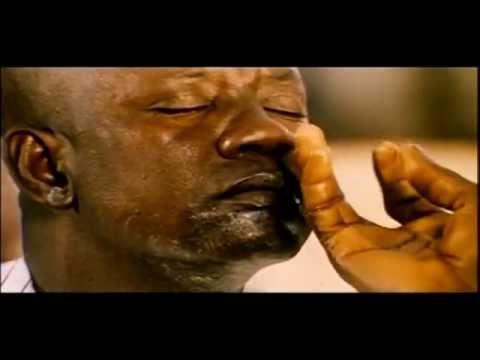
Opening scene from "Mandabi" (1968); Audio Track: Masani Cisse
Clip
More Like This

It Runs in the Family
2003 · ★ 6.0

SubUrbia
1997 · ★ 6.2

The Racer
2020 · ★ 5.9

A Dog Year
2009 · ★ 6.1

My Own Love Song
2010 · ★ 6.2

Sometimes Always Never
2019 · ★ 6.4

The Middle Man
2021 · ★ 6.1

Six Pack
1982 · ★ 6.4

Roll Bounce
2005 · ★ 6.9

The Parts You Lose
2019 · ★ 6.6

Carnage
2011 · ★ 7.2

LaRoy, Texas
2024 · ★ 6.8

Fun with Dick and Jane
1977 · ★ 6.6

Things Change
1988 · ★ 6.2

Gotcha!
1985 · ★ 6.0

Best Man Down
2012 · ★ 6.6

Thunderstruck
2012 · ★ 6.2

Welcome Home Roscoe Jenkins
2008 · ★ 6.0

Benny & Joon
1993 · ★ 7.0

Swing Vote
2008 · ★ 5.8
What People Are Saying
Contains spoilers — show it
Mandabi is a Senegalese postcolonial drama that impresses both as biting social critique and as a nuanced cultural study. Directed by Ousmane Sembène just eight years after Senegal’s independence from France, the film’s political edge feels all the sharper for being so immediate. The opening scene is brilliant: we see Ibrahim having his nostril shaved with a straight razor—a small, intimate detail that immediately draws you in and sets the tone for the film’s unflinching but close-up gaze on everyday life. The dialogue is in Wolof, a deliberate choice by the director to speak directly to the Senegalese people in their own language—the most widely spoken in Senegal and much of West Africa. It’s a cultural and political statement in itself, resisting the linguistic legacy of French colonialism. The story itself has a deceptively simple premise with a dark twist. Ibrahim receives a money order for 25,000 francs from a relative in France. But cashing it becomes a bureaucratic nightmare filled with corruption, bribes, and humiliation. It reminded me of my own memories of Yugoslavia in the late 1980s, where special agents existed just to help people withdraw money—a process that could take hours. Not exactly Ibrahim’s ordeal, but with a clear, shared root in absurd and punishing bureaucracy. Sembène succeeds in painting a vivid portrait of Senegalese life and the postcolonial legacy. Wives and children sleep on concrete while a well-fed Ibrahim snores comfortably in his bed—he’s a product of his time: religious, chauvinistic, self-satisfied. It’s a powerful cultural study that doesn’t shy away from criticizing patriarchy and social inequality. The film becomes an intimate study of bureaucracy and corruption in the wake of colonial rule. It depicts a society without a truly functioning administrative system, where money is everything and corruption is omnipresent. Ibrahim himself can’t read or even say when he was born—a potent symbol of a people left with a broken system. It’s also very clearly a political portrait of Sembène’s critique—targeted both at French colonialism and at the new, homegrown elite that quickly became corrupt and dependent on the old structures. Sembène shows, unflinchingly, how independence didn’t automatically bring dignity or justice for the people. The film’s message is both grim and all too true: nine days of humiliation to cash a money order, only to have it embezzled by his own relative. Hard facts. Raw corruption. ⭐ A strong recommendation for anyone wanting to understand postcolonial critique through cinema. Rating: 8/10 I tip my hat to Sembène.
Good film, it seems a Kiarostami in Senegal, and I guess the similarities are in part due to some sort of Muslim mentality, in the good and in the bad. Really harsh to show the human misery in the post-colonial Senegal.
Read it on trakt.tv