

The story
During the 1972 Munich Olympics, an American broadcasting team is thrust from covering sports to reporting a dramatic hostage situation involving Israeli athletes. A young producer, unexpectedly leading the live broadcast, faces difficult decisions as time runs out, rumors spread, and the hostages' lives hang in the balance.
Story from TheTVDB.
Where to Watch
Where-to-watch data by JustWatch · every service.
Cast

Peter Sarsgaard
Roone Arledge

John Magaro
Geoffrey Mason

Ben Chaplin
Marvin Bader

Leonie Benesch
Marianne Gebhardt

Zinedine Soualem
Jacques Lesgards

Georgina Rich
Gladys Deist

Corey Johnson
Hank Hanson

Marcus Rutherford
Carter Jeffrey

Daniel Adeosun
Gary Slaughter

Benjamin Walker
Peter Jennings

Ferdinand Dörfler
Hermann Jäger
Solomon Mousley
Roone's Assistant
Caroline Ebner
Assistant Editor Judy
Daniel Betts
Director Swim Race
Leif Eduard Eisenberg
Camera Assistant Ben
Sebastian Jehkul
Police Officer

Rony Herman
David Berger
Jeff Book
Berger's Father
Robert Porter Templeton
Director's Assistant
Stephen Fraser
Communicator
Leon Dragoi
Lighting Technician
Doris Meier
Content Assistant
Mark Ruppel
Sound Engineer
Christine Ulrich
Camera Control Technician
Videos

Writer Moritz Binder Dives Deep with Sean Evans on Billy Wilder, “Network” & More
Featurette

HANSJÖRG WEISSBRICH wins BEST EDITING at the 2025 Film Independent Spirit Awards
Featurette

Conversations @ Curzon | John Magaro on September 5, the challenges of acting & comfort films
Featurette

Interview with Actor John Magaro
Featurette

Can We Broadcast a Hostage Situation? - Extended Clip
Clip

Scene at The Academy (Feat. Tim Fehlbaum & More)
Featurette

Crafts Featurette
Featurette

Ensemble Featurette
Behind the Scenes

Directing Featurette
Behind the Scenes

'September 5' With John Magaro, Tim Fehlbaum, and More | Academy Conversations
Featurette

"Whose Story Is That" Clip
Clip
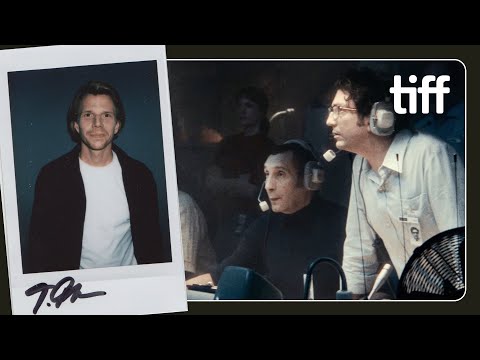
Tim Fehlbaum On The Media's Role In The 1972 Munich Massacre | TIFF 2024
Featurette
More Like This

Raid on Entebbe
1976 · ★ 6.0

Mad City
1997 · ★ 6.2

Shattered Glass
2003 · ★ 7.0

The Eichmann Show
2015 · ★ 6.7

The Company You Keep
2012 · ★ 6.2

Munich - The Edge of War
2021 · ★ 6.9

7 Days in Entebbe
2018 · ★ 5.8

Golda
2023 · ★ 6.3

The Scarlet and the Black
1983 · ★ 7.1

Richard Jewell
2019 · ★ 7.4

The House on Carroll Street
1988 · ★ 6.0

Escape from Germany
2024 · ★ 6.7

The Devil's Arithmetic
1999 · ★ 6.8

Patriots Day
2016 · ★ 7.1

On Fire
2023 · ★ 6.3

The Caveman's Valentine
2001 · ★ 5.9

All the President's Men
1976 · ★ 7.7

55 Days at Peking
1963 · ★ 6.9

The Man Who Knew Too Much
1956 · ★ 7.4

Last Breath
2025 · ★ 6.8
In the News
See All
What People Are Saying
This movie brilliantly tells the story of one of the most known terrorists attacks of the 20th century. It's beautiful execution captures one quite quick. Archive footage is neatly intertwined within remade scenery, and you don't notice at all. At first I was skeptical as to why they shot this german movie in english language, but it was justified and I'm happy that they often also speak german in the movie. Overall really solid flick with remarkable camera work.
Read it on trakt.tv“September 5” is a behind-the-scenes thriller that throws us right into the eye of the storm during one of the darkest moments in Olympic history, exploring the impact of the 1972 Munich crisis through the lens of TV coverage. Directed by Tim Felhbaum, the film does a great job of capturing the urgency and claustrophobic tension of a newsroom trying to process a tragedy in real time. But at the same time, it sticks too closely to the journalistic narrative, steering clear of deeper dives into the historical and political implications of the event. The goal here is clear: to put the audience inside the ABC Sports control room and let them feel the weight of the decisions that would shape not just that fateful night’s coverage but also the future of live media itself. The script, written by Felhbaum and Moritz Bender, takes a sharply focused approach, following Geoffrey Mason (John Magaro), a producer forced to juggle the ethical and commercial demands of the coverage while dealing with pressure from his bosses and the unpredictable nature of the situation. Magaro delivers a nuanced performance, perfectly conveying the mental exhaustion and paralyzing fear of making the wrong call, making his character the moral anchor of the story. His clashes with Marianne Gebhardt (Leonie Benesch), a German translator suddenly thrown into the heart of the crisis, and Marvin Bader (Ben Chaplin), a tech operator with personal ties to the tragedy, add an extra emotional layer that keeps the drama grounded and engaging. The chemistry between the trio is one of the film’s biggest strengths, helping to humanize a plot that could sometimes feel overly technical. Felhbaum’s direction takes a minimalist approach, using handheld cameras and a grainy visual style that mimics the look of 1970s TV broadcasts. This stylistic choice works well to heighten the sense of urgency and pull the audience into the chaotic atmosphere. The sound design plays a crucial role, with overlapping dialogue, radio chatter, and TV monitors buzzing in the background, creating an almost documentary-like immersion that highlights the cacophony of voices and information flooding the control room. The sense of disorientation is intentional and effective, making us feel the same confusion as those trying to make sense of what was happening on the other side of the screen. However, the film stumbles when it comes to addressing the political and historical complexities of the crisis. The Israeli-Palestinian conflict is only briefly touched upon, and the film seems more interested in tackling the ethical dilemmas of TV journalism than delving into the deeper roots and consequences of the attack. This choice might disappoint viewers hoping for a more in-depth exploration of the event as a whole. Peter Jennings’ character, played with understated charm, ends up feeling underutilized, pushed to the sidelines, which weakens the film’s attempts to offer a broader perspective on what happened. It’s understandable that the focus was meant to stay on the internal dynamics of the newsroom, but the lack of deeper context makes the film feel a bit one-sided. Still, “September 5” stands out in the way it captures the birth of modern media coverage as spectacle. The use of the iconic image of the masked terrorist as a symbol of the tragedy—and its transformation into an almost branding element for the broadcast—is one of the film’s most powerful moments. It subtly hints at the consequences of blending information with entertainment. The movie suggests, without being too on-the-nose, that the Munich crisis marked a turning point in how tragedies began to be televised and consumed, something that still resonates today in the era of social media and 24-hour news cycles. “September 5” is an effective film within its intended scope—a tense and well-crafted thriller about the inner workings of historic news coverage. It shines in its technical details, strong performances, and meticulous recreation of a moment of crisis, but it falls short by avoiding a deeper exploration of the event’s complexities. For those looking for a character-driven study of people under pressure and an almost sensory dive into the chaos of a newsroom, the film delivers an engaging experience. But for those expecting a broader, more critical take on the tragedy’s ripple effects, it might leave them feeling like something is missing.
Read it on trakt.tvThe retro approach coupled with the suspense was great.
Read it on trakt.tvThe attack at the 1972 Munich Olympics has been told in many ways, but September 5 takes a different perspective: that of the journalists who covered the crisis live. The film throws us into the ABC newsroom, where a team struggles to inform the world while the events unfold with unbearable tension. The story feels real and intimate because it doesn’t need to exaggerate the drama. There are no unnecessary reenactments or cheap emotional tricks. The pressure of the moment is conveyed through intense dialogues, uncertain glances, and the constant feeling that every decision inside that newsroom could change everything. It’s a raw look at journalism when immediacy clashes with the responsibility of telling the truth. The setting is excellent, and the pacing maintains the tension without forcing situations. While some parts may feel slightly stylized for cinematic impact, the film achieves its goal: making us feel the anguish of those who lived that day, not as mere witnesses, but as the ones responsible for informing the world.
Read it on trakt.tvIf this's propaganda get your head checked. :peanuts:
Read it on trakt.tvI was fully captivated by how insanely intense this job really is. That was the best part of the movie for me, pulling back the curtain and really focusing on the process in its most minute details.
Read it on trakt.tvIt’s invariably disappointing when a movie you’ve been looking forward to seeing doesn’t live up to expectations. But such is the case with the latest offering from writer-director Tim Fehlbaum. This re-creation of the day when Black September terrorists took members of the Israeli Olympic team hostage at the 1972 Munich Summer Games, sadly, misses the mark on many fronts. As told from the perspective of the ABC sportscasting crew covering the story, the film comes up short in conveying the sense of urgency and immediacy associated with this human tragedy, which was broadcast live around the globe and is said to have attracted more viewers than Neil Armstrong’s 1969 moon landing. While the picture is to be commended for its apparent authenticity and insights at capturing the events and mood inside the broadcast headquarters, much of the narrative nevertheless descends into a talky, overly technical take on what was transpiring around the TV crew, not a particularly effective way of depicting the nature of an event that shook the world and inevitably changed the way on which crisis situations are reported. While I certainly was not looking for sensationalist treatment here, I also wasn’t expecting to be bored by its clumsy, underwhelming chronicling of circumstances that had the globe on the edge of its seat. The depiction of this scenario, including the coverage of the particulars of that day, as well as examination of the myriad moral implications involved in their televised presentation, fail to captivate viewers on the same way as the events themselves did. I personally remember this fateful day quite well as one that became indelibly etched into the memory of an impressionable 15-year-old – and one that played a critical role in my eventual decision to pursue an education and career in journalism. Because of that, perhaps I expected too much from this release. Perhaps I had unrealistic hopes that an entertainment vehicle could live up to the compelling journalistic portrayal of an event such as this. Either way, though, that doesn’t make up for the disappointment associated with the telling of this story. In a world plagued by as many catastrophes as we experience these days, one could argue that we needn’t be reminded of those that are now behind us. But, if we choose to embrace the notion of “never forget” associated with such traumatic incidents, it behooves those behind such painful commemorations to make sure that their impact unmistakenly comes through, something that is definitely not the case with this offering.
Read it on themoviedb.org<em>'September 5'</em> is based upon a true story, one that I had somehow not really known about - despite being into sports, albeit not a big Olympics guy. The event in question did ring tiny bells in my head pre-watch, but oddly not as much as other Olympic events would have. As such, I didn't actually know how this story was going to play out. That was actually very beneficial, as I was moving up and down with all the dramatic and disturbing developments. This film portrays its plot tremendously, they set the perfect vibe and pace throughout. The acting is also of good quality. John Magaro is the one who impressed me most, though Peter Sarsgaard, Ben Chaplin and Leonie Benesch are also excellent. It's fascinating to see it all from the media's perspective, especially in terms how they broadcast; e.g. the onscreen graphics.
Read it on themoviedb.org