


The story
This series explores the history of the major American musical form. We track its development in African American culture, its rise to prominence with its golden age of popularity spanning from the 1920's to the mid 1940's both in its original form and in Swing through its popular decline and the rise of vital new sub-genres into the present day. Along the way, we learn of the lives and work of major contributors to the form such as Louis Armstrong, Duke Ellington, Billie Holiday, Benny Goodman, Charlie "Bird" Parker and many others who helped form Jazz into the vibrant musical form it is. Moreover, we see how the music reflected the political and social issues of the African American community over the course of the form's history.
Story from TheTVDB.
Where to Watch
Where-to-watch data by JustWatch · every service.
Cast

Keith David
Narrator (voice)
Sidney Bechet
Self (archive footage)

Louis Armstrong
Self (archive footage)
Duke Ellington
Self (archive footage)
Benny Goodman
Self (archive footage)
Artie Shaw
Self (archive footage)
Billie Holiday
Self (archive footage)
Glenn Miller
Self (archive footage)
Dave Brubeck
Self (archive footage)
Art Tatum
Self (archive footage)
John Coltrane
Self (archive footage)
Art Blakey
Self (archive footage)
Charles Mingus
Self (archive footage)
Wynton Marsalis
Self

Miles Davis
Self (archive footage)
Lester Young
Self (archive footage)
Stanley Crouch
Self
Seasons

Videos

Wiz Khalifa Wants To Try Jazz Music 🎶✨ #WizKhalifa #PuppyInterview
BuzzFeed Celeb

Lizzo wants fans to feel the intimate vibe at Blue Note Jazz Club in NYC
Late Night with Seth Meyers

Cassandra Wilson, GRAMMY-Winning Jazz Singer, Dead at 70
Entertainment Tonight

Peter Parker & Gwen Stacy - Jazz Club Dance Scene - Spider-Man 3 (2007) Movie CLIP HD
TopMovieClips

The Biggest Jazz Star of the 1970s was Secretly Born a Woman
Facts Verse

A Jazz-y trip down memory lane 🐈🎶
Disney

Soul's Half Note Jazz Club Ambiance | 10hr Pixar LoFi
Pixar
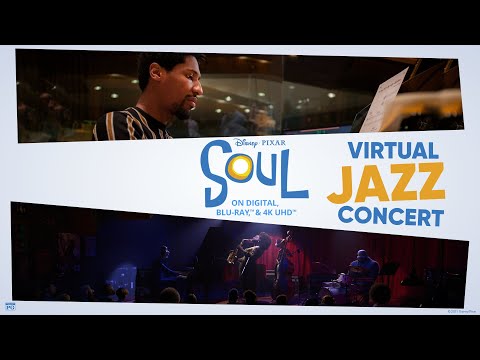
Soul | Virtual Jazz Concert
Pixar

Tony Bennett, Legendary Pop and Jazz Singer, Dead at 96 | PEOPLE
People

Life After Beth | Smooth Jazz | Official Movie Clip HD | A24
A24

Timothée Chalamet and Kylie Jenner's courtside date night at the Lakers vs. Jazz game #shorts
Page Six

Michael Jordan Refused to Give Jazz Chisholm Jr. His Autograph (Extended) | The Tonight Show
The Tonight Show Starring Jimmy Fallon

See Camden Through the Lens of Legendary Jazz Singer Amy Winehouse | Reel Destinations
Focus Features

‘Severance’ Creator on Season 3: “We Know the End, But We’re Playing Jazz” | Emmys 2025
IndieWire
More Like This

American Masters
1986 · ★ 7.0 · TV

Baseball
1994 · ★ 7.5 · TV

Horizon
1964 · ★ 7.5 · TV

Biography
1987 · ★ 6.7 · TV

The World According to Jeff Goldblum
2019 · ★ 6.6 · TV

Animal
2021 · ★ 8.0 · TV

American Experience
1988 · ★ 6.5 · TV

30 for 30
2009 · ★ 7.5 · TV

How Do They Do It?
2006 · ★ 7.5 · TV

The Circus
2016 · ★ 6.5 · TV

Welcome to Earth
2021 · ★ 7.6 · TV

Top Gear
1978 · ★ 8.0 · TV

Earth at Night in Colour
2020 · ★ 8.1 · TV

History's Greatest Mysteries
2020 · ★ 7.7 · TV

NOVA
1974 · ★ 7.1 · TV

Mysteries at the Museum
2010 · ★ 8.8 · TV

MegaStructures
2004 · ★ 7.5 · TV

Cosmos
2014 · ★ 8.5 · TV

Natural World
1983 · ★ 7.4 · TV

World War II in Colour
2009 · ★ 7.7 · TV
What People Are Saying
Contains spoilers — show it
Jazz is a noble attempt to be the defining documentary about jazz, “America’s art music” and one of the greatest things to happen in human history, in my humble opinion. Burns has assembled his usual materials – pictures, quotes, historians, contemporary music – to go along with video clips and reminiscences due to the fact that much of this music was performed when it could be recorded either by audio alone or by audio and film. And it should be commended that the tried to do this, just like Burns should be commended for his other long-form documentary projects. But this film is not the story of jazz. Rather it is a biased and inaccurate account that is ultimately a failure as a history of jazz, and so a failure as a film. It is an excellent history of jazz prior to about 1950, and if that was its stated goal, we would have another excellent Burns documentary. Instead we get typical Wynton Marsalis conservatism that is opposed to everything that is great about jazz. (And this isn’t necessarily a criticism of Marsalis himself, as he is an excellent educator – I can tell that by his interviews. But he is horribly wrong about what jazz is and isn’t.) This film is something like 19 hours long, and barely makes room for anything post-bop. These conservative types are the worst: they idolize Bird and Diz for how they broke with tradition but hate late period Miles or late period Trane, or hate Ayler for the same reasons. And of course they totally ignore the Europeans post Reinhardt as if European jazz had barely happened at all. Here are some of their various crimes: Monk is ignored until near the end and when they do eventually discuss him its partly to talk about how he was ignored. Bud Powell barely gets any time. They spend something like 90 seconds on Mulligan’s piano-less quartet. Brubeck gets some time, but hardly as much as you might think given the revolutionary nature of the one recording of his they actually acknowledge. Davis gets more attention than anyone else post-Bird but Davis should get similar amounts of time to Armstrong and Ellington and yet the first 15 hours or so are dedicated primarily to Armstrong, followed by Ellington – Ellington is not mentioned in the earliest segments – and Miles gets major sections of the last few episodes and that is all. Speaking of Davis, when he did cool jazz, apparently it was cool, but when other people did it, not so much – now I don’t particularly enjoy cool, but they don’t really provide any reason for their opinions and they shouldn’t ignore the fact that cool jazz has been as popular as bop post-war. What was with that brief, horrible “history” of rock and roll? It was all of 90 seconds and seemed to imply that Ray Charles invented it and Elvis made it popular. Um, right… Trane’s free jazz phase is ignored altogether until the final episode and Coleman gets what feels like 10 minutes. In the last episode, when they list contemporary styles of jazz they omit fusion entirely and then later fusion is dismissed as Miles’ attempt to make money, even though if they had actually paid any attention to history, they would know he wasn’t even the first fusion musician. (This is the most egregious error of the entire program. They insist that Miles only embraced fusion because of his experiences at the 1969 Newport Jazz Festival but this is idiotic and easily fact-checked: Miles’ first fusion album – not the first ever – was released in July of 1969, probably prior to the festival, which I believe usually takes place in August. Moreover it was recorded in February, i.e. half a year before the festival. Also the idiots keep calling the instruments used in Fusion “electronic” as if an electric guitar or bass is “electronic.”) Apparently, because Armstrong sang pop tunes that were hits during the British invasion, we should care more about his ’60s work than, say, Miles’ work of the same period, which is basically the embodiment of the “When I was younger things were better” conservatism that ruins this series. The brief amount of time they give Mingus is almost entirely dedicated towards his social comment, and not his actual music. The Art Ensemble of Chicago gets only a few minutes. They and Taylor are pretty much the only people who are addressed in Free post-Coleman, and Taylor gets some flak because apparently he’s just too difficult to bother with. (And the same people who accuse Taylor of being too difficult accuse Miles of pandering…) Hancock is discussed as as sideman only. The film completely ignores the following genres (only the ones I can think of off the top of my head): Chamber jazz; ECM; Fusion (the modern variants with alternative rock and hip hop); Klezmer jazz; Modern creative; And no doubt many more. The documentary further omits or barely acknowledges many important jazz artists, here are only a few: Chet Baker (mentioned only in passing); Anthony Braxton; Don Cherry (mentioned only as a member of Coleman’s quartet); Steve Coleman (mentioned only in passing, shockingly as someone we should listen to); Chick Corea; Eric Dolphy; Every single European jazz musician post-Reinhardt and every other international jazz performer; Every post-Miles fusion performer; Ahmad Jamal (mentioned only in passing); Keith Jarrett (mentioned only in passing and only in relation to Art Blakey – can you imagine thinking Keith Jarrett is only worth knowing as a sideman to Art Blakey?!?!?); Roland Kirk; Wes Montgomery and every single post-Charlie Christian jazz guitarist save one I didn’t know (who is mentioned in passing) – that’s right, the guitar as a jazz instrument is ignored from the 1940s onward; Lee Morgan (mentioned only in passing); Bud Powell (mentioned briefly); Every major jazz vocalist post-Fitzgerald (though a couple are shown as interviews and Cassandra Wilson gets a sentence); John Zorn; And numerous others I am forgetting – I apologize but I haven’t set out to write a definitive history here, I was just attempting to watch one. Supposedly many of these people aren’t mentioned or barely mentioned because they helped kill jazz. Clubs closed and people stopped listening because of too much innovation. And who will safe us from the poverty of self-indulgent free jazz and pandering fusion? Why, it’s Wynton Marsalis, the same guy who we’ve been listening to for 18+ hours. Talk about self-serving… I mean, I don’t know what Burns was thinking but the final hour of this film is practically an advertisement for Wynton and his despicable conservatism. I mean, how can these guys seriously let him say this shit? Your lead interviewee is also the person who “saved” jazz? And you don’t question this? Unbelievable. And then they give us a list of the people we should be listening to, multiple of whom had participated in the program as interviewees. Thanks, I’ll be sure to listen to these people who are apparently so much better than everyone ignored, who all actually have reputations and make great music. But I’ll give them one thing: At least they have Artie Shaw talking about how much he hated Glenn Miller. That part was awesome. If you want a history of the first decades of jazz, watch this. If you want a history of jazz, read a book, such as Alyn Shipton’s excellent history. I really wanted to give this a 3 or lower, however the first 8 episodes are a near-excellent history of jazz in the first half of the 20th century, and so that is why I am being kind and giving it a 4.
PBS ten-part series (on Kanopy & Hoopla): 1. Gumbo: Beginnings to 1917 2. 3. 4. 5. 6. 7. 8. 9. 10. ...
Read it on trakt.tv