


The story
Elliot, a young programmer who works as a cyber-security engineer by day and a vigilante hacker by night. Elliot finds himself at a crossroads when the mysterious leader of an underground hacker group recruits him to destroy the corporation.
Story from TheTVDB.
Where to Watch
Where-to-watch data by JustWatch · every service.
Cast


Seasons


Videos

Official Extended Trailer - Season 1
Trailer

Trailer
Trailer

Extended Sneak Peek - Season 1
Featurette

Rami Malek says he was responsible for this iconic part of MR. ROBOT
Josh Horowitz

LEAVE THE WORLD BEHIND Ending Explained | Hidden Meaning, Mr. Robot Easter Eggs, Breakdown & Review
Heavy Spoilers

MR. ROBOT reunion: Rami Malek, Christian Slater, Sam Esmail on the show that changed their lives
Josh Horowitz
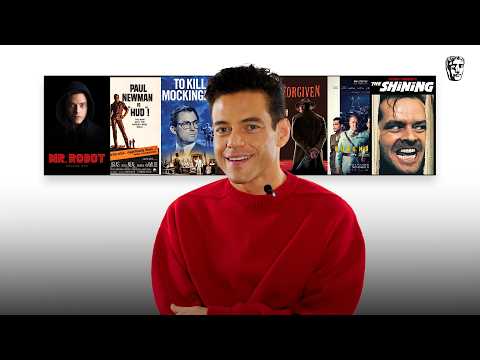
Rami Malek Could Not Look Away From The Shining And Why He Had To Say Yes To Mr Robot | BAFTA
BAFTA
More Like This

Black Mirror
2011 · ★ 8.3 · TV

The Capture
2019 · ★ 7.6 · TV

Sneaky Pete
2015 · ★ 7.5 · TV

Mr Inbetween
2018 · ★ 8.3 · TV

T@gged
2016 · ★ 7.1 · TV

Altered Carbon
2018 · ★ 7.6 · TV

The Patient
2022 · ★ 6.9 · TV

Sense8
2015 · ★ 7.7 · TV

S.W.A.T. Exiles
2026 · ★ 6.4 · TV

The Hitchhiker
1983 · ★ 6.2 · TV

The Hack
2025 · ★ 6.7 · TV

Titans
2018 · ★ 7.8 · TV

Paradise
2025 · ★ 7.6 · TV

Person of Interest
2011 · ★ 8.1 · TV

Suspicion
2022 · ★ 6.8 · TV

Gotham
2014 · ★ 7.6 · TV

Killing Eve
2018 · ★ 7.9 · TV
Monsters: The Lyle and Erik Menendez Story
2024 · ★ 7.6 · TV

Oz
1997 · ★ 8.0 · TV

Painkiller
2023 · ★ 7.2 · TV
In the News
See All-
 The 6 Most Hopeless Thriller TV Shows, RankedCollider · 6d ago
-
 10 Thriller Shows With the Greatest Villain Performances, RankedCollider · Nov 6
-
 6 Thriller Shows From the 2010s That Are Perfect From Start to FinishCollider · Nov 2
-
 Chris Sullivan Joins Jeremy Holm On ‘Tessellation’ As Filming Gets Underway In IllinoisDeadline · Oct 29
-
 The 15 Best Shows To Watch if You Love Stephen KingCollider · Oct 26
From Wikipedia
Mr. Robot is an American psychological techno-thriller television series created by Sam Esmail for USA Network. It stars Rami Malek as Elliot Alderson, a cybersecurity engineer and hacker with social anxiety disorder, clinical depression, and dissociative identity disorder. Elliot is recruited by an insurrectionary anarchist known as "Mr. Robot", played by Christian Slater, to join a group of hacktivists called "fsociety". The group aims to destroy all debt records by encrypting the financial data of E Corp, the largest conglomerate in the world. The pilot premiered online and via video on demand services on May 27, 2015. In addition to Malek and Slater, the series stars an ensemble cast featuring Carly Chaikin, Portia Doubleday, Martin Wallström, Michael Cristofer, Stephanie Corneliussen, Grace Gummer, BD Wong, Bobby Cannavale, Elliot Villar, and Ashlie Atkinson. The first season debuted on USA Network on June 24, 2015; the second season premiered on July 13, 2016; and the third season premiered on October 11, 2017. The fourth and final season premiered on October 6, 2019, and concluded on December 22, 2019. Mr. Robot received critical acclaim, particularly for the performances of Malek and Slater, its story and visual presentation and Mac Quayle's musical score. The series has gained a cult following. Esmail has received praise for his direction of the series, having directed three episodes in the first season before serving as the sole director for the remainder of the show. The show received numerous accolades, including two Golden Globe Awards, three Primetime Emmy Awards, and a Peabody Award.
From Wikipedia’s article “Mr. Robot”, under CC BY-SA 4.0.
What People Are Saying
easily at the top 3 best shows of decade! there is a lot to say about this show, but if you have not seen it yet. I have only envy at you. so if you are reading these words, go now and embrace this amazing experience.
Read it on trakt.tvI did not expect such a brilliant first episode... What an intricate and nuanced representation of hacking life! Beyond this, the writing, and the acting are exceptional. It's also nice to see Christian Slater... he was a staple from my youth when I started messing with computers and learning how to code. This first episode was a very pleasant surprise... really was better than most of the crap out here, and I, in general, abhor the bulk of television on offer. This show looks more meaningful somehow.
Read it on trakt.tvContains spoilers — show it
My mixed reception is an unpopular opinion, so I want to clarify that I’m not saying the show needs to be a certain way or trying to invalidate the feelings of those who like it. This is not a persuasive piece. People will enjoy art to varying levels based on their personal experiences. This (long) review is only about why it failed to resonate with me. Firstly, I really enjoyed the first season, with its vigilante-hacker premise, which felt very similar to Dexter. The pilot and Whiterose's introduction are really intriguing, and I enjoyed the conflict between Elliot and Vera. Elliot makes a risky choice, turning Vera, a crime lord, in to the police because he's supplying Shayla drugs, only for Vera to later realize Elliot was the one who turned him in. This leads Vera to force Elliot to break him out under threat of harming Shayla; Elliot complies, only to later learn that Shayla had already been killed. I think it's an engaging conflict because the show gave compelling motivations for Elliot's actions. We're shown that Elliot knows the risk involved in turning in Vera, but decides to go through with it to protect Shayla. It was an interesting choice and conflict to give this vigilante hacker. Furthermore, I thought Shayla's death landed emotionally through Elliot's grief because the show spent enough time developing their relationship. Early on, the show establishes how Elliot utilizes hacking to cope with his social ineptness. Through hacking, Elliot uncovers people's private lives without direct interaction. But Shayla stands out as the first person Elliot forms a sincere emotional connection with. Even though Elliot hacks Shayla, she voluntarily reveals intimate aspects about herself that Elliot failed to learn while hacking her. Elliot finds emotional intimacy within a world where he feels isolated and misunderstood. I love it; it comes across as a sincere emotional beat. However, it remains my favorite part of the show. While the conflict between Vera and Elliot isn't incredible, it's debatably more textured than anything else in the show. Other ongoing conflicts are definitely engaging, such as Elliot and Mr. Robot's fight for control. But much of the show's drama remains dull because I either found myself uninvested in the characters or felt the conflicts needed more fleshing out for their choices and tragedies to carry emotional weight. Season 1 remains a part of the show that offered engaging, self-contained story arcs, but once it concludes, everything screeches to a halt. It quickly became clear the story had run out of the ideas it was initially desperate to unveil. I want to clarify that I really enjoyed the show's slow pacing. It's soothing to watch, and it helped create an immersive atmosphere. It allows time to process elements like character deaths and flesh out more complex concepts. However, I didn't like how Mr. Robot approached many of its concepts and characters. Although it aims to examine emotions like depression and anxiety, I thought its approach to these topics was often one-dimensional, vague, or callous. As a result, I found the show's bleak atmosphere unnecessary, and, at times, its consistent killing off of characters came across as mean-spirited/misanthropic. The show consistently portrays characters being abused and abusing themselves, yet shies away from sincerely delving into much of their trauma. It leaves much of the show feeling like misery porn, with tragic endings becoming monotonous. The show is hardly about working through or exploring trauma, but more about presenting the ugly side of trauma in increasingly shocking ways. Even with its twist ending, what it unveils is not an anti-escapist message, but that Elliot had relied on escaping his reality for longer and to a more extreme degree than previously shown. The broader apathy begins with the show’s political conflict. With Elliot incessantly rambling on about the top 1% of the 1%, Mr. Robot attempts to discuss class disparity and the systems that perpetuate it. Unfortunately, I found the show's exploration of the subject matter and the drama it generated unengaging. To explain why, let's start with those in that top 1% of the 1%: Price and Whiterose. Both had potential as characters; for example, they could have solid reasons for believing they should be in power, but they don't. To start, Price is purely selfish and goal-oriented, which I quickly failed to empathize with. Price is defined almost entirely by his desire to be the most powerful person in the world. He has an undefined narcissism and, therefore, wants to be at the top of the human hierarchy. I really struggle to see much nuance in his character. On the other hand, Whiterose seeks power to construct her ominous machine, and while I like certain aspects of her character, vital aspects of both her and her plan are needlessly ambiguous. This morally ambiguous machine, which supposedly would create an alternative world, has considerable narrative potential; however, the show fails to address the growing moral implications or the specifics of its function. Ultimately, both Whiterose and Price lack compelling goals because they offer no clear arguments to support their perspectives. That matters because the most interesting thing about characters like this is how much influence they have. They face dilemmas most will never understand, and these dilemmas highlight their moral beliefs and personal motivations/plans for those under their rule, but the show fails to offer them. Both characters remain focused on their goals, regardless of moral considerations. This leads to the elements that could offer such dilemmas, such as The Dark Army’s conduct (killing themselves rather than being captured, blowing up 71 buildings, and killing over 3000 people), functioning as a merciless show of cruelty from Whiterose’s end. (Her willingness to sacrifice such lives could very well result from her belief that her machine can bring people back to life. In which case, Whiterose cares about human life, but she's killing people in the short term because she believes it can be undone.) Price is against much of Whiterose’s actions, not supporting killing as many people as she does, and thinks her to be delusional. However, he remains utterly unempathetic towards everyone except Angela, and his later acts seem to come from simple vengeance rather than a true change of heart. Given how Whiterose and Price are presented, the potentially compelling ways it could explore people in positions of power are wasted. It could have asked questions like: How much power should one person be allowed to have? How much control should a government have over your life? Thought-provoking stories explore such questions and the dramas that arise from them. However, I feel Mr. Robot ends up only asking one much less interesting question: Would it be bad if people with selfish goals who are willing to kill large numbers of people to accomplish those goals were in power? Shockingly, the answer is yes. And herein lies the problem. The show shies away from exploring fundamental issues in its world because it frames the conflict as individual rather than systemic. As far as I'm aware, to fix the problems in the world of Mr. Robot, you wouldn't need to make fundamental changes to the systems in place; you would only need to remove people like Whiterose from power, and the show reflects this. Elliot initially failed to fix society's problems by destroying the economy and all financial records. Many in power maintain their positions, and instead of pushing society in a better direction, the reset creates chaos. On the other hand, the Deus Group hack is portrayed cathartically. Whiterose created the Deus Group, which included some of the world's wealthiest people. By hacking them, Elliot takes them out of power. Ultimately, Elliot wins by temporarily removing those in power. But of course, I'm not expecting the show to offer a foolproof solution; there is no such thing as a perfect society, but it could've done much more. For example, by showing more of how Whiterose and Price manipulated/exploited systems and people in place to gain power. I won’t deny that there are still interesting elements of manipulation by Whiterose/Price. It shows how those in power give the general public a false sense of security to retain their power. And it introduces certain ideas, such as commodity fetishism. It also outlines political corruption, showing large conglomerates being more or less integrated into the government, and one core issue with capitalism is its tendency toward monopolies. However, Whiterose having as much influence as she does and conglomerates integrated into the government is simply the status quo of Mr. Robot; the reasons why the systems in place could lead to this are more or less implicit. I'm still happy to see a show that wants to explore such topics, even if I don't think it leads this discussion well; I believe the show's heart is in the right place. But what it ultimately offers isn't very constructive; it's a thick layer of cynicism, only enlightening for idealistic people who think the way we've structured our societies is perfect. Ultimately, I feel its efforts are wasted. I find the show only gestures towards an insufficiently grounded anarchist/anti-society message; I first thought the f-society title was satirical, but it doesn't go much deeper than that. Emotionally, as outlined, I find Price too simple a character, so efforts at emotional catharsis feel fruitless. At the end of Season 3, Price has a massive shift in motivation following Angela's death. Whiterose explains to Price that Angela forced her hand because she looked too much into the toxic waste that killed her mother. After all, the plant powers her machine. Fundamentally, Price thinks Whiterose's machine won't work and that she's killing Angela out of delusion, so he drops his pursuit of wealth to team up with Elliot. Unfortunately, I find Price’s shift unconvincing, and I wish it had established two things. First, it should have established more about Price as a character. For example, the show could've given Price more textured reasons for believing he should be in power, or added some rationale for his lust for power. If they did something like this, it would add some moral complexity to his character. Although this change isn't directly related to Angela, it will make this change of sides more understandable. The second would be to establish Price's relationship with Angela further. Because in the show's current state, we don't understand Price's relationship with Angela beyond the fact that she's his daughter. And, if anything, what we see suggests he doesn't care much about her. He is still working as CEO of the company that killed Angela's mother, and the two rarely interact. He does hire Angela and, at times, shows a fondness for her, and, as Price tells Angela, her mother took her away from him because he was a monster. But that raises the question: Why didn't he relinquish his goals sooner if Angela meant so much to him? Price's feelings towards Angela sadly remain vague, and with Angela's death catalyzing a shift in Price's character, it’s central to why I found the shift so unconvincing. Without this effective transition, his death feels meaningless. Price sides with Elliot and succeeds at avenging Angela, but Whiterose kills Price. Price, while dying, seems content, crumbling Whiterose’s empire in revenge, and his contented death avenging Angela leaves me more confused than moved. This conflict between Whiterose and Price is also a missed potential for something more nuanced. A feud between two characters in positions of power is intriguing; for example, Price and Whiterose could strongly disagree on certain issues or agree on others, all while holding philosophical positions that fuel their motivations. Contrasting differing worldviews could create a genuinely provocative conflict and raise relevant ethical questions, but I don’t feel this is the case. Switching over, Whiterose is initially intriguing but fails to live up to her potential. I mainly want to focus on the final scene in "eXit," when Whiterose kills herself, as it's the most disappointing moment of the entire show. Elliot’s confrontation with Whiterose felt like the moment the whole show had been building toward. After all the death and suffering Elliot and Whiterose have been through, their conversation over her machine should have been the show's pinnacle. The show continually alludes to Whiterose's deeper secrets regarding her plan, and in "eXit,” Whiterose tells Elliot what her machine is. A device that will transform their world into a parallel world, bringing everyone who has died back to life. If this machine works and she can create a parallel dimension, it could be the show's most creative, compelling, and morally conflicted concept yet. By fleshing out the machine's function and use, you could explore rich themes and character drama. How might both Elliot and Whiterose feel about alternate versions of their loved ones/companions brought back but freed of the suffering they’ve been through? There’s this whole rabbit hole of potential for both characters. Alongside hopes to learn about the machine, what excited me about this confrontation was the possibility that all the ambiguity around Whiterose would generate drama. Elliot could be tempted by what she offered. Whiterose could confront Elliot about his impactful actions of destroying financial records and the Deus hack. Elliot could challenge the morality underlying Whiterose’s project, and Whiterose could finally give context for how she convinced Angela. And both could confront the uncomfortable similarities that both left people hurt in pursuit of their goals, especially Whiterose killing thousands. The film contrasts whether their ideals were worth making others expendable. And a lot of this could still be accomplished without explaining the intricacies of White Rose’s machine. But it’s all thrown away by Elliot's response to Whiterose: "You're not liberating them. You're forcing this on them." We later learn that Elliot isn't Elliot; he's a created personality that embodies Elliot's rage, and he was "the mastermind" who orchestrated the 5/9 hack. Elliot's rage is driven by a core motivation: to make the world Elliot lives in better. His key character flaw is that he's willing to take radical action to accomplish this goal, and his efforts have caused many of those he cares about to be killed. So, I feel this response is out of character. He tried to destroy the economy; he's not a stranger to "forcing things on people," and his goal seems to be to improve the world around Elliot; if anything, the prospect should greatly pique his interest. I don't understand this dismissive approach. After Elliot's rebuttal, Whiterose disappoints further, alluding to everything she previously showed Angela to convince her (which remains a mystery), but Elliot doubles down, doubting that her machine even works. In response, you’d expect something defensive, maybe showing the logical outcome of what Angela witnessed. But no, Whiterose remains adamant, yet only implying that she has strong evidence that her machine works. Then, annoyingly so, Whiterose gets a random sense of destiny before she can explain herself further. She states that all she wanted was for Elliot to believe in her, and "Our paths were too precisely linked to this moment for there not to be a reason." Then, we get Whiterose’s suicide. What does Elliot do in response to these confusing actions? Unsurprisingly, he tries to stop her. Whiterose never explains why her machine will work, yet she has enough faith in it to kill herself and is convincing enough for Angela and an army that would rather die than be captured. Whiterose then allows Elliot to stop her, claiming she could substantiate her position, but doesn't because of destiny. When Elliot tries to stop Whiterose's machine, he thinks he has succeeded, but it turns out it is too late, and her machine activates. But this is all a fake-out; her machine doesn't work. And the show doesn't specify why, which makes Whiterose's character ambiguous. The show doesn't say whether the machine failed because Elliot tried to stop it or because it would never have worked. So, with Whiterose's character, there are two ways to view this situation. Either Whiterose was simply insane, Price was right, her machine would never have worked, and she needlessly killed many people for it. Or, Whiterose did have a point to make: she represents a conflicting philosophical position but refuses to reveal it because she feels a sense of destiny. Either way, for such an intriguing character, this conclusion left me deeply disappointed. The most likely interpretation of Whiterose's character is that, in one way or another, she was incredibly delusional. I’d also like to question this choice regarding queer representation. Whiterose is transgender, and because of that, this choice feels off-putting. Many transphobes will attempt to label gender-expansive people as mentally ill and want to dehumanize them. Obviously, queer representation is a complex topic; it's essential to recognize that policing representation can support bigotry, and we shouldn't discourage writing flawed queer characters. If someone found themselves meaningfully represented in Whiterose, I would never want to take that away from them, but this ominous send-off for her character is insubstantial. It seemed like Whiterose would have a lot to say for herself, but she doesn't, and I find her portrayal as delusional to be disconcerting. Whiterose has a strong foundation, but by the end, she feels less like a realized character and more like a vessel for a puppet master pulling the strings. Mainly in the story for the mystery of her machine and the deception of believing it worked. It saddens me that I felt this way about Whiterose's character; trans representation is currently scarce. I really felt the show provided a compelling/intriguing base for Whiterose's character; we're shown her struggle against a lack of trans acceptance and her partner's suicide due to it, all then wrapped in the prospect of this machine to resolve it all. But I'm left desperately wishing the show had handled her differently later on. (To be fair, Whiterose may have been written this way to contrast Elliot, who developed dissociative identity disorder to cope with his trauma and frustrations. In contrast, Whiterose creates the delusion that she can bring people back to life to cope with her partner's death. However, I'm still put off by the idea of making her character a delusional mass murderer, and I wish she'd been more fleshed out.) A few other characters are worth discussing, such as Tyrell Wellick. When writing a loose-cannon-type character, I want to see two things. First, if they get substantial screen time, which Tyrell does, I want to see them consistently used as a loose cannon. Second, and most importantly, I don't want their being a loose cannon to define their character. So, regarding Tyrell Wellick being underutilized, he gets a lot of attention, which frames him as a loose cannon. The problem? So much time is spent building him up, but his volatility only pays off in the Season 2 finale. Tyrell shoots Elliot, yet even that is a fake-out death rather than an action of lasting consequence. In the overarching narrative, Tyrell ultimately serves only as a scapegoat for the 5/9 hack, which also feels inconsequential. Did anyone specifically need to take the fall for the 5/9 hack? I feel Tyrell taking the blame for the 5/9 hack only serves his arc, where Elliot betrays him. Second, Tyrell Wellick's motivations remain ambiguous. As far as I can tell, they don't go beyond: "He wants money and a legacy." We also know he loves his wife and likely has feelings for Elliot, but neither is well fleshed out. Regarding his feelings for Elliot, we know he has a sense of destiny, believing that he and Elliot are "destined to do great things together." Otherwise, it feels half-baked, and I struggled to invest emotionally in Tyrell. This lack of development hurts his arc because, like Price, who is also seeking exceptionalism, I think it makes his shift hard to believe. His wife's death and Elliot's betrayal catalyze a shift in Tyrell's character, yet this shift is obscured because I didn't understand his relationships with these characters well enough. As a result, the melodramatic tragedy in the latter part of his arc carries little weight. When he struggles and Elliot says he doesn't care about him, I struggle to understand how he feels, and when he sacrifices himself, I'm relieved because it means the show will stop wasting time on him. Suppose they provided anything substantial to Tyrell's actions. For example, giving him a backstory, such as contextualizing him as an immigrant who has been in extreme circumstances. Just something to flesh out his character to make me care about his motivations. But no, Tyrell already seems to be living in excess, killing people and the like in pursuit of more wealth, and falling in love with Elliot because Elliot is exceptional. I don't know how to feel about Tyrell's character because I couldn't understand him, and he feels inconsequential in the story. He mainly exists to add to the list of people around Elliot who died. (I dislike how gimmicky Tyrell's death is. Tyrell finds something glowing blue on the ground, and it’s incredibly portentous, suggesting that he may not be dead. Knowing that Tyrell stays dead, I don't see the purpose of doing this other than serving as a superfluous metaphor for his death, seeing the light at the end of the tunnel, a computer's blue screen of death, or some other nonsense. My problem with this is that suggesting he may not be dead during his death quickly removes most of the potential weight it could have had, and I just found it annoying.) Regarding Angela, I admittedly found her dull in the first two seasons. She has some decent points, such as her interactions with Elliot. Yet she also gets substantial screen time for her independent misadventures, like being hacked by Cisco and going undercover at Ecorp. These misadventures are dull and feel irrelevant. Some of them do a decent job of humanizing her, but given how much focus the show puts on her, it’s strange that the only thing that ends up being impactful is her work at ECorp because it's tied to Elliot. The bulk of Angela's arc takes place in Season 3 and suffers because it relies on information the show never reveals. Whiterose shows Angela something that enthralls her, but as discussed, remains ambiguous. Because the information is critical, the show never clarifies what Angela saw or how it persuaded her to betray Elliot and work for Whiterose; her internal conflict remains unknowable. A broad motivation is discernible: we learn that Whiterose's machine supposedly creates alternate dimensions. Angela may have sided with Whiterose so that the machine could bring Mother back. But the emotional conclusion that Whiterose led her down from grief to betrayal of Elliot is left too undefined. Angela's arc has clear potential. The pieces are all there; Angela goes behind Elliot's back only to feel responsible for assisting a mass murderer with the final stab in the back that Price is her father. We could've watched her battle with her temptations, giving her agency and inner conflict in decisions with such strong consequences. It could’ve been a great, tragic arc, but her motivations remain ambiguous; all we know is that what she was shown was potent enough to make her betray Elliot. The pieces are there, but the decision that sparked her tragic end remains ambiguous. Ultimately, she remains a character who met a tragic, guilt-ridden end, yet without the agency to justify that guilt. Many of these same issues arise amongst the supporting cast: Trenton, Mobley, Cisco, and Romero. All four of them are killed by the Dark Army because they're considered loose ends. The problem is that the Dark Army's hunt for these four carries no weight because the Dark Army is a nebulous entity, so we can't follow their pursuit. All we know about the Dark Army is that Whiterose leads it, and they're careful to stay enigmatic. Also, their motivation to tie up loose ends is dull and does not add to their characterization. Ultimately, this pursuit relies on shocks rather than engaging tension. They also lack developed motivations. Elliot states that Trenton, Cisco, and Mobley worked with him because they wanted to change the world. However, Trenton is the only one with a clear reason for her emotional investment in such a change: her parents are immigrants struggling financially. It makes sense why she would join an organization trying to ruin the world's economy. It’s not amazing or anything, but it's better than nothing. The other characters are nothing; Mobley and Romero get little characterization. At points, Romero doubts Elliot's ability to carry out fsociety's plans, but that's about it. And while Mobley is rather charming and often used for comedy, I don't know anything about him or why he decides to work with Elliot. Cisco is part of the Dark Army and serves as Elliot's connection to them. All I know about Cisco is that he and Darlene are in love. He dies because Dom finds a keycard with his face on it, and he's announced on the news, making him a loose end. Ultimately, I find these characters are left as plot devices, killed off for shock value to fuel Elliot’s general angst. With Dom and Darlene, there was some promise early on, particularly in the show's brief exploration of Darlene's sense of insignificance and insecurity compared to Elliot. Later in the series, Dom and Darlene get into trouble with the dark army; however, this plotline is irrelevant and not nearly interesting enough to stand on its own. Both characters also remain underdeveloped, so I can't emotionally invest in them, like so many others in this show. They are both defined by her vague angst/trauma, with Dom being defined by being tired because she's been working a difficult and traumatic job for too long or something. They're both struggling in a nebulous way, and I thought the time spent on them was pointless. It also annoys me that the show chose another tragic end for them, even if it was less tragic than death. Lastly, I want to discuss the show's overarching mystery, particularly its penultimate twist ending. My interpretation of the show's twist ending is that the Elliot we've been with was not the real Elliot. He created Fsociety and planned out "Stage 1" and "Stage 2." Then, he lies to the audience, making it seem that Mr. Robot did all these things to feel like a hero. The show reveals that Elliot was the "rage" personality, taking radical action and being the "mastermind" behind the plans mentioned above. (Another way to explain it is to compare it to Dr. Jekyll and Mr. Hyde, as it has a similar premise. At the end of Season 1, we learn that Mr. Robot is Mr. Hyde, an evil version of Elliot that’s thrown his life into a spiral, supposedly, the whole time we’ve been with Dr. Jekyll. By the end of Season 4, we learn that the story was actually being told from Mr. Hyde’s perspective, and that there are various alternative personalities. Mr. Hyde pretended to be Dr. Jekyll to look better in the reader/viewer's eyes, and made another personality look like Mr. Hyde. Also, we never meet Dr. Jekyll. Yeah, it’s convoluted.) Generally, these mystery stories offer me little enjoyment. I care more about a story's characters, humor, and the emotions it evokes and explores. An unfolding mystery is only an additive; for example, twists can enhance a story by recontextualizing it, and unresolved elements can build tension. I consider three relevant factors when analyzing a twist like this. How does the twist add to the prior story? How engaging is the setup for the twist? And does it take the story in a compelling direction? (But the last is irrelevant because this is at the end.) I don’t like how this twist recontextualizes the prior story. It's a massive cop-out that creates aimless ambiguity. Of course, there's nothing inherently wrong with ambiguity; on the contrary, it's one of the strongest tools in a storyteller's arsenal. However, I can't entirely agree with the creative choice of using ambiguity on such a vast scale, as it makes everything we see from Elliot's perspective unreliable in terms of continuity, which is most of the show. In stories, I find this type of total ambiguity frustrating, a slosh of symbols with little discernible pattern. Some may love this for its capacity for overinterpretation in an endless search for coherence, but I find it betraying. Suppose I discuss parts of the show from Elliot's perspective. There's always the interpretation: "No, that's not what happened. Elliot was tricking you." And this is the problem. When discussing the validity of differing interpretations of a story, the debate hinges on whether you can provide evidence from the story to support your interpretation. Of course, many interpretations can be valid and not mutually exclusive. However, these differing interpretations are usually derived from the same story. But with Mr. Robot, instead of offering different ways of viewing the same story, you're told parts of it might be completely fake, so you can make up whatever you want to replace them. Because much of the show is undefined, many scenes invite various interpretations without any way to debate their validity. For example, there's the scene where Whiterose shoots herself. You could take this scene at face value, as Elliot presents it, but you could also argue that Elliot lied. You could say that, in actuality, Elliot killed Whiterose, and Whiterose never explained why her plans would work, because it allows Elliot to preserve his perception of the 1% as evil and make himself look like a hero, stopping a villain rather than a murderer who killed someone who had a point. But I could also say that Elliot let Whiterose run away, telling her he'd fix her machine. These are drastically different interpretations. So far, I've been discussing what the show presents at face value, specifically what Elliot shows you. But because of this ambiguity, the show's story becomes malleable enough for interpretations of Mr. Robot to have drastically different themes. But character analysis is where it's properly crippling. Because Mr. Robot is a character-driven show, the strongest engagement factor should be exploring its characters' inner worlds and interpersonal relationships. Now, I've already discussed my apathy with individual characters in detail. But this ambiguity heightens that apathy and utterly destroys my desire to dissect these characters. When a character interacts with Elliot, anything they do in that scene is ambiguous, as Elliot may misinterpret their behavior. This causes problems. I already discussed the different interpretations of the scene where Whiterose dies. I like subtle storytelling; simplicity often makes things significantly more effective on an emotional level. But here, rather than subtle or minimalistic, the show's text is inexplicit and malleable—for me, that's incredibly emotionally dissociating. But how does the twist add to Elliot's character? The main change this twist brings is in how we perceive Elliot. In Season 1, it's revealed that Elliot has dissociative identity disorder, creating Mr. Robot to cope with societal issues and the abuse by his father. It’s rather bland; it's the plot of someone experiencing trauma and creating a delusion to escape it. This concept of utilizing escapism to escape one's trauma has been done to death, and I don't find Mr. Robot offering specific trauma or subverting traditional ways of telling this story. Or at least that's how I felt regarding the end of Season 1, so does the final twist expand upon it? Short answer: This twist adds nothing to this concept. Later in Season 4, we learn Elliot was sexually abused by his father, but I honestly don't understand how this abuse, on top of other physical abuse, added to the story. And the final twist reveals that the version of Elliot we've been with embodies Elliot's frustrations with the world, when initially we thought it was Mr. Robot. This only changes which character embodies Elliot's rage, not what made Elliot upset in the first place. Furthermore, regarding the twist's setup, I will continue discussing whether the twist adds to the show, but I will now do so alongside how the show builds to it.) A story with an unfolding mystery differs clearly from any other story, and that's what you ask while watching it. With a regular story, your question is simple and open-ended: What direction will the story go in? A mystery story raises specific questions and contradictions. For example, a murder mystery starts with the question, "Who is the murderer?" As the story progresses, more questions arise to answer the core question, and then, in some cases, more questions arise once you receive the answer to the core question. This type of plotting is very engaging: a string of interconnected questions to follow and dissect. Or with inconsistency: This character couldn't possibly have committed the crime, so who did, and who had the capabilities this character lacked? Such contradictions make a story more engaging because they stand out and stay at the forefront of the audience's mind. And, even if they're only red herrings, people will engage with them. For most of Mr. Robot's runtime, the question I kept asking myself about Elliot was: What direction will they take Elliot's arc? (The biggest question I wanted answered otherwise was: What is Whiterose planning?) And with the show suggesting that Tyrell may be a created personality, I became primed to believe Elliot may have more than two personalities. But I hardly engaged with that question, and it wasn't until 407 (nearly the end of the show) that I was provided a proper reason to engage with the mystery. This episode presents Mr. Robot as the protector personality, but I recognized an inconsistency: Mr. Robot consistently puts Elliot in harm's way. This is an intentional inconsistency because Mr. Robot is the protector personality; it's just that earlier in the show, our Elliot, Elliot's rage, misrepresented him. My main problem is that this inconsistency was too little, too late. When it was introduced, it didn’t reel me back in; I only continued questioning the direction the story would take. Confronted with this inconsistency, I merely waited to see whether it was purposeful or a mistake. Of course, certain elements hint at this twist, such as the meetings between Mr. Robot and the other personalities in 4x09, which suggest that Elliot is a created personality. Some parts suggest that Elliot is deceiving us, such as at the end of 4x06, when Mr. Robot muses, "What if Elliot isn't the hero?" However, many poor allusions are mixed in, such as Angela handing Elliot a key and saying, "Elliot, you are the-" before cutting out in 1x04, only to be reintroduced in the series finale as "Elliot, you are the mastermind." My problem is that Angela could've just said anything like, "Elliot, you are the coolest person in the world." Stuff like this doesn't imply anything; it's claptrap to be gawked at on rewatch. Unlike many mystery stories, this twist doesn't reveal a specific aspect connected to a broader story; it exposes how the story is told and why, which makes the twist feel like it exists despite the rest of the show, since nothing tangible or gradual led up to it. It lacked a sense of unfolding mystery because, rather than peeling back layer after layer by fleshing out aspects and advancing specific themes that culminated in this reveal, the twist felt like it came out of nowhere. Most hints toward this twist are scattered allusions to how the story is being told and why, and I feel the reveal in 407 that Mr. Robot is the protector personality is the only reveal that sparks genuine engagement. (For a bit more elaboration on why the mystery failed to engage with scattered information. I believe you can categorize how your brain handles information into two general systems. System 1 is fast thinking, an intuitive way of thinking through a situation. When your brain operates in this state, it stores experiences in short-term memory. This is because the task is repetitive. Say you take out the garbage. Unless something particularly unique occurs, you'll never remember it. The action relies on long-term memory from when you initially learned to take out the trash. System 2 is slow thinking when you face new problems. This is more likely to go into long-term memory. Mr. Robot is a show full of cryptic, vague elements, many of which are never fleshed out or given immediate relevance. The problem is that, rather than introducing vague/cryptic elements and then fleshing them out shortly after, it overwhelms you with them. Because of this, I began engaging with the show's cryptic, vague elements using System 1. Another easily forgettable element in a string of ambiguous occurrences. I pointed out some sequences that were definitive setups for the twist; however, they were cryptic. So, unfortunately, when they showed up, I remembered them by the time the twist ended, but I didn't engage with them beyond a superficial level. If I ever rewatch the show, I can take pleasure in recognizing hints I missed or forgot about, but that's hardly engaging. As stated, its plotting is a convoluted slosh of symbols with little coherence.) But what about Elliot lying to the audience? Lying can be compelling in storytelling; however, it usually involves one character lying to another. In these cases, the audience is either aware of the lie or unaware of it, but so is the perspective character. However, Elliot is not lying to another character but directly to the audience. Elliot has solid motivations for lying: he wants to make himself out to be a hero, but the show does not do enough to hint at that deception. Elliot was always an unreliable narrator. But those were minor things, like his perception of E-Corp as Evil Corp. However, we now find that Elliot is an unreliable narrator who maliciously hides information from the audience. Early on, with Elliot's multiple personality disorder, we would experience his struggle with him. We saw the same delusions he did and shared his gaps with him, but now we learn that some of those gaps were sequences he didn't want to show the audience. For a show meant to center on Elliot’s emotional journey, muddying the reliability of his experiences creates an immediate emotional disconnect. But how does this reveal change Elliot and Mr. Robot as characters? We were initially supposed to believe that Mr. Robot had created plans to take down the "top 1% of the 1%" and that Elliot had spent the first three seasons trying to stop them. This conflict is recontextualized. Now, Mr. Robot tries to stop Elliot's rage from carrying out his plans, while Elliot's rage tries to preserve them. In Season 3, Elliot tried to stop Whiterose after she went rogue. I guess. Also, when Elliot gets himself imprisoned, we are led to believe he did so to stop Mr. Robot, but in fact, he was trying to stop him from ruining his plans. These aren't too engaging recontextualizations, and Mr. Robot's and Elliot's conflict in the show's early stages doesn't suggest this twist; the conflict is reversed. I've claimed that the twist feels like it exists despite the rest of the show. I want to do what I can to continue justifying that. I just talked about Mr. Robot and Elliot, but we also need to discuss how this twist affects other characters. For many characters, their only connection to this twist is that they died, fueling Elliot's general angst and making the story tragic, including Trenton, Mobley, Angela, Tyrell, Cisco, etc. Regarding the twist, these characters could fit into numerous other tragic stories; they don't feel like they were written with this specific twist in mind. With Whiterose, in the later seasons that flesh out her tragic past, she feels written so that the fake-out of her machine working is tangible. As I've previously outlined, I don't find this twist adding anything to her character; it just makes her character ambiguous. But lastly, Darlene: In the final episode, Darlene admits she knew the entire time that our Elliot wasn't the "real Elliot." Many different things fueled Darlene's angst, all of which were only vaguely coped with. The twist recontextualizes her character: we already knew several things that caused her grief, but we didn't know our Elliot wasn't the real Elliot. And regarding her choice to work with Elliot on fsociety, it's initially framed as her working with him to change the world because she cared about him. Neither motivation changes because she knows this, and I know of nothing that suggests Darlene knows Elliot is a personality until it's revealed. So, I was disappointed by this twist. The show failed to provide an engaging mystery, and the twist tells me nothing about the world of Mr. Robot. I found it added nothing to its thematic dimension; if anything, it weakens Elliot’s emotional journey. I can’t help but see it as a convoluted gimmick with little upside. For me, Mr. Robot was a string of missed opportunities: a thrilling vigilante hacking show that steps up to the plate to address real-world issues, explore interesting ideas, or provide compelling characters, but instead backs down. It entices with moral ambiguity, grandiose deadpan monologues, and genuinely intriguing ideas, but rarely gives them enough definition to become emotionally or thematically satisfying. And in the end, I thought it made a damning decision, creating so much ambiguity that it encourages wild theorizing rather than a simple, compelling story. Mr. Robot left me enthusiastically intrigued by the end of its first season, but by its series finale, apathetic and exhausted.
The sheer amount of attention to details in this show is staggering! This is a masterpiece in the making. 'Mr. Robot' is topical when it needs to be, but timeless in its critique of the human behavior.
Read it on trakt.tvThe fact that text doesn't make a sound when it slowly appears on screen is a big WHOOHOO! The show shows real shit and not that Hollywood crap. Real Linux with boring terminal windows with actual commands and actual terms.. The stuff they talk about is all real, not something made up in a studio. Some real security knowledge was used to make this believable and it worked out pretty good so far (I'm up to episode 5). I really hope they keep this up for the entire show.. I do however am kinda worried about the crowd this will pull... I'm afraid it will mostly pull the computer nerds (myself included, so no offence) interested in the topic and this may not be enough to get enough viewers for a second season
Read it on trakt.tvAs someone who works in IT, this show is amazing! There are almost no flaws to find.
Read it on trakt.tvI wasn’t at all interested in watching this series for some or other excuse cause the advertising and marketing that was part of the marketing. Really never was intended at me . I was really captivated with Elliot’s society hang-ups and his lack of people skills. The series was very compelling and it had me mesmerized. THAT WAS THE 1st SEASON however . Season 2 was really detached from what direction the first season was aiming at . The 2nd season was disappointing and thankfully,the 3rd season was pretty good. I was pleasantly surprised with the characters and the plot is very tangible . It’s a movie I’d watch again!!
Read it on themoviedb.orgI pretty much avoided this show, until someone pointed me to it, around the end of season 2. Starting off watching it from the first season, first episode, I was able to binge watch season one, and by the time I got to the end of season two, in one sitting. As stated by another reviewer, I was also mesmerized by the show, and being able to watch each episode one after the other, and with no week long gaps, I found that as soon as one episode was finished, I immediately fired off the next. I got so interested in the show, that I was really waiting for the next episode each week, and I was really unhappy when it was announced that season four was going to be the end. I think the reason I stayed clear of the show in the beginning was that I was concerned that this show was more hype than it was advertising. Too many "tech" shows promise the tech, but don't deliver, in this situation, promise hacking tech. This show does. Elliot is a believable role, and the background that is provided through the show, is actual commands. The writers did their research. If you want to watch bubblegum, or glossy hacking, watch the movie Hackers. On the other hand, if you are intrigued by hacking, and the mindset of one, this show will not only keep you interested, but give you a little education as well. LC
Read it on themoviedb.org