


The story
Experience the wonders of our world like never before in this epic docuseries from Jon Favreau and the producers of Planet Earth. Travel back 66 million years to when majestic dinosaurs and extraordinary creatures roamed the lands, seas, and skies.
Story from TheTVDB.
Where to Watch
Where-to-watch data by JustWatch · every service.
Cast

Seasons


Videos
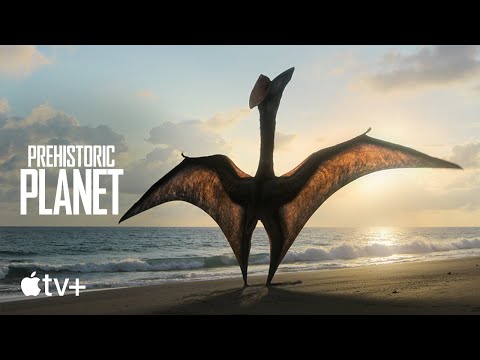
Official Trailer
Trailer
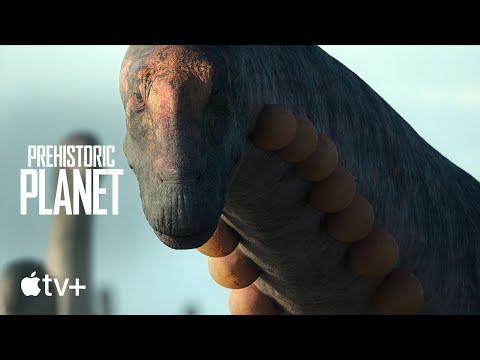
Official Teaser
Teaser

Official Sneak Peek
Clip

Prehistoric Planet: Ice Age — Season 3: Puppet Behind the Scenes | Apple TV
Apple TV

Prehistoric Planet: Ice Age — Season 3 First Look | Apple TV
Apple TV

Prehistoric Planet: Ice Age — Season 3 Official Trailer | Apple TV
Apple TV

Prehistoric Planet: Ice Age — Spa Time | Season 3 Scene | Apple TV
Apple TV

Prehistoric Planet: Ice Age Season 3 First Look
Rotten Tomatoes TV

Prehistoric Planet: Ice Age — Rhinos Are Fast Runners | Season 3 Scene | Apple TV
Apple TV
More Like This

Life on Our Planet
2023 · ★ 8.1 · TV

Walking with Dinosaurs
2025 · ★ 7.1 · TV

Natural World
1983 · ★ 7.4 · TV

The Dinosaurs
2026 · ★ 8.0 · TV

Earth at Night in Colour
2020 · ★ 8.1 · TV

Human Planet
2011 · ★ 8.2 · TV

Seven Worlds, One Planet
2019 · ★ 8.5 · TV

Our Planet
2019 · ★ 8.5 · TV

Great Migrations
2010 · ★ 7.7 · TV

Nature
1982 · ★ 7.9 · TV

Planet Earth
2006 · ★ 8.6 · TV
Planet Dinosaur
2011 · ★ 7.9 · TV

Super/Natural
2022 · ★ 7.3 · TV

David Attenborough's Natural Curiosities
2013 · ★ 7.3 · TV

Welcome to Earth
2021 · ★ 7.6 · TV

Planet Earth II
2016 · ★ 8.6 · TV

Planet Earth III
2023 · ★ 8.6 · TV

Dynasties
2018 · ★ 8.3 · TV

The Life of Mammals
2002 · ★ 8.4 · TV

Night on Earth
2020 · ★ 7.4 · TV
From Wikipedia
Prehistoric Planet is a television series, created in the nature documentary style, about extinct prehistoric animals that premiered on Apple TV beginning May 23, 2022. The first two seasons (2022–23) are produced by the BBC Studios Natural History Unit, with Jon Favreau as showrunner, visual effects by The Moving Picture Company, and narration by natural historian Sir David Attenborough. These seasons depict dinosaurs and other prehistoric animals, recreated with computer-generated imagery, living around the globe in the Late Cretaceous period 66 million years ago (Maastrichtian), just before the non-avian dinosaurs' extinction. The show intends to simulate the behaviors of these species by speculating from modern palaeontological research. A third season titled Prehistoric Planet: Ice Age, narrated by Tom Hiddleston and focusing on Pleistocene megafauna, was released in 2025. Hans Zimmer, Kara Talve, and Anže Rozman composed the soundtrack. Prehistoric Planet is the highest-profile dinosaur-focused documentary series produced by the BBC since Planet Dinosaur in 2011, and its nature documentary-styled format is similar to the highly successful Walking with Dinosaurs (1999). Prehistoric Planet received critical acclaim for its visual effects, depiction of dinosaurs, and Attenborough's narration.
From Wikipedia’s article “Prehistoric Planet”, under CC BY-SA 4.0.
What People Are Saying
Photorealism and nothing else. Scenery often feels fake af and variety is low. And if you dont give me some hard sience facts or theories i dont want to look at the same dinosaur for 20 minutes just because they look nice.
Read it on trakt.tvit's honestly mind blowing what vfx is capable of. really immersive and interesting. plus if you're a millennial, look forward to googling things while you go "idk that sounds fake" and finding out that way more has changed than just some dinos having feathers. like wtf new zealand is part of a submerged CONTINENT
Read it on trakt.tvContains spoilers — show it
Looks absolutely incredible... Wish they didn't show me a baby T-Rex being eaten 2 minutes into episode one though.
My background is in paleontology, so theoretically this show should be right up my alley. It was a pleasant watch with my wife and I appreciated that it did not outstay its welcome. There wasn't anything particularly remarkable about Prehistoric Planet. It clearly is trying to follow in the footsteps of Walking with Dinosaurs, but that show was a technical marvel with good music and it brought many interesting species to life for the first time. Here, we see many animals that have been visualized in CGI time and time again. The show tries to show us new sides to these animals, but none of them particularly grabbed me. It just seemed fairly generic. What nudged this down to a 5/10 instead of a 6/10 for me was the science. I have no doubt that this show is well-meaning and based on good data. But as a science-minded individual, I was really here to learn about what I have missed in the last 8 years since I stopped studying paleontology. The show presents itself as a sort of nature documentary made for casual viewers rather than people interested in zoology and science. I would have liked the show to make clear distinctions between portrayals that were based on hard science; those that were inferred based on the behaviors of related animals like birds or crocodiles; and speculative "what ifs" that just let us flesh out the animals and imagine what they were MAYBE like when they were alive. The show doesn't make any such distinction, and there were multiple moments where my wife and I looked at each other and remarked, "There's no way we have evidence for that!" Each episode has a companion short that explains some of the science behind the episode, which is welcome, but it only focuses on one single factoid per episode. Some of them proved me wrong and showed we absolutely had evidence for the thing that raised my eyebrows, but I am wondering why everything in the show can't be fact-checked like this? I'm totally happy and fine with "what ifs," but I came to the show to learn and I feel like I am walking away not knowing what was fact and what was fiction. So in the end, I feel like I learned nothing!
Read it on trakt.tvI love dinosaurs and I take everything I can get, however this was quite boring. My wife fell asleep every episode. feels like the same few dinosaurs in every episode over and over again, those you see in the trailer are the ones you'll see in the tv series. lots of stuff was very hard to believe (like, how could anybody know how mating rituals might have worked) but there was no scientific backing or anything to substantiate the claims. it might all be true but why not tell me HOW we know that today?? The same "intro" every episode was also kind of weird. At first I thought I chose the wrong episode. Also, the "1 climate zone per episode" style was IMHO not the best choice. I would have liked an overview of dinosaurs, types, time eras and so on. More like "cosmos" with Neil deGrasse Tyson did it, "scientific".
Read it on trakt.tvVisually stunning, but a complete swing and a miss on the format. It doesn't actually tell you any new dino science, instead sitting on a level your average 8 year old dino enthusiast would know. The first 3 episodes taught us "t rex big, t rex hunt" and "pterosaurs flew around and mated" - the only big shakeup on screen from "popular" knowledge of dinosaurs, was the feathered Velociraptor. It would have been much more interesting to have each period of history (there's 150 million years between the emergence of some of the dinosaurs shown!) which dinosaurs were active, the state of the world (fauna, climate) how they adapted to that, why you got large dinos before the small ones, etc.
Read it on trakt.tv